Features
BN Prose: This Administration Will Favour Me and Family (II) by Toyosi Onikosi

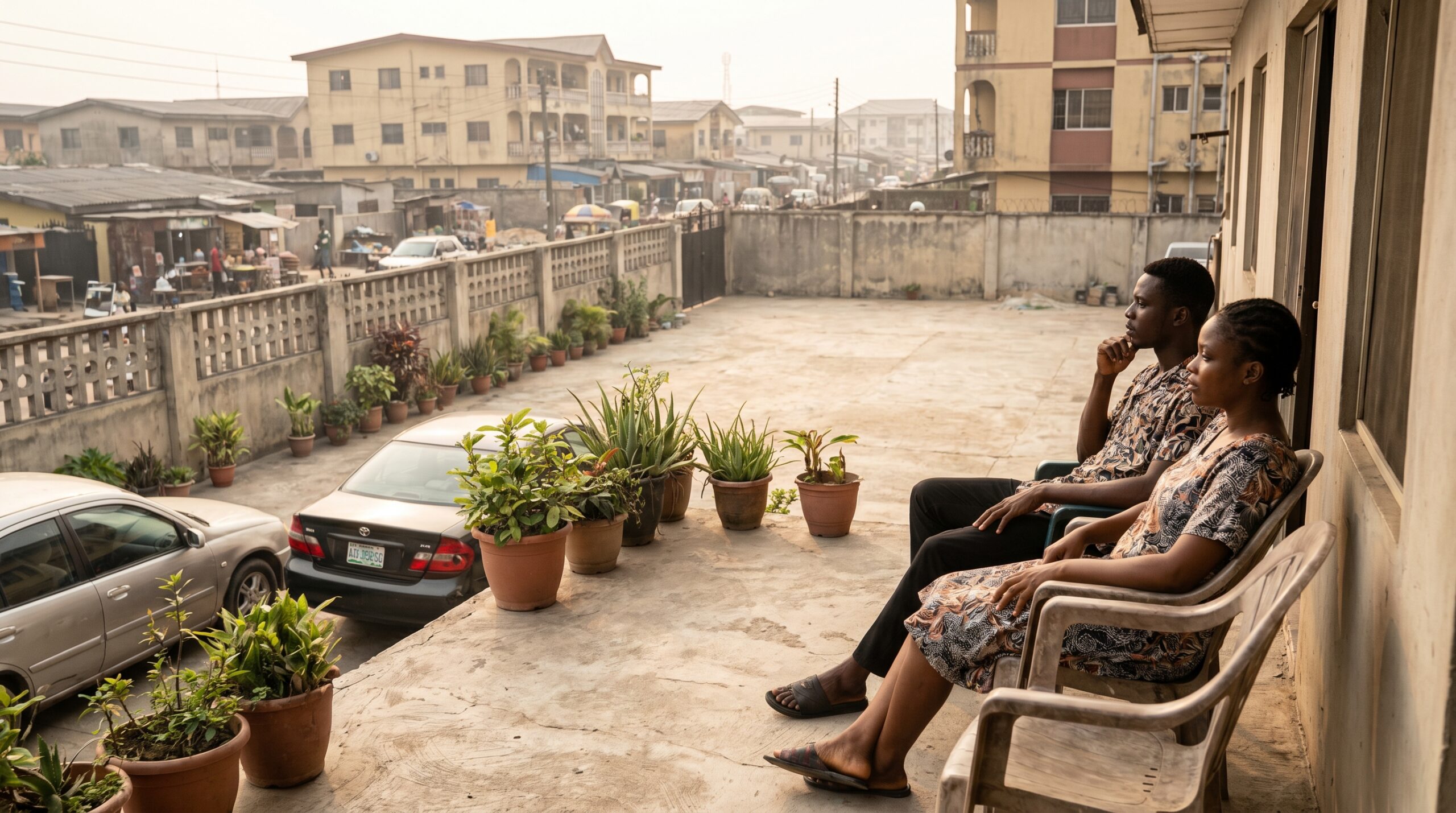
Pere woke up sweaty and restless. It was morning, but it felt like the same night refusing to end. Seiyefa and their mother lay beside him on the floor, breathing lightly, like people who had learned how to sleep inside worry.
He stared at the ceiling and realised he no longer believed his own words. Sometimes he thought about how their names sounded like promises: Pere — wealth, poured hopefully over a baby who now counted coins. Seiyefa — nothing is impossible, a small hope folded into a girl. In this room, with its cracked walls and thin soup, those meanings felt like someone else’s prophecy.
He slipped outside. The compound was already moving—buckets, greetings, someone arguing softly about money. He sat on the step and rubbed his face.
The door opened behind him. Seiyefa came out and sat next to him.
“You didn’t sleep,” she said.
He shook his head. “You?”
She gave a small shrug. “My eyes were closed.”
They sat in silence for a moment.
“There’s no work today,” he said. “Boss cut more days.”
She nodded slowly, as if she’d been expecting it. “So what now?” she asked.
Before, he would have said, “God will open another door.” Or, “Things will turn around.” The sentences lined up in his mind, old and rusty, but none of them came out.
“I don’t know,” he said.
Seiyefa turned to look at him properly. “Preye called,” she said. “From America.”
Pere’s jaw tightened. “America again.”
“He’s there now,” she went on. “Working one warehouse night shift. Petroleum engineering degree and an American master’s in business, but he’s packing boxes in some warehouse over there, always scared that one small mistake will have immigration putting him on a plane. He said, watching his back all the time, too tired to even complain properly.”
She paused. “He also said Mama Preye is sick in Nembe. They say she may not last. He can’t even come home until his papers are settled. He’s there praying his mother doesn’t die before his green card comes.”
She glanced at him. “It’s funny that you’re here declaring this administration will favour you. He’s there begging that his own administration won’t remember him. Between both of you, who is really better off?”
This time, Pere’s laugh came out bitter. “Trust you to turn all this into a proverb.”
“Proverb, but I’m not wrong,” Seiyefa said quietly. “You’re here trying to name this heat a blessing. He’s there turning fear into ‘opportunity.’ All of us are just trying not to drown.”
He rubbed his face again. “I also heard from Cousin Ebimini,” he said. “From the UK.”
Seiyefa’s eyebrows lifted. “What did he say?”
“He finally got his residency,” Pere replied. “Big English. Papers. He said he’s now working for the city council. Road sanitation. Cleaning streets, washing roads and gutters. He said the job is embarrassing for a former well-respected Abuja real estate agent. Last week, someone called him a monkey and told him to go back to the jungle. On top of it, after tax and bills, he too is choking.”
Pere sighed. “He told me he feels small, but at least his smallness pays on time. That over there, even his shame has rent. I didn’t know whether to congratulate him or tell him sorry.”
They sat with that for a moment.
“So,” Seiyefa said quietly, “Preye is in America, afraid to breathe wrong. Ebimini is in the UK, scrubbing roads. We are here, calculating seasoning cubes. Everybody is poor, just in different currencies.”
Pere almost smiled. “Different kinds of poverty,” he said. “Ours without a passport. Theirs with visa and residency.” No administration seems to be favouring anybody regardless of location.”
They fell quiet again.
“I’m tired,” Seiyefa said at last. “Not just body tired. Tired of pretending this is fine.”
Inside, their mother coughed and shifted. Soon she would get up, pray over them and repeat the familiar lines: “This year will favour us.” Pere felt a sharp ache in his chest. He didn’t despise her words. He just no longer knew where faith ended, and denial began.
A young man walked into the compound with a bundle of papers and started pushing them under doors. When he reached them, he handed one to Pere and kept moving.
COMMUNITY MEETING, it read. At the primary school.
Topic: “Rising rents, light, and how we are coping.”
At the bottom, in smaller writing: Come if you are tired.
Pere almost laughed. It sounded like a joke God would make.
“Are you going?” Seiyefa asked.
“I don’t do meetings,” he said. “People shout, nothing changes.”
“You don’t do meetings,” she said quietly, “but meetings are doing you. Rents, light, fuel, everything. Whether you talk or not.”
He stared at the paper.
He thought of all the hours he had spent speaking to the mirror, declaring change that never came. All the days he had gone to church and shouted “Amen” while prices rose faster than his salary. All the times he had told Seiyefa and his mother, “Don’t say negative things,” as if words alone moved policy. Nothing had stopped the heat.
“I’ll go,” he said, almost surprising himself.
Seiyefa nodded. “I’ll come with you.”
He looked at her. “You?”
“I live here too,” she said. “My own suffering is not by proxy.”
Pere picked up the jerrycan and joined the queue at the tap. The water came in a thin, stubborn stream, like it too was tired but refusing to stop completely.
When they went back inside, their mother was already sitting on the edge of her mattress, Bible open on her lap.
“Come,” she said. “Let us pray. This administration will favour—”
“Mummy,” Pere cut in, more sharply than he meant to. “Can we… not say that part today?”
She stared at him as if he had slapped her. Seiyefa held her breath.
“So what should we say?” his mother whispered.
Pere did not have an answer that wouldn’t break something. He sat down beside her anyway and took her hand.
“Let’s just say we are tired,” he said. “And see what God does with that one first.”
For a while, nobody spoke. Then, quietly, his mother began to pray, this time without mentioning any administration, here or abroad.
It did not cool the room. But Pere stayed…