Features
Abimbola Ishaku: Are Abuja’s Good Roads Encouraging Dangerous Driving?

The morning after my wedding, I almost lost my mother on a Sunday morning on May 3rd, 2026. My phone battery was at 2%, and I picked it up only to switch it off. Newly married, exhausted, and still floating somewhere between celebration and disbelief, I had no intention of using or checking my phone. But something nudged me to check it. There were eight missed calls from my father and brother. Then a long WhatsApp message explaining that my mother had been involved in an accident and was lying in the emergency unit at Limi Hospital.
The joy of the previous day suddenly disappeared. The accident occurred at Wuye Junction while my parents were leaving Abuja for Ilorin. It was around 6 a.m. The roads were still empty, the city barely awake. As they approached an intersection, a speeding Toyota RAV4 suddenly slammed into their car. The impact was violent. The driver lost control immediately, and the car spun wildly in the middle of the road. My mother was seated at the back, so she took the worst of the impact. The windows shattered on contact, sending glass into her skull. She lost consciousness.
What unsettled me later was how preventable it all felt. The accident happened not due to poor road conditions in Abuja; rather, it was because the roads are actually very good. So, the quality of the roads encourages speeding and can give drivers a false sense of control over their vehicles.
As I was managing panic, hospital calls, and trying to understand how life could change overnight, I kept heavily thinking about the point of Abuja’s roads being built for speed, the price road users pay for it.
When Good Roads Become Dangerous
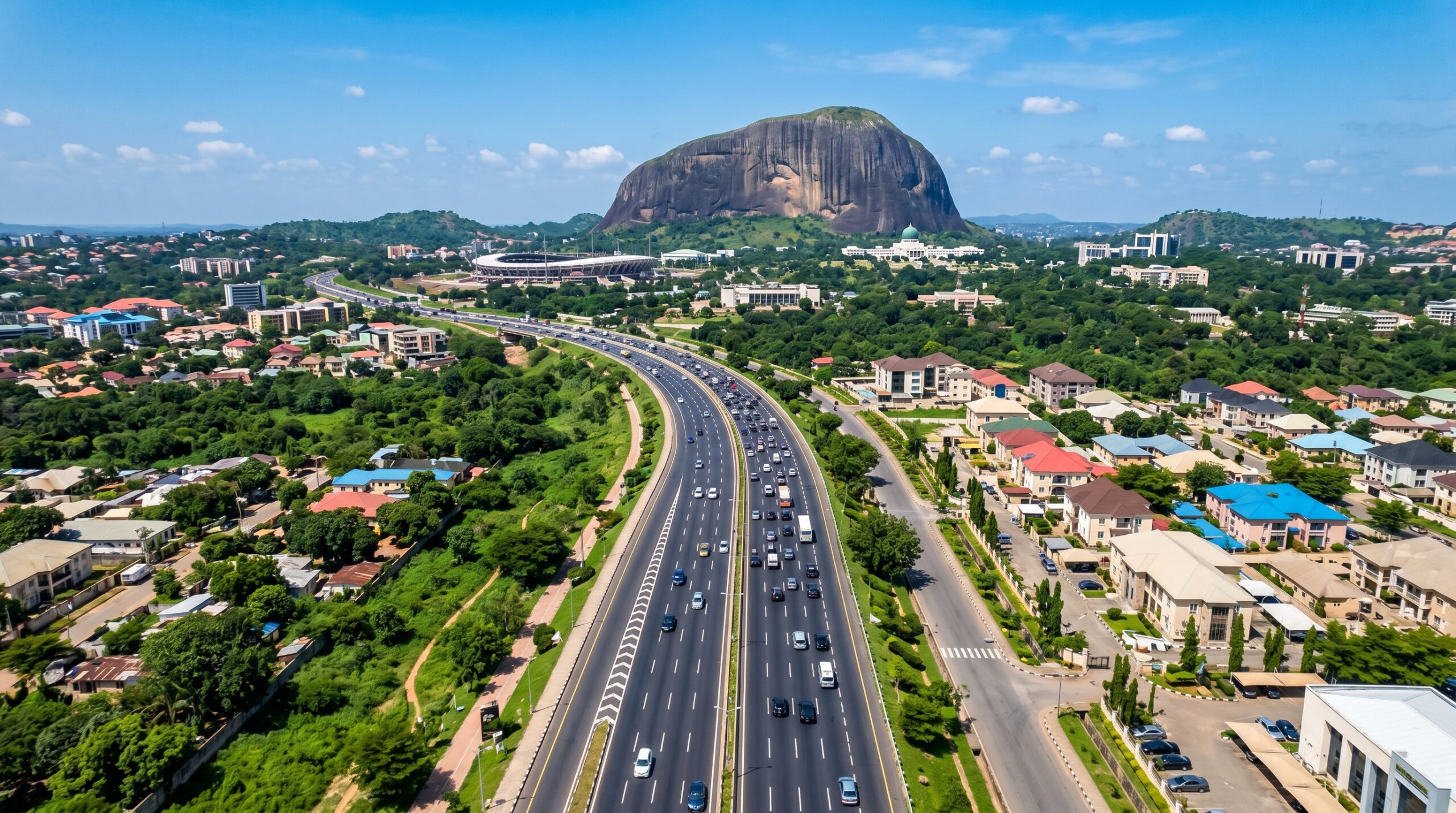
Abuja was never designed to be Nigeria’s modern capital: organised, spacious, and efficient. After Lagos became overcrowded and difficult to manage, the Federal Government moved the capital to Abuja in 1991 with the vision of building a world-class city from scratch. Unlike Lagos, where roads often feel like an afterthought forced into an already crowded city, Abuja was planned with wide expressways, multiple lanes, smooth interchanges and long uninterrupted stretches of road that make driving feel almost effortless.
Driving into Abuja feels like entering a different country entirely, like, as the popular saying goes, “small London.” The roads are cleaner, traffic flows better, and there is space. And because there is space, there is speed.
Over time, I have started to wonder whether the city’s greatest advantage has become one of its biggest dangers. Smooth roads change the psychology of driving. As a driver, you overtake more aggressively because there is enough space. You assume you have control until suddenly, you do not. And perhaps that is why so many Abuja accident stories sound eerily similar: early morning, open road, high speed, and lost control.
Data from the Federal Road Safety Corps has repeatedly identified speeding as one of the leading causes of road accidents in Abuja and across Nigeria. In 2021 alone, the FCT recorded 738 accidents and 137 deaths, with speed violation listed as the major cause. Between 2020 and 2024, Abuja recorded one of the highest accident rates in Nigeria’s North Central region.
But statistics only tell part of the story. The rest live in hospital waiting rooms, damaged cars abandoned by the roadside, and families forced to split their lives into “before” and “after” one terrible moment.
What’s The Way Forward?
I appreciate that Abuja has some of the best roads in Nigeria, which makes moving around the city without spending half your life trapped in traffic. Infrastructure matters. But what do we do when the infrastructure endangers citizens’ lives?
This highlights the need for the government to take further action. The city requires regulations and traffic controls to manage how drivers use the roads. It is essential to enforce traffic laws consistently. We should redesign intersections and high-risk junctions with safety as a priority, rather than just convenience. Additionally, we need to invest in comprehensive driver education, focusing not only on licensing but also on training that promotes responsible road usage behaviour. A smooth road only becomes dangerous when drivers forget that they are still responsible for human lives, their own and everyone else’s.
My mother survived that accident, but I often reflect on that morning and how close we came to losing everything. Just one phone notification changed our joy into grief in an instant. Now, every time I drive through Wuye Junction, I find myself pondering how many lives could still be saved if the roads in Abuja encouraged us to slow down just a little more.