
Features
BN Prose: How to Grieve with a Machete by Udochi Mbalewe

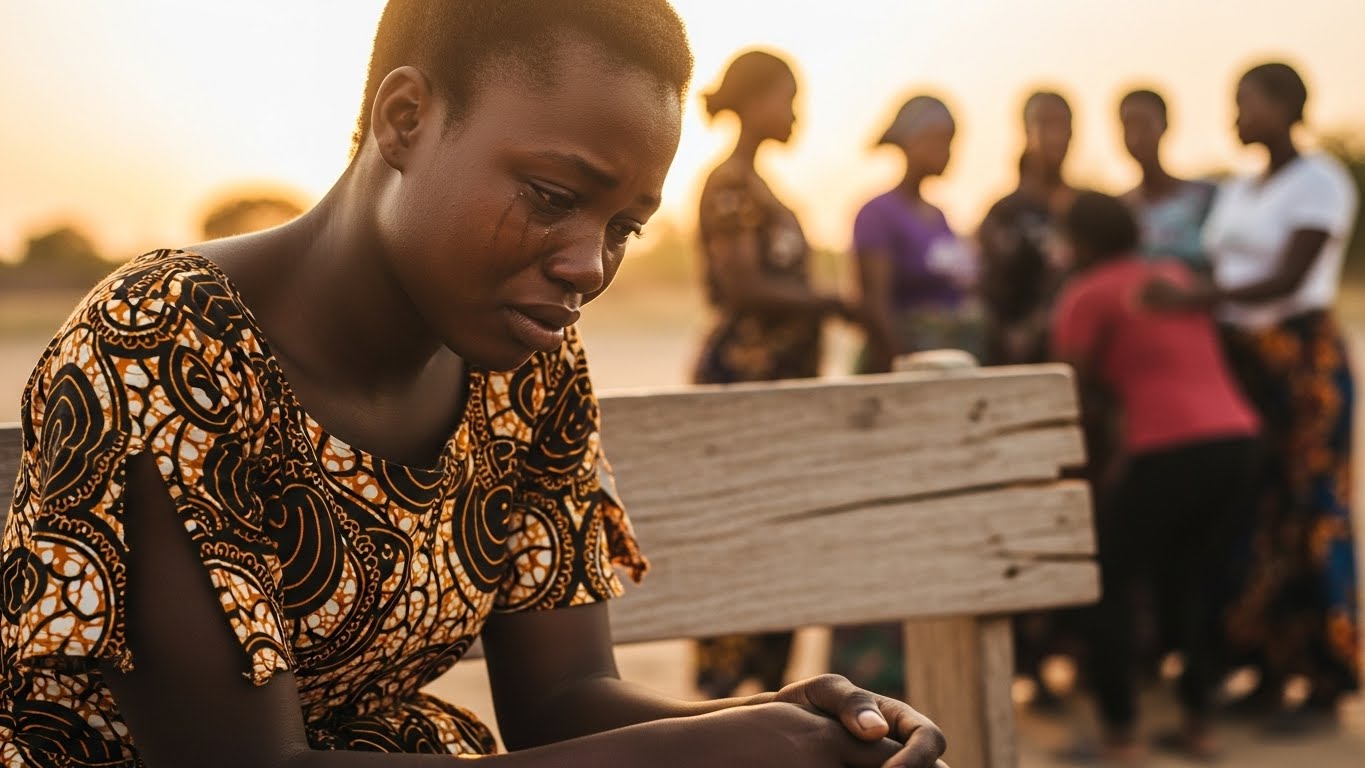
Generated Image
What does it mean for a land to drink blood and still expect its people to love it?
Before Yelewata learned the taste of blood, our biggest catastrophe was a man named Ikyoche.
He was a gifted barber, a good father, a man whose laugh softened difficult conversations. He taught boys to part their hair on the left and taught wives how to hold grudges politely. But his true talent was cheating, and with it, he walked around town with the smug confidence of a man who believed charm could cure shame. Wives melted at his grin; husbands shrugged and kept their eyes on their farms.
Just last Sunday, Ibeme, his wife, our choir mistress, and the strongest soprano in Benue, was leading worship as if she were wrestling God for a miracle. As she reached the chorus, another woman exploded from the pews like a summoned spirit, anger dripping from every step, wrapper barely clinging to her hips. She stormed the altar, snatched the mic from Ibeme’s hand, shoved her aside, and spat.
‘Ibeme! Abeg warn your husband! Na condom he dey scatter for road like groundnut. My pikin don too carry sotey she think say na balloon. She no gree stop dey blow am! Wetin be all this nonsense?’
We screamed, “Jesus!” and laughed. Ibeme blinked, tightened her throat around the next line, and sang louder. But that night, she lit a candle, held it under Ikyoche’s penis, and told him to confess. He begged; she cried. And by morning, she served him yam porridge with roasted fish. Love holds many tools: patience, food, and sometimes fire.
Four days later, Ibeme sat across from me on my rubber-patched chair, hands slicing the air, narrating how she’d chased Ikyoche and his mistress down the street, yelling, “Holy Ghost fire! Fire consume you!” like she was casting out demons. I leaned back, half-listening, half-studying her, watching the way the story made her look brave and broken at the same time. I never understood how she kept loving a man who served her shame for breakfast and disgrace for dinner. Dede, my late husband, never cheated. He held his morals the way other men held land, proud and stubborn.
But looking at Ibeme, God help me, I felt a hunger I couldn’t name. Dede treated me like a glass vase; Ikyoche looked at women like they were food he was starving for. Sometimes I wanted that. I wanted to be looked at with that sharp animal desire that tasted of danger. But how could I envy a woman whose husband humiliated her for sport? She was my best friend, the one who fought Dede to let me breathe, and we were two women bound by grief and gossip, clinging to whatever softness we could find. Yet here I was, smiling, nodding like I was still listening to her, while envying the chaos of her life, envying the feeling of wanting someone so much it rearranged your senses, and the way her big, generous bum entered a room, unapologetic, careless and alive. I bit my tongue and recoiled in shame.
I had not finished thinking about it when a gunshot split the air. The spoon rattled in my bowl. Ibeme didn’t look up. “Dem don come again?” she asked, reaching for a banana. We live with bullets the way we live with rain: they interrupt, they pass, and we return to washing plates. But we don’t cry. Crying assumes someone will answer back.
Another round of shots. The tin roof shook, and we decided to step outside. A child spelt O-B-L-I-V-I-O-N by the borehole, two boys kicked a torn ball to each other, a woman cursed the price of a derica of rice from a seller, and children hawked sachets of gin and soap. Life, continuing. Then came a scream, the kind that splits the sky like lightning. We saw men carrying Terhile, the neighbour’s son. His head was split open as a yam tuber dropped on concrete. His mother didn’t cry immediately. She went inside, murmuring, put on her Sunday best: red lipstick and a green lace skirt, and then came out to scream.. “Or dedoo u sha man ga!” My heart has been torn apart. The community women circled her quickly, held her down from hitting her chest on the ground, and some rubbed salt into her scalp and legs.
I didn’t comfort her. Instead, I went back inside and washed Ibeme’s plate. I scrubbed it until my knuckles turned red. If I kept the plate clean, maybe the blood wouldn’t reach us. That was the logic. My throat felt blocked, like something was lodged there, refusing to move up or down. I told myself I wouldn’t cry, but I did.
They told us the herders only attacked at night, so we started sleeping during the day. That way, if we died, at least we’d be well-rested.
“Why do they still call these clashes, when all we’ve got is a hoe against people carrying big guns?” I said to Ibeme.
She dropped a bottle of groundnut beside me, then sat. “You still dey think of that small boy?”
I nodded.
Ibeme didn’t stop eating. “Na so e go be now,” she said. “When Ikyoche talk say dis land get blood for mouth, dem say he mad.” She leaned back, arms behind her head and continued. “When my pikin die, I carry palm oil rub am. Say make e shine enter heaven.” She rubbed her hands as if she could still feel the oil.
Sometimes, I miss the herders, the ones before the madness, the ones who joked with us, gave our children kulikuli, and shared roasted meat during Sallah. Now? We sleep in fear of them, we sleep on floors, in churches, schools, and markets. Anywhere that promises a delay in dying.
Three evenings after Terhile died, I packed two pieces of faded ankara into a black nylon bag and headed to the church, our usual refuge now after too many nights of killings. Ibeme had gone ahead, so I joined my other neighbours. The church sat between the school, the new market, and the police station. It was God’s house. Surely, God would protect us. I thought.
I had just curled into my corner by the altar, my head on a makeshift pillow, when the first bullets hit at 10:25 p.m. Gboah! Gboah! Ratatatata! Tatatatatat! Gboah! Drilling straight into my skull.
“Lie down!” someone shouted.
We dropped. Bodies tangled, stacked like broken chairs. I was pressed into the concrete, a baby’s foot in my mouth, someone’s elbow in my ribs. The air smelled of kerosene, sweat, and baby powder. Around me: boys, girls, pregnant women, everyone scrambling, crying, praying, mothers over strangers, fathers shielding children not their own. A woman recited Psalm 23, and a man cursed the governor. I tried to pray, but my throat was a locked door. One of the chairs had scraped someone’s arm and had bled on our stacked bodies. We didn’t know who it was, and we didn’t care.
I would hear later that someone had warned the police before the attack, but now, it didn’t matter. Nobody expected them to strike again, at least. We had tried to resolve it. When the first killings happened, we called a peaceful meeting and a committee, and it was resolved, or so we thought. The village had just begun to breathe again, for God’s sake! Women had gone back to trading, and children had started returning to school. But on this day, they came prepared. The police stood their ground, I won’t lie. God knows they tried. They stopped the attackers from getting into the church, where I was, but hours later, when the gunfire finally stopped, and we crawled out like insects from under stones, someone held my shoulder and whispered, ‘They fooled us.’ That’s when I understood: while the police were protecting us, the old market, unguarded and unwatched, fell like a banana tree. No one knew when my uncle was sliced open like a yam tuber, that Adohi Dooga and his entire eight family members: Mbanyiar, Ikyoche, Awanboi, Regina, Adoo, Aondofa, Ute Dooga, were set on fire inside his stall. That a boy named Samson ran with a machete wound so deep his intestines were visible. Entire bloodlines, twenty, maybe more, were wiped out, and over 200 people were killed.
By morning, the market was smoke and silence, except for the sound of people screaming names. Even the air had turned black. I walked through what used to be our old market, now ash and limbs. A woman’s wrapper clung to a charred pole like a surrender flag; burnt tomatoes floated in blood. Arms in one direction, legs in another. Bodies everywhere, too many to count. A boy sat by his mother’s corpse, shaking her arm, whispering, “Mama, Mama.” I stood dry-eyed. The stench of burnt flesh sat like a stone in my throat. My hands shook, but I couldn’t feel them. I wanted to cry, but I remember that crying is for countries where someone is listening.
Ikyoche was right. They say a land that forgets its dead will drink more blood. And here we were, drowning in it. I couldn’t bear it. The pain in my stomach had come back again, now tight and low. Just then, a young woman in a crisp blue shirt approached me. She held a clipboard, an NGO worker, I assumed. “Madam,” she said softly, pen hovering. “We are documenting experiences. Can you rate your trauma on a scale of 1 to 10?”
I looked at her pen. It was a nice pen. Blue ink. “If I say 10,” I asked, “will you give me two bags of rice instead of one?”
She blinked, confused. “I… It’s just for the report, ma. So the President knows.”
I laughed. A dry, cracking sound. The President? He doesn’t remember the living; how would he remember the dead? Instead, I shook my head and said, “Tell him that we don’t need his pity. We need his guns.”
She tried to hand me a paper. “To write your feelings…” I collected the paper out of courtesy and kept it in my purse. I grabbed my nylon bag and the dog-eared Bible and ran home. I needed to distract myself. I turned on the radio, and a jingle for Indomie noodles came on, followed by a love song that made me want to break something. Then, I heard the Tor Tiv’s voice, the supreme traditional leader of our people, saying, “It is not a farmer-herder clash,” he said. “It is genocide. A land-grabbing campaign. A well-planned genocidal invasion.” I laughed, short and bitter. They said what we had already learned with our feet. I switched the radio off, dug the NGO’s fold of paper from my bible, “Document your experience,” she had said at the market, and felt ridiculous. I folded it back the same way and slipped it into my purse.
Later that day, I went to see Ibeme. I found her at the back of the compound that evening, seated on a cracked bench. Her scarf was gone, her ankara gown was torn at the shoulder, the sleeve ripped open, exposing the slight swell of the left breast. Her feet were dusty and trembling, crusted with dried blood.
I wrapped my arms around her and held her like I needed her to breathe. My skin felt cold against hers. This woman, who had held me when no one else would. “Wetin happen?” I asked.
“When I reach house from your side,” she started, voice shaky, eyes puffy and red, “I see one woman dey sleep for our bed. Me and my husband kon fight. I tell my husband make e no follow me and my pikin school go sleep. But I no know say e go go the market. I no know say e go sleep for that place.’” She bit her lip. “See wetin I don cause.”
“Where eim dey?” I asked, holding her tighter.
She nodded. “E get one kain serious wound, cheek reach neck. Dem say na broken zinc e jam as e dey run. Dem go sew am, give am tetanus injection. Na wetin dem talk be that o.” She exhaled. “Thank God, ah, wetin I for do…” She cried. When she calmed, I told her what the President said: forgiveness and patience. “Okay,” Ibeme said, sucking her teeth. “E say make we learn how to give, make we share, make we donate blood give people wey wound.’”She sucked her teeth. “But abeg, to forgive na food?”
She had started packing a bowl of cooked yams and garden egg stew into a reused plastic bowl. After she finished, she wiped the lid with a faded cloth and caught me watching. “You go still write that your letter?” The letter, the one the NGO lady had given me to document my experience. I nodded.
She hummed, not meeting my eyes, but tightening the lid. “If you write am, no beg. Just talk am as e be.”
Behind us, a few women had gathered to check on her. “Make I tell you,” Ibeme whispered, but loud enough for them to hear, disgust written on her face, “if to say na country wey get sense, we no suppose dey like this.” She slapped a mosquito on her arm and shook her head. ‘But e be like say suffer suffer don sabi farm work.’
“They say peace dey come,” one bow-legged woman murmured from the shadows.
Ibeme scoffed. “Peace no dey come, na camera dey come.”
I didn’t laugh, but I wanted to. Even at her lowest, Ibeme could still move people, no matter how hardened they’d become. I imagined the President watching the broadcast: children raising packs of donated bags, women waving sachets of Milo and packets of noodles like victory flags. I imagined him nodding and smiling in approval.
I went with Ibeme to the IDP camp’s makeshift clinic. Ikyoche was on a thin mattress, face wrapped in bandages from cheek to neck, one eye visible. He looked like an Egyptian mummy from a low-budget movie. Ibeme sat beside him, feeding him yams. He winced as he chewed, the stitches pulling at his mouth. After a few bites, he tried to speak. “Ibeme,” he wheezed. “I need Panadol. Head… pain.” “I go buy am,” Ibeme said. She set the bowl down and hurried out.
I was alone with him. Ikyoche the cheat, the liar, the survivor. I looked at his hand, resting on the dirty sheet. Slowly, I reached out and touched his fingers. They were warm. My Dede was a good man, a moral man, but Dede was rotting in the ground. Ikyoche was wicked, and he was here. I squeezed his hand, just for a second, a moment of jealousy and desire washed over me. You need to be a monster to survive, I thought. Good men die, only the wicked get to eat yam porridge after the fire.
Ibeme returned, breathless. I pulled my hand away. “Oya take your medicine,” she said, sitting down.
“Ibeme… I see dat woman… she…” Ikyoche tried to talk.
“Shhh,” Ibeme said, not unkindly. She dipped the spoon back into the bowl.
He swallowed, then tried again. “ I run… I think… I think say na you I dey see for fire…”
Ibeme paused, the spoon hovering between them. Then she laughed, short, bitter, but somehow soft. ‘So zinc cut your face, and you don already get sense?’
Ikyoche’s visible eye crinkled. He was trying to smile under the bandages. “At least… e sharp pass… your lighter…”
And Ibeme laughed again, louder this time, shaking her head. She wiped his chin with the edge of her wrapper where some stew had dribbled. “You no well,” she said. But she kept feeding him.
I watched them from the corner. This woman, who burned her husband’s penis, this man who had humiliated her, now sitting together like this, was the most natural thing in the world. I thought about Dede and how he tried to control me, “You’re too wild to be kept,” he’d say, like I was livestock. And now he was gone, and no one was here to protect me. I realised then, love isn’t about being good; it was the most violent survival strategy of all. It makes no sense. It forgives what shouldn’t be forgiven. It stays when staying might kill you. Ibeme didn’t forgive him because she was a saint. She kept him because in a world of wolves, you don’t throw away your own dog, even if he bites.
Ikyoche whispered something I couldn’t hear. Ibeme leaned closer, and he said it again. She looked at him for a long time, then nodded. “I don hear,” she said quietly. “If you pass this one and you still waka back to that nonsense, I go finish you. I no dey play.”
His eye crinkled again. “Yes, ma.”
Outside, the sun was setting, everything orange and red. The whole world still looked like it was burning. I thought about all the others: women now called barren because their husbands were ash, children with one parent left, men who couldn’t protect anyone anymore. My chest burned.
I pulled out the paper from my purse and unfolded it. It was creased and smudged, but still blank. I didn’t know where to begin, so I wrote one line: “Do you know what it means to bathe your daughter, not for school, not for sleep, but to flee? To watch a woman give birth behind a burning market, afraid even a scream could get her killed?”
I folded the letter carefully and tucked it back into my purse. Sealing it felt like lying to myself, like I actually believed someone would read it. I may still send it to the IDP secretariat tomorrow, or I won’t. Still, I was grateful. For those who remembered Yelewata, the ones who sent beds, shoes, rice, and clothes, and the white people and NGOs who asked how we were, even when they couldn’t pronounce our names.
That night, Ibeme and I walked back home in the dark. At my doorstep, I bent down and picked up the machete Dede used to clear the grass. It was heavier than I remembered. I went inside, locked the door and opened my bag. I took out my Bible, the one with the dog-eared pages and the dried flower inside. I opened the drawer and placed the Bible inside, deep at the back. Then, I took the machete. I placed it in my bag, right at the top.
Ibeme was outside, carrying the broken calabash Ikyoche once said could trap a lingering spirit. She set it on the doorstep, filled it with ash, muttered something I could barely hear, and wiped her hands on her wrapper. Somewhere in the distance, a radio played a jingle for Indomie noodles. Mama do good, Indomie good.
I lay down, my hand resting on the bag, fingers brushing the cold steel handle. I didn’t pray. I just listened to the dark and waited for something to bleed.