
Features
Temitope Abiola: The Nigerian Art of Storytelling in Chigozie Obioma’s The Fishermen
Obioma’s use of natural elements, particularly the river Omi Ala, does more than provide a setting. It establishes an early symbolic current that runs through the novel.

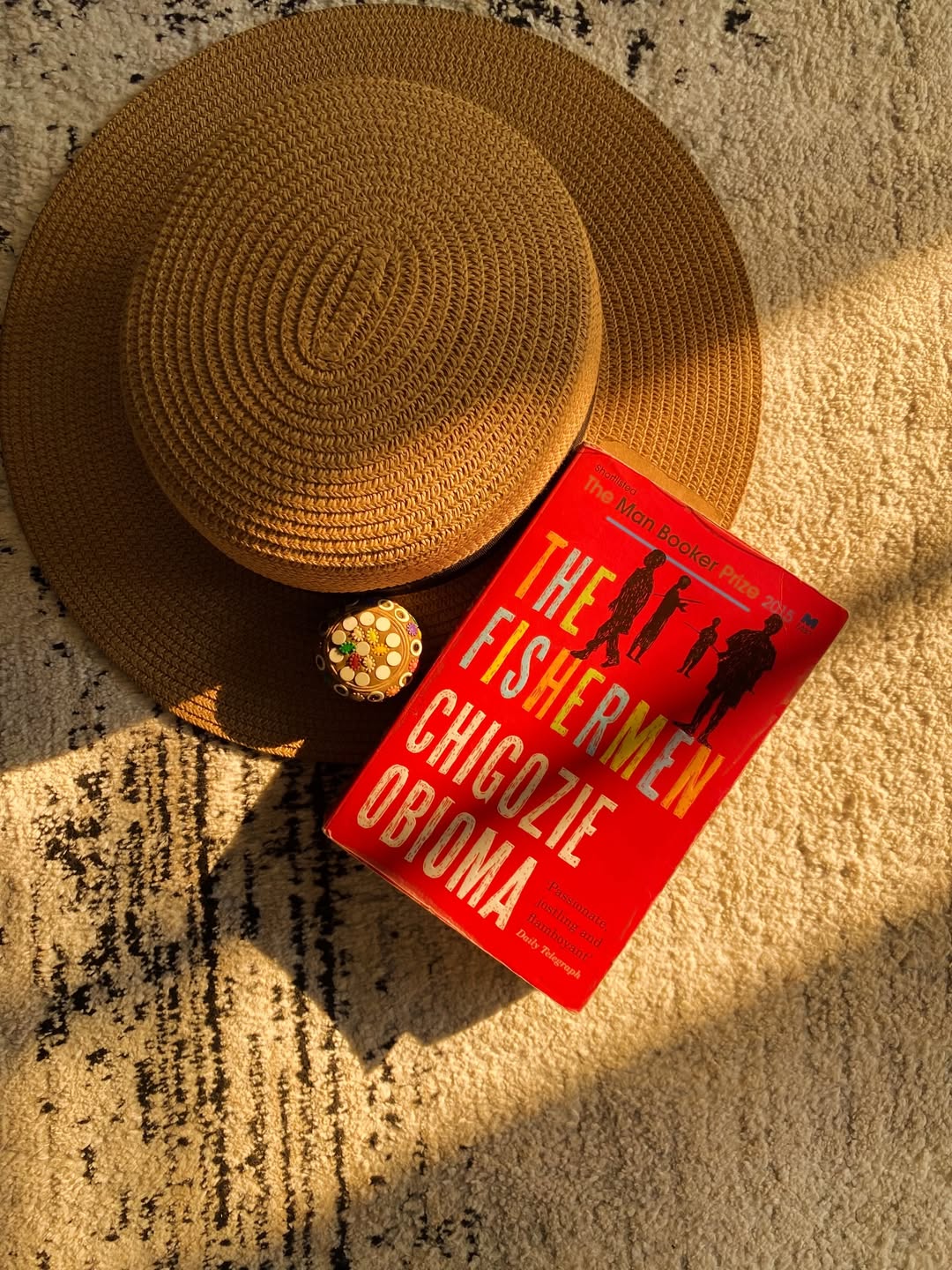
When the act becomes art, the audience forgets it was ever an act. The Fishermen is that kind of narration where the audience forgets they are only witnessing a telling. For me, this is a story of rebirth. It speaks to the childhood many Nigerian millennials know too well. A family of eight lives happily in one of Nigeria’s fast-developing towns until work separates the father, the steady protector of the home, from the rest of the family. With the first four children being boys and already developing their adult personalities, it becomes increasingly difficult for the mother to step into the father’s role as a trusted guide. Ikenna and Boja, the oldest of the boys, quickly establish themselves as voices that begin to shape the family’s core decisions.
In The Fishermen, the window within which a thriving order can devolve into chaos, once the loudest voice becomes that of a child, proves to be alarmingly short. It begins with something almost innocent. The boys take to fishing after school, until play hardens into identity and they begin to see themselves as fishermen. Then comes their encounter with Abulu, a filthy yet visionary madman, whose prophecy that Ikenna will be killed by fishermen casts a dark and lingering shadow over the brothers.
It does not take long before Abulu’s words begin to work their way into Ikenna’s fragile mind. From that point, the story tilts. What follows is a chain of events marked by untimely deaths and a quiet, gathering misery that comes to define the heart of the novel.
What sets this work apart among recent stories I have read is the way it commits itself to imagery through sight and sound. Obioma situates the reader within the terrain of Akure, a town where I spent my first decade. The timeline of the story overlaps with those years. The reading experience became, for me, something close to a return. Not just to a place, but to a feeling. Equally striking is his exploration of the inner lives of his characters. From Benjamin, the narrator, Ikenna, Boja, to Obembe, Obioma opens up their minds with a clarity that makes their fears, impulses, and fractures difficult to look away from. It is this access that builds the emotional weight the story carries to its end.
Obioma’s use of natural elements, particularly the river Omi Ala, does more than provide a setting. It establishes an early symbolic current that runs through the novel. The river is introduced with a familiarity that gradually gives way to unease, foreshadowing the role it will come to play in the unravelling of the family. It is not incidental that the boys choose this same river as the site of their fishing. What begins as play is already situated within a space marked by danger.
Obioma extends this symbolic structure through a deliberate use of metaphor that shapes how the reader understands each character. Mr Agwu is rendered as an eagle, a figure of strength and oversight, reflecting the order he imposes on his household. Ikenna’s transformation from Python to Sparrow traces a movement from force to vulnerability, mirroring his psychological decline after the prophecy. Their mother, cast as a falconer, is positioned as one who senses threat but lacks the force to contain it.
This pattern continues across the narrative. Boja is associated with weakness and affliction, Obembe with pursuit and retribution, while the narrator comes to understand himself in relation to the presence of others. Even Abulu is elevated beyond the ordinary, assuming the weight of something closer to a force than a man. David and Nkem, the last two siblings, emerge later as figures of quiet renewal, their presence suggesting a fragile return to calm after the storm.
Through this network of metaphors, the novel constructs a world in which character is not only described but interpreted through image. The result is a narrative that moves with a sense of inevitability, where place, identity, and fate are bound together from the outset.
The Fishermen came to me at a time when I had grown somewhat disillusioned with fiction. I had begun to feel that few stories could meet the standard I had come to expect. This novel did more than meet it. It unsettled it. It is also a story that quietly speaks to parents and those who hope to become one. When a parent, especially a father, becomes absent, the order of a home can shift in ways that are not always visible at first. Sometimes, it takes more than effort to hold things together. Sometimes, it takes grace. And when that fails, what begins as a small fracture can widen until it is no longer something a family can contain.