
Features
What Ade Love’s Iya Ni Wura Tells Us About Time
Iya Ni Wura, despite being released many decades ago, doesn’t feel like an old film.

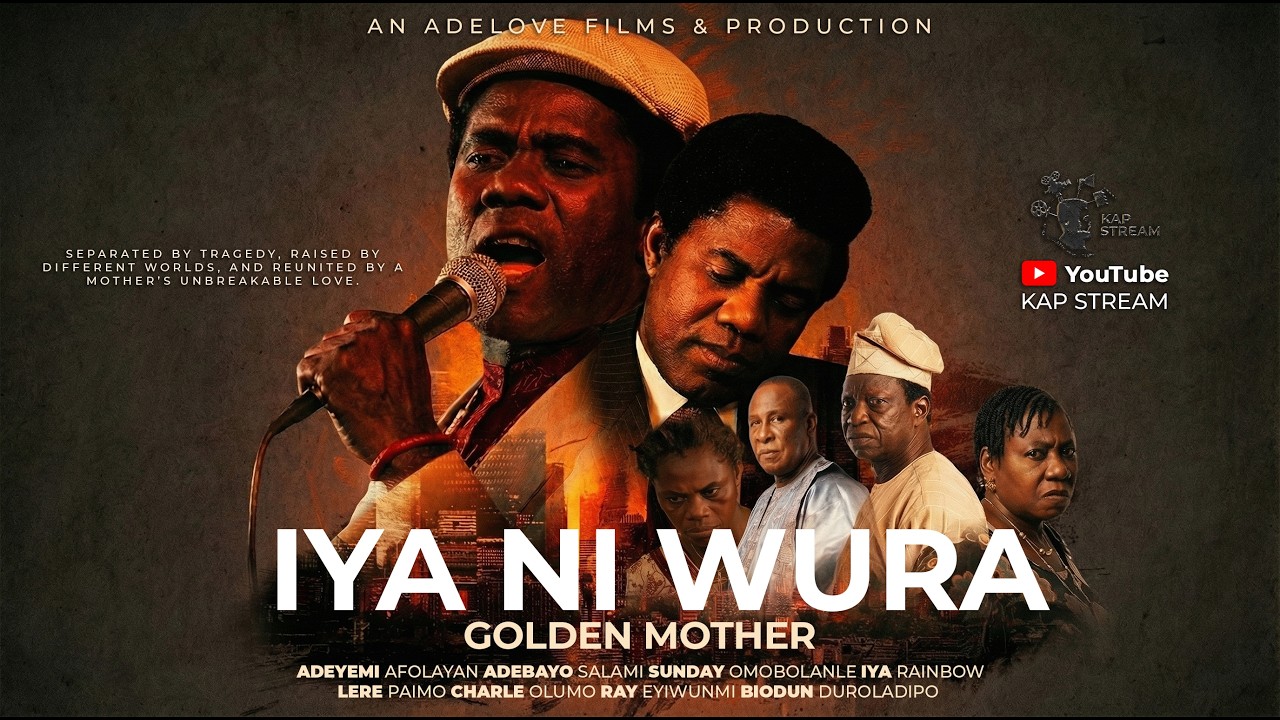
There are certain elements that make a film an instant classic. One of these elements is the film’s thematic relativity, how well it mirrors or projects a society’s future. The first thought that came to my mind after watching Iya Ni Wura by Adeyemi Afolayan, popularly known as Ade Love, was how a film has the responsibility of documenting time. Every form of art, you could argue, holds the same responsibility, but films are more significantly responsible because they encompass almost every other form of art: dialogue, visual, sound and others.
Iya Ni Wura was released in 1984 and was written, produced, directed and acted in by Ade Love. It narrates the stories of twin brothers, Goodluck and Adewale, who become separated as children in a market when their mother leaves them to fetch water to drink. Goodluck is picked up by the roadside and raised in an orphanage, and becomes a music superstar. Adewale becomes a lawyer like their late father, who dies on the day Goodluck goes missing.
We could talk about how Adeyemi Afolayan pulled off acting in dual roles as the twin brothers, but what Iya Ni Wura reveals more is about time: how, as time goes on, some things change while some remain. Without criticising the film, here are five things I think Iya Ni Wura tells us about time.
Time as an archivist
As said, a film bears the responsibility of documentation. As we know, documentation is important for comparing and juxtaposing how things were, how things could be, and how we can learn from the past to judge the present. The main plot of Iya Ni Wura happens in Lagos, and it serves as an archive of how Lagos or Nigeria was in the 1980s. From fashion, social values and speech patterns. There was a Social Welfare Department at the time, responsible for taking care of children living by the roadside. Goodluck has a chance of becoming a superstar because instead of ending under the bridge, as it would have been today. The film shows us how what may have been ordinary at the time has now become historical.
Life is a cycle
While things change as time goes on, some things remain. It reveals that life is a repeated cycle; traditions are repeated, and values are transferred across generations. Music in Nigeria has not become as global as it is today. While there were artists who were very popular, the springboard to popularity hadn’t been built at the time Iya Ni Wura was released. Today, an artist could upload a song from their corner in their room and go viral. However, Iya Ni Wura shows us something that has been in the music industry from time immemorial. Goodluck, also known as King, is signed to Fuja Records, owned by Chairman, played by the legendary Lere Paimo. Once Goodluck’s contract expires at Fuja Records, he decides to become an independent artist, a pattern that is now common in the music industry today.
Life na turn by turn
One of the most revealing things about Iya Ni Wura is how eras switch people. Most of the people who are very young in the film have become very old; some are dead. In a scene where Moji Afolayan is shown amongst children living in an orphanage, you wonder if that is the same person you know today. Adebayo Salami, who plays Goodluck’s manager, could almost be unrecognisable due to how young he is. Which means, as Nollywood continues to grow, actors and actresses will be cycled across eras. Life na turn by turn.
Iya Ni Wura, despite being released many decades ago, doesn’t feel like an old film due to how much it reveals about Nigeria today.