
Features
Is Education Becoming Expensive in Nigeria?

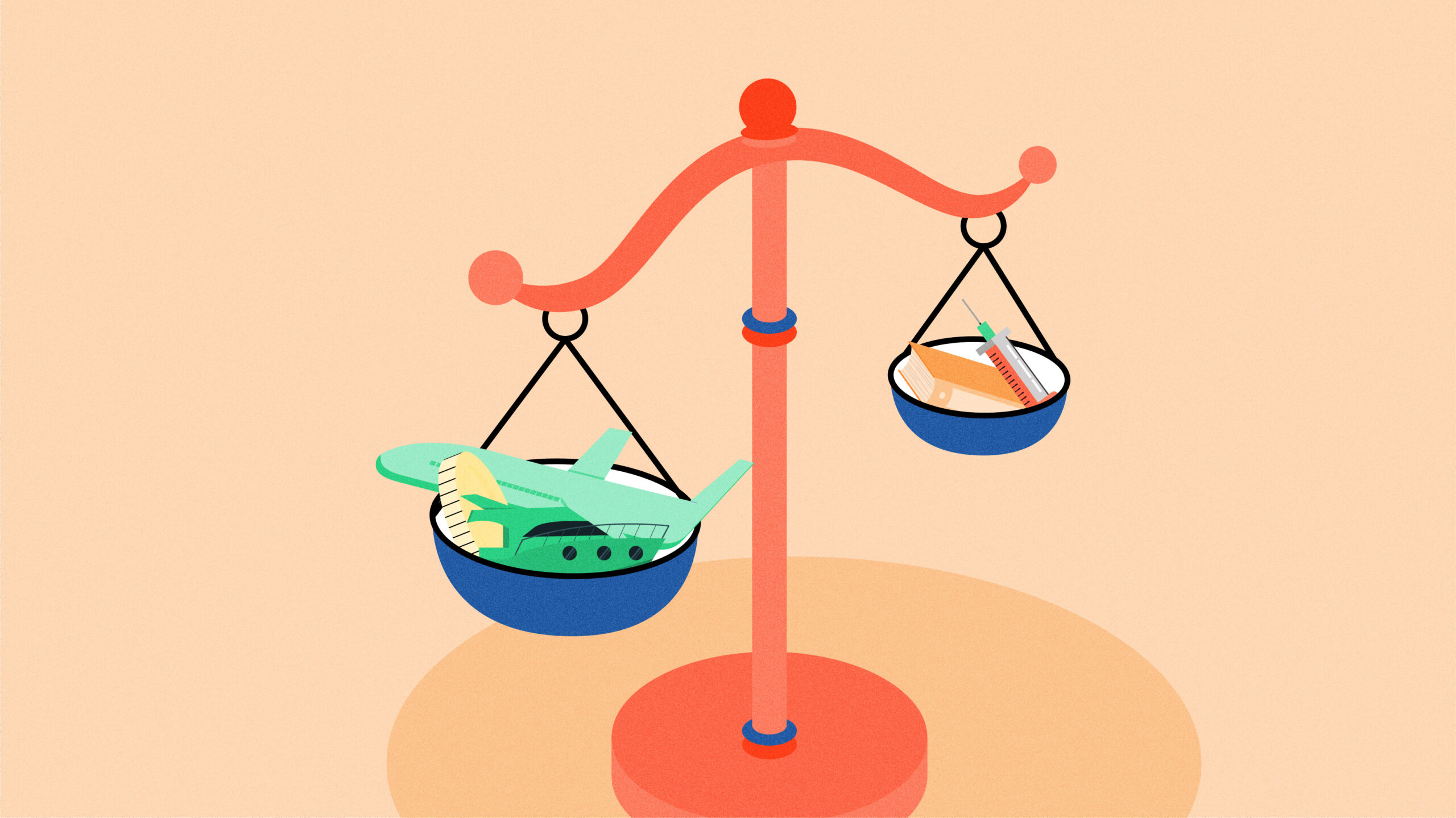
Education is becoming expensive in Nigeria, both economically and in terms of scarcity. Last month, JAMB, the body responsible for conducting the Unified Tertiary Examinations into higher institutions, reduced the cut-off marks for several levels of institution, with the minimum admissible UTME score for University, the highest level, being 150 out of 400. Years ago, 150 would have been considered a woeful failure, as the applicant/student did not have the intellectual capability to be considered for university. This score reduction followed a national social media debacle when Tosin Eniolorunda, Moniepoint’s CEO, mentioned in a public speech that his company struggles to fill open roles because Nigerians lack the talent for the globally competitive standards required by the company.
Tosin’s statement was met with national debate, with the majority opposing his point. They argued that the company does not pay enough to attract talent, and while that can be true, the pattern of educational reduction in Nigeria validates Tosin’s statement.
Last year, in an interview with Channels, Nigeria’s former minister for education, Professor Tahir Mamman, declared that “underage” students will not be allowed to sit for the examinations held by the West African Examination Council (WAEC) and National Examination Council (NECO), which would deny them from seeking university admission at an early age. According to his analysis, the prerequisite age to write the Unified Tertiary Matriculation Examination (UTME) is 18, so secondary school students are expected to graduate at the age of 17 and a half. Any students below that will not be allowed to seek admission. In my article last year, I asked if a 16-year-old in the university was a problem for Nigeria.
In 2009/2010, subjects like Social Studies, History and others were removed from the basic education curriculum, and the government cited the lack of interest from Nigerian students as a reason. Although some of the subjects have been reintroduced, the thought of removal ever occurring to the Nigerian government showed how intentional the system is about constantly reducing the educational standards to the barest minimum.
The result of the chain of these reductions is what births the Nigeria of today. The country now has to constantly lower the bar because it has spent years weakening the structures that once sustained intellectual excellence. Instead of investing in schools, improving teacher welfare, funding research, and modernising public institutions, the system continuously adjusts expectations downward. A while back, someone asked why there are no fully funded scholarships to pursue in Nigeria.
Over time, this creates a dangerous decline in intellectual curiosity. Students stop seeing education as a tool for knowledge and critical thinking, and instead begin to see it merely as a life requirement for the passage of time.
This shift has deeply affected how young Nigerians imagine success. In previous decades, becoming a lecturer, teacher, researcher, or academic carried such prestige. Today, many young Nigerians no longer aspire towards intellectual professions, because the system itself has made those paths unattractive. Lecturers in public universities are underpaid. Primary and secondary school teachers are poorly rewarded despite carrying the burden of shaping the country’s future. Public schools suffer from deteriorating infrastructure, outdated curricula, overcrowded classrooms, inadequate learning facilities; the list goes on.
As a result, brilliance is no longer sufficiently nurtured. Many intellectually gifted Nigerians redirect their ambitions toward industries perceived to guarantee quicker financial rewards. Education is slowly losing its cultural value beyond economic mobility.
Meanwhile, because public education continues to deteriorate, parents who can afford alternatives now turn to private institutions in search of quality. From nursery schools to universities, private education has become the closest thing to a guarantee of functional learning environments in Nigeria. But quality comes at a high cost.
For millions of Nigerian families, school fees have become one of the largest financial burdens they face. Parents now make extraordinary sacrifices simply to provide what should ordinarily be accessible through a functioning public system. Some take loans, work multiple jobs, or deprive themselves of basic comforts to afford tuition. Others cannot keep up at all, leaving many children trapped in underfunded schools with limited opportunities or no school at all. According to a UNICEF report, 1 in 3 Nigerians is out of school, which accounts for roughly 33% of the school-age population.
So education in Nigeria is gradually becoming class-dependent. Like a thing of the elite. The wealthy can still access relatively competitive learning environments, while poorer Nigerians are left to struggle within collapsing public institutions. Over time, something that is supposed to be accessible to everyone becomes a reference for social inequality.
Economies do not grow sustainably without strong educational foundations. Nations that dominate technology, medicine, engineering, research and innovation do so because they invest heavily in knowledge production and intellectual development. Nigeria, on the other hand, continues to underfund education while expecting globally competitive outcomes from students and workers.
This explains why many companies complain about skill shortages despite the country producing thousands of graduates yearly. A country that consistently lowers educational standards risks producing generations that are less equipped to solve complex problems, compete globally, or drive innovation. Eventually, the effects spread beyond classrooms into the economy itself — lower productivity, weaker institutions, higher unemployment, reduced innovation and continued dependence on foreign expertise.
Education is expensive in Nigeria, not only because school fees are high, but because the country is paying the price of years of neglect. A commodity becomes expensive when it is scarce. Education is becoming unaffordable to a particular class and also becoming expensively scarce. What to do?