
Features
Staphanie Inakoju: What a Coffin Maker Taught Me About Life
Every occupation, no matter how small or big it may seem, contributes something valuable to the lives of others.

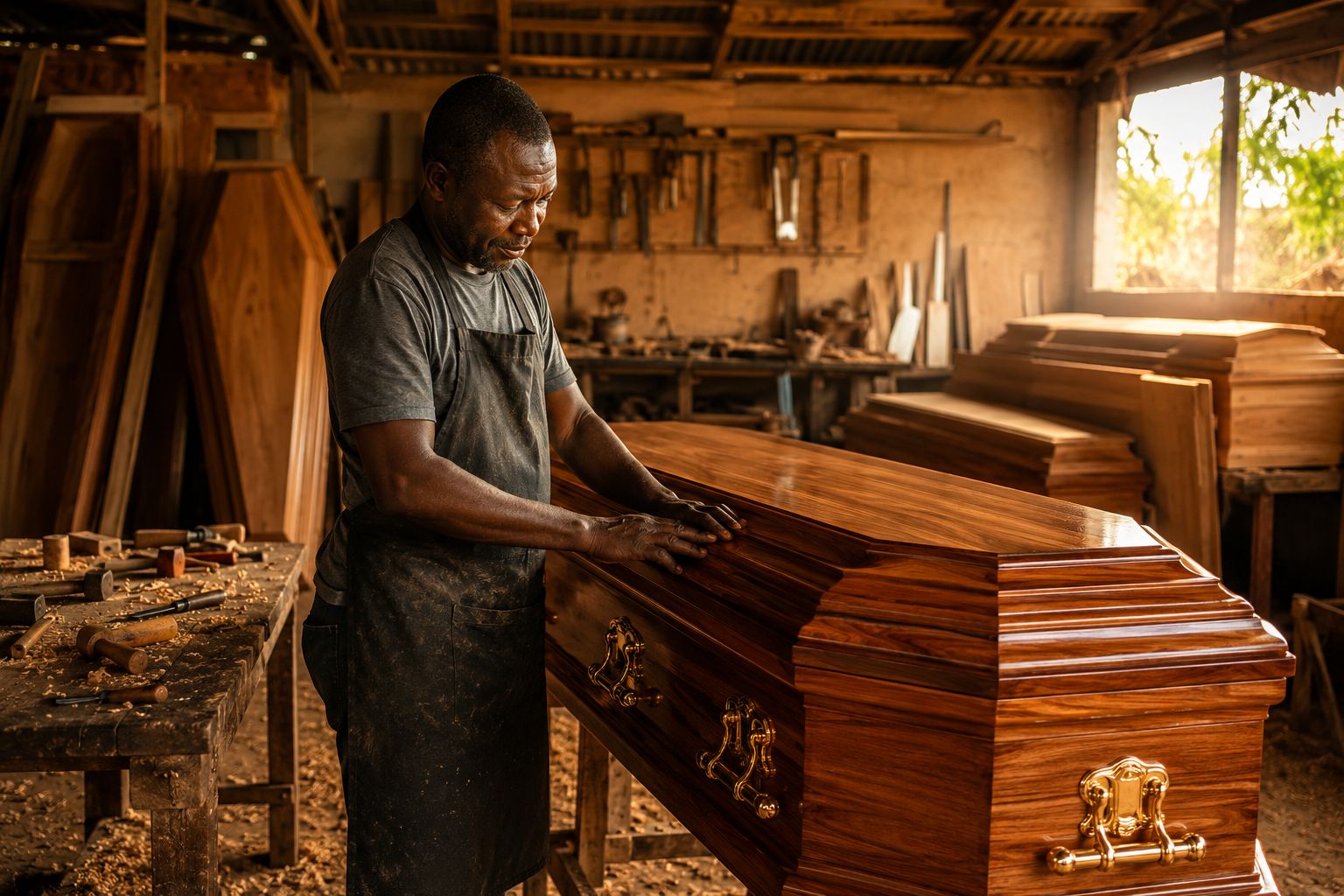
On a particular afternoon, I was passing by a coffin maker’s shop. There were several coffins displayed outside. They were very beautiful pieces of work, and I was pretty sure the designer himself would admire the craftsmanship that went into producing them. Looking at them, I couldn’t help but think about the reality they represented. Although no one wishes to leave this world, we all know that one day we will, whether peacefully, joyfully surrounded by loved ones, or through sadness and pain. It is simply one of the unavoidable truths of life.
As I watched the owner check around his work, inspecting the coffins with care and attention, something came to my mind. It made me realise that we all need each other in one way or another. Every one of us renders a service to someone else. There is a purpose for each person in this world, and within the system we all live in.
The coffin maker depends on people needing his service before he can earn a living. In the same way, a mechanic depends on cars developing faults for customers to come for repairs. A trader depends on people running out of foodstuffs or household items so they can come back to buy more. The cybercafé owner depends on people having documents to print or forms to process. The programmer depends on clients needing websites, applications, or technical solutions.
As I thought about it more, I realised that this pattern exists everywhere around us. The teacher depends on students. The doctor depends on patients. The farmer depends on consumers. The transport driver depends on passengers. The barber depends on people needing haircuts. Everyone is connected to someone else’s needs.
While the mechanic doesn’t hope for accidents in others, nor does the doctor hope for sickness, their professions exist because certain needs exist in society. Their skills become useful when those needs arise.
That was when I concluded that we all need one another, directly or indirectly. Every occupation, no matter how small or big it may seem, contributes something valuable to the lives of others. We all render services in different ways, and because of that, every honest profession deserves respect.
Just because someone is selling tomatoes by the roadside, repairing vehicles, pumping tyres, sewing clothes, or fixing electrical appliances does not mean they lack a business. Whether we choose to acknowledge it or not, we are all running our own businesses in one form or another. Some may be large, some may be small, but they all provide value to someone.
What is even more interesting is how the chain of dependency happens. Your customers today may become the mechanic you need tomorrow. The mechanic may become a customer of the farmer. The farmer may become a customer of the trader. The cycle keeps moving, connecting everyone.
Our society functions in a cycle like that. Each person plays a role that supports another person. Remove one part of the chain, and the effect is felt elsewhere. No matter how independent we think we are, none of us truly stands alone. Once we understand that we need one another, we begin to understand how important it is to behave responsibly and treat people well. We should be careful how we speak to others and how we conduct ourselves because we never know where life may bring us tomorrow.
The person you ignore today may become your customer tomorrow. The person you offend today may be the one whose service you need tomorrow. The person whose work you look down on today may one day be in a position to help you. All it takes is for one person to offer a service that another person needs, and from there, a chain of dependence is created.
Whether we choose to believe it or not, we all need each other for survival. We are connected through the services we provide, the value we create, and the needs we help to meet. Life keeps reminding us that no work is useless and no person is without value. We are all part of the same cycle, helping one another move forward, even when we do not realise it.