Features
Which African Football Legends and Icons Never Won the AFCON Title?

In football, there are different metrics to measure a player’s legendary or iconic status. It could be goals they score for their clubs and countries, or trophies or individual achievements. In most cases, goals are often the determinants because goals are the most important things in a football match. Some players, despite how many trophies they win for their clubs, will forever be remembered for their goals, like Cristiano Ronaldo, Erling Haaland, Yakubu Aiyegbeni and others. Some are also accorded the legendary status for their style of play, bringing new skills and dynamics to football. Ronaldinho Gaúcho and JayJay Okocha come to mind here.
However, in Africa, what seals the legendary status for an African footballer is not only the goals or trophies (which are very crucial), but also how much visibility and impact the player has brought to their country. It sometimes doesn’t matter how long the player has played for their country, but longevity is also a great metric for legendary status.
Meanwhile, the most coveted football prize on the African continent is winning the African Cup of Nations (AFCON). Any African player who wins the AFCON will always be remembered as part of the squad that made their country proud on the biggest African football stage. Sadio Mane sealed his status as a Senegalese legend when he won the AFCON with Senegal in 2021. So winning the AFCON is a great deal, and many African players, especially those who are already doing great across Europe and have brought visibility to their countries, hope to win it someday.
There are many African football icons who have yet to win the AFCON despite their significant contributions to their countries. It has been the one prize that consistently slipped through their fingers, even as they carried their nations on their backs and elevated African football on the global stage.
Though these players are not remembered less because they never lifted the trophy. In many cases, they are remembered more for the weight of expectations they carried and the pride they inspired back home. Here are some of Africa’s most iconic footballers who, despite illustrious international and club careers, never won the Africa Cup of Nations.
Didier Drogba (Ivory Coast)
Didier Drogba is more than a footballer in Ivory Coast. He is a national symbol. As captain, he led a golden generation filled with stars but faced heartbreaking AFCON final defeats in 2006 and 2012. Beyond goals, Drogba’s greatest legacy may be how he helped unite a country during conflict, using football as a bridge for peace. Not winning the AFCON does not diminish his status; it simply shows how tough the tournament is.
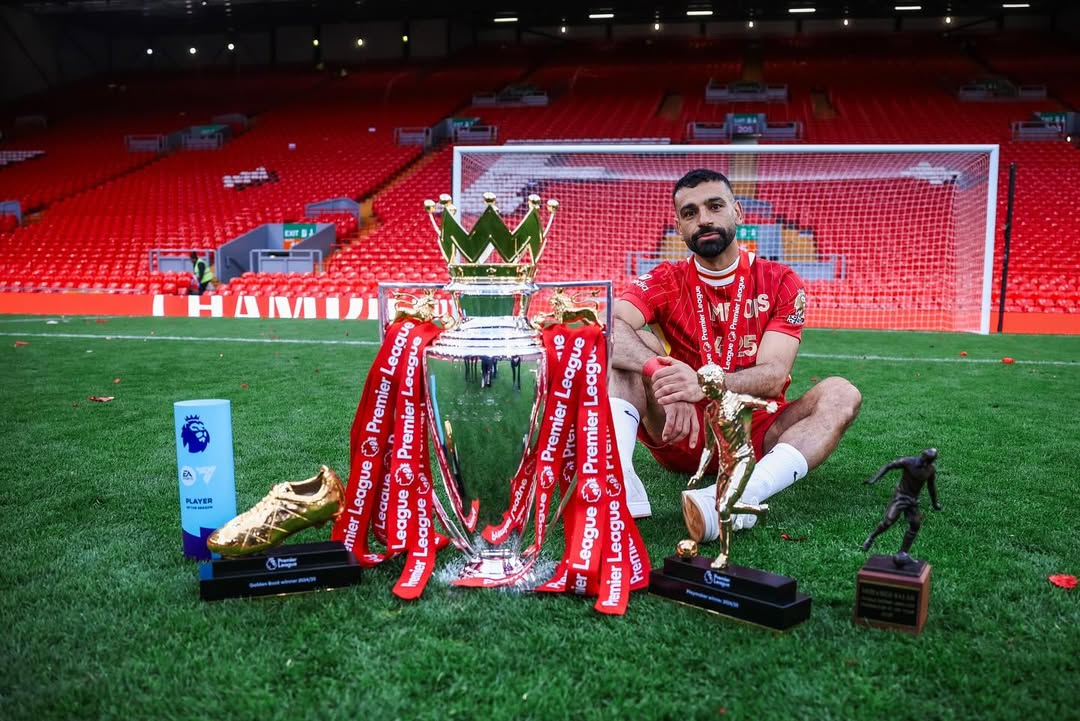
Mohamed Salah (Egypt)
The Egyptian kind. Mohamed Salah is arguably the most globally visible African footballer of his generation. His success in Europe has turned Egypt into a permanent presence in world football conversations. Despite Egypt being AFCON’s most successful nation historically, Salah’s era has yet to deliver the ultimate prize, making his international story one of near-glory rather than fulfilment. He has reached several AFCON finals but just hasn’t won it yet.
Asamoah Gyan (Ghana)
Asamoah Gyan is one of the AFCON’s all-time top scorers and the all-time leading goalscorer of the Ghana national team. Gyan was the face of Ghanaian football for over a decade. He is one of the top African goal scorers in the history of the World Cup. His goals carried Ghana through multiple tournaments and unforgettable moments. He did not win the African Cup of Nations till he retired in 2023.
George Weah (Liberia)
George Weah’s career defies conventional measurement. As Africa’s only Ballon d’Or winner, he put Liberia on the global football map almost single-handedly. Despite his career inspiring generations and reshaping how African players were perceived worldwide, with limited national team resources, AFCON success was not achieved.
Pierre-Emerick Aubameyang (Gabon)
Aubameyang carried Gabonese football for years, scoring goals across Europe and captaining his country with pride. While Gabon never went deep enough at AFCON to challenge seriously, Aubameyang’s influence in raising the country’s football profile is undeniable.
El Hadji Diouf (Senegal)
Before Senegal’s AFCON win in 2021, El Hadji Diouf was the nation’s loudest footballing voice. A two-time African Footballer of the Year, he led Senegal to their first AFCON final in 2002. His flair, confidence and fearlessness helped announce Senegal as a footballing force, even without lifting the trophy.
Michael Essien (Ghana)
Michael Essien was the engine of Ghana’s golden era in the 2000s. Powerful, disciplined and versatile, he engineered the Black Stars’ dominance on the continent during that period. Ghana reached AFCON finals and semi-finals multiple times, but victory never came. Essien’s legacy is defined by leadership, consistency, and his role in making Ghana a respected football nation worldwide.
Stephen Appiah (Ghana)
Stephen Appiah was the heartbeat of Ghana’s midfield for over a decade. He was known for his leadership and ability to control games. Appiah captained the Black Stars through multiple AFCON tournaments and World Cups. Despite his influence, Ghana never won AFCON during his playing days.
Kanu Nwankwo (Nigeria)
The Papilo. Kanu is one of Africa’s most elegant and accomplished forwards. Beyond his club achievements in Europe, he was a key figure for Nigeria during the late 1990s and 2000s. Though he played in AFCON tournaments and helped Nigeria qualify for multiple World Cups, he never won neither. He will however be always as one of Nigeria’s most decorated player of all times.
Emmanuel Adebayor (Togo)
Emmanuel Adebayor is Togo’s most famous football export and arguably its greatest player. A powerful, athletic forward, he carried Togo through several campaigns, including their only World Cup appearance in 2006. At AFCON, however, Togo’s limited team strength meant Adebayor never reached the podium. Still, he is revered as a national icon, having brought global visibility to Togo and inspired countless young players in a small footballing nation.
Are there other African footballers that should be on this list? Tell us about them.