
Events
Slum2School Africa Commissions the Green Academy in a Lagos Riverine Community
Written by Rosemary Balogun, Researcher, storyteller and author

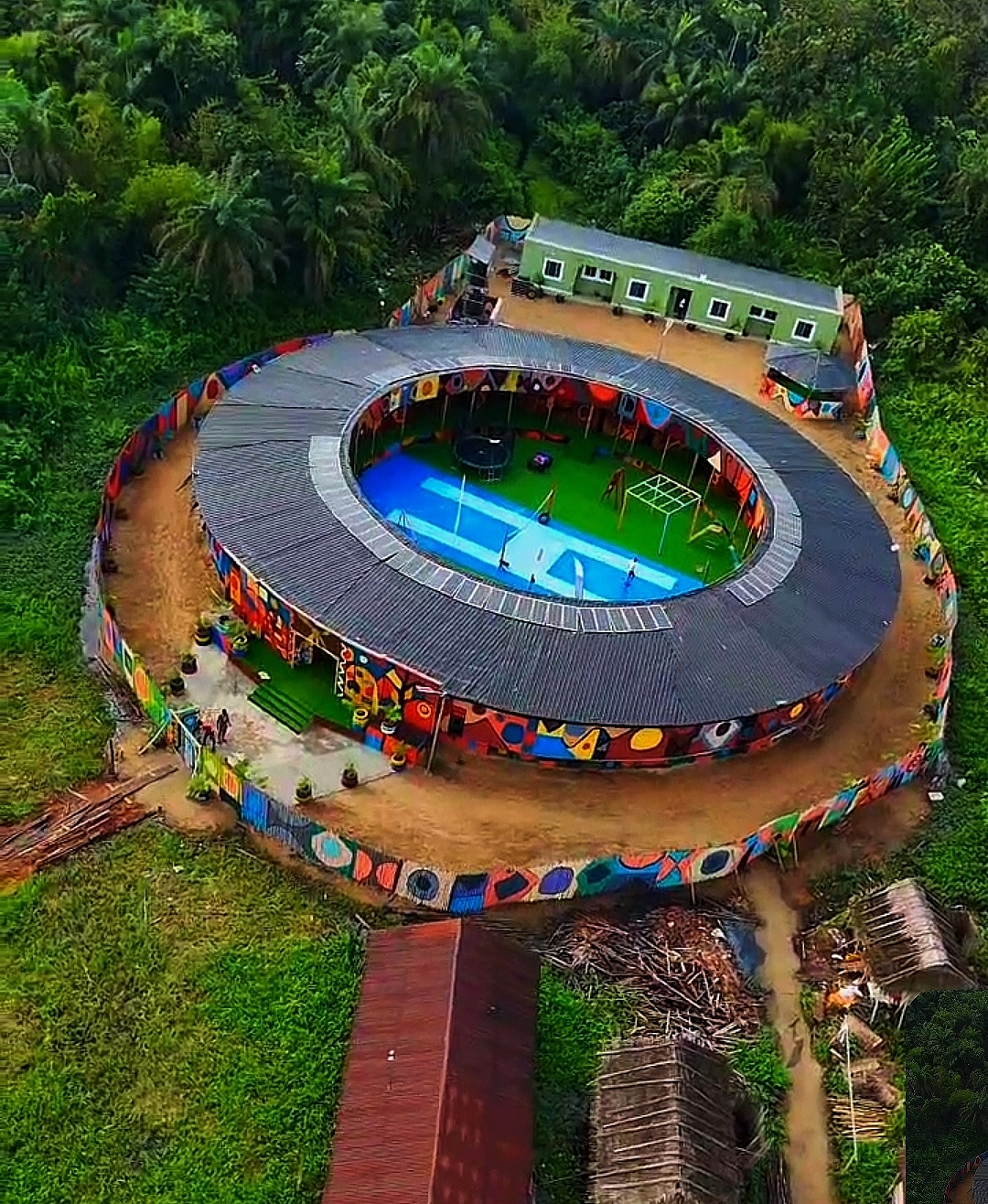
The Slum2School Green Academy ,Saga ,Epe ,Lagos.
On the calm waters of Saga, a riverine community in Epe, Lagos State, a school now stands where many believed one could never exist. Built from bamboo, powered by the sun, harvesting rainwater, and converting waste into clean energy, the Slum2School Green Academy is redefining what quality education can look like in underserved communities. More than a school, it is a living blueprint for how education, sustainability, and community can come together in powerful ways.
A Journey That Began with a Simple Question
For Slum2School Africa, the Green Academy represents the culmination of over a decade of work focused on one enduring question: What would it take for every child, regardless of where they are born, to have access to quality education?
Founded in 2012 by social entrepreneur Orondaam Otto, Slum2School Africa began as a volunteer-driven response to the stark inequalities visible across Nigeria’s informal settlements and riverine communities. Over the years, that response has grown into a Pan-African movement, supporting more than 710,000 children across over 550 communities with education, health, and psychosocial services.
The commissioning of the Green Academy in 2025 marks a bold evolution of that work, bringing together sustainability, technology, and deep community ownership into a single, transformative model.
The Crisis That Demands Innovation
Nigeria is home to one of the world’s fastest-growing populations. Yet behind this demographic growth lies a sobering reality: over 20 million children are currently out of school, many of them living in riverine, rural, or informal settlements where weak infrastructure, poverty, and climate vulnerability make learning difficult.
For Otto, the crisis was never abstract. A visit to Makoko in 2011 exposed a painful truth: children with dreams but no classrooms, no teachers, and no safe spaces to learn. That moment planted the seed for Slum2School Africa and shaped its guiding belief: every child deserves access to quality education, regardless of circumstance.
The Slum2School Green Academy is the physical expression of that belief.
An Eco-Digital School Like No Other
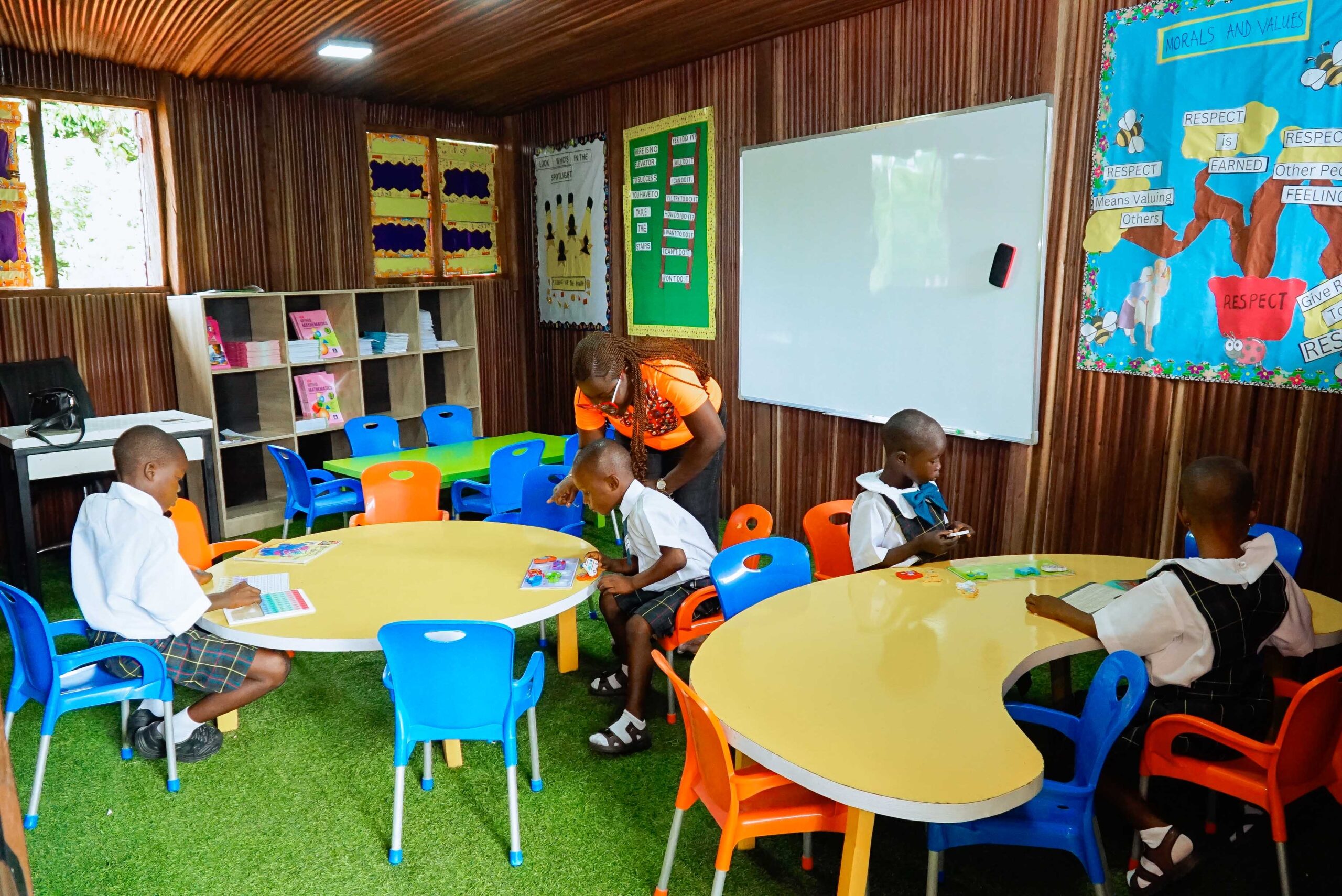
Widely regarded as Nigeria’s first fully eco-friendly, climate-resilient green school, the Slum2School Green Academy was designed to respond to real environmental and infrastructural challenges.
Its circular classroom design reflects African communal values, while bamboo, a fast-growing local material, reinforces environmental responsibility and climate resilience.
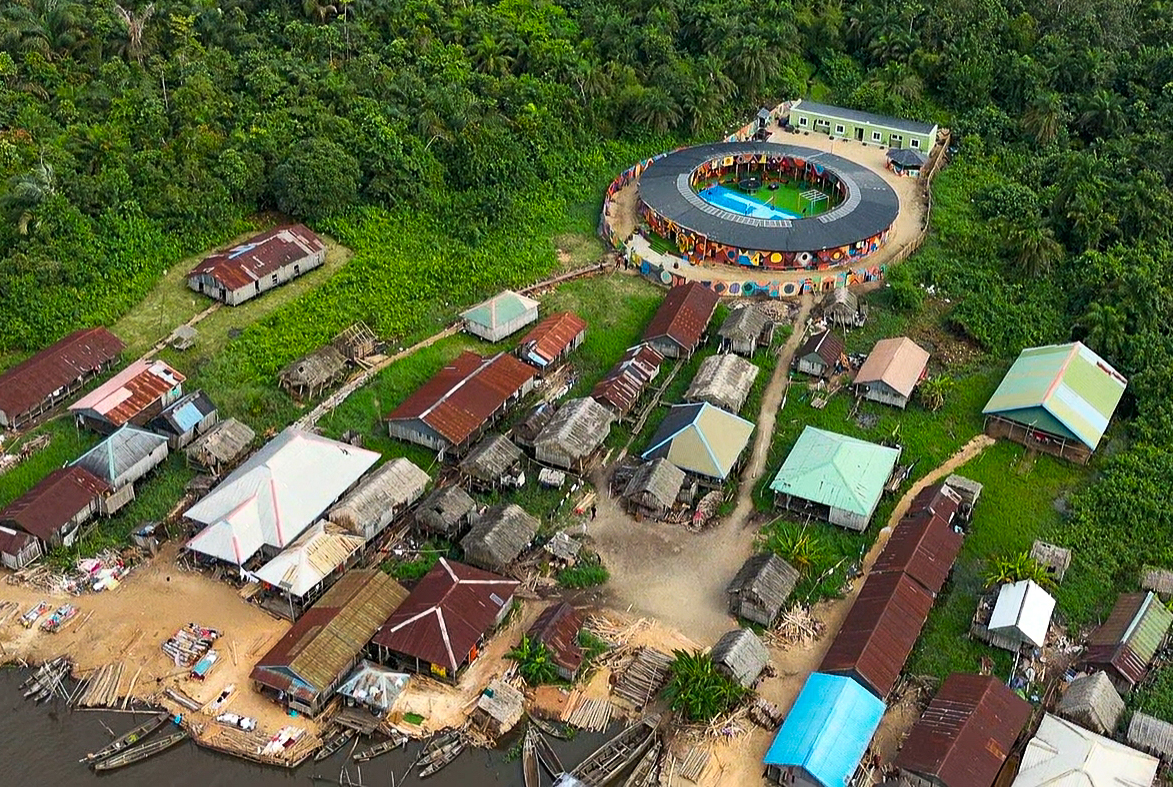
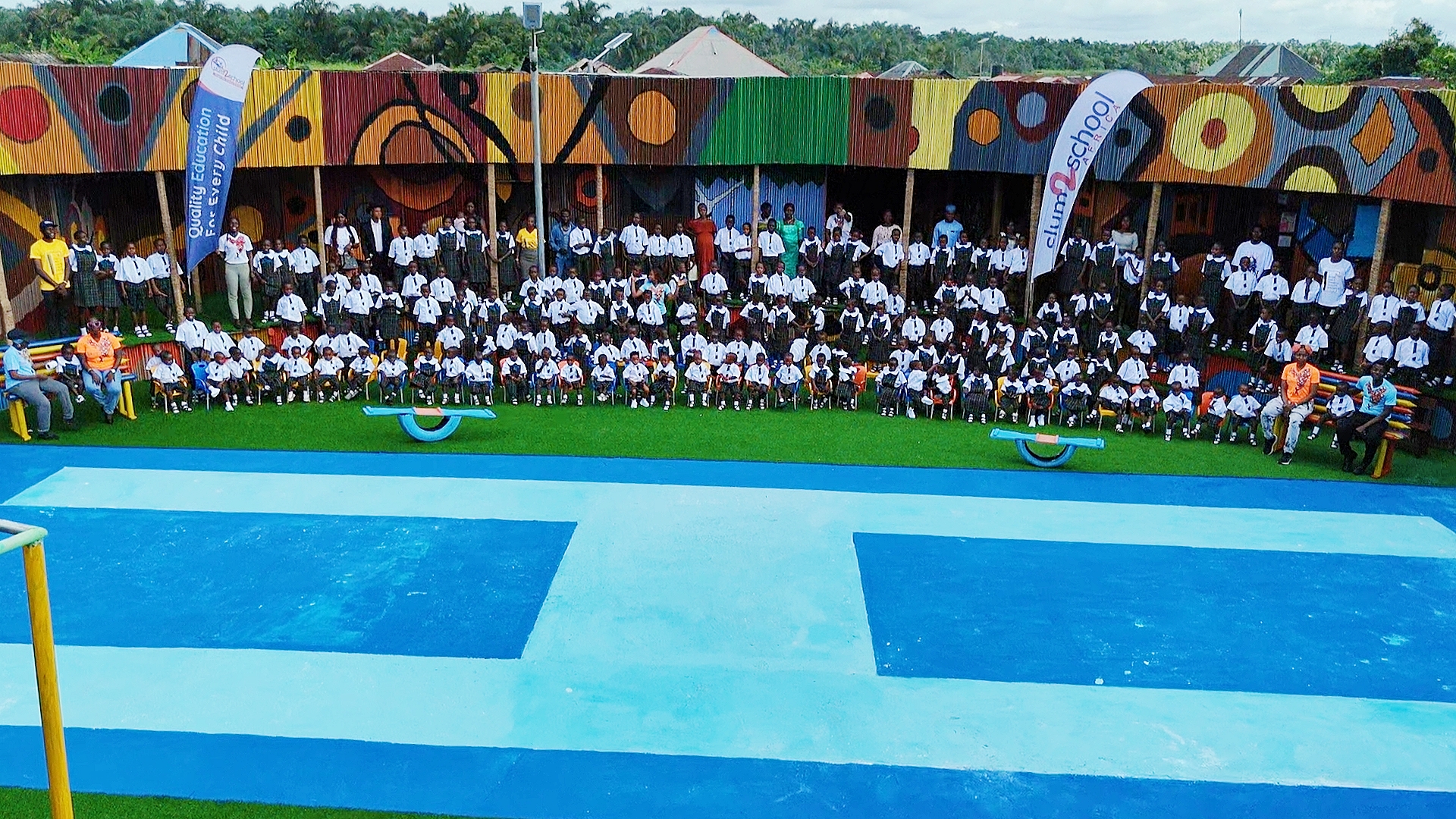
Aerial view of the Saga community and the Slum2School Green Academy
Key features of the Academy include:
- 15 digitally equipped classrooms with teacher tablets, and interactive learning materials.
- A 27kW solar farm powering the entire campus
- Rainwater harvesting and purification systems providing clean water
- Biogas units converting waste into usable cooking gas
- Recreation and biodiversity zones, including a school garden.
- Fully furnished teachers’ quarters, supporting educator retention
- Satellite internet enabling global learning and virtual collaboration
- Remote security systems ensuring child safety
- A mindfulness and psychosocial support centre for holistic development
Designed to serve over 250 children from seven riverine communities, the Academy was built with replication in mind across Nigeria and Africa.
Technology at the Heart of Learning
Technology is woven into every layer of the Green Academy’s approach, building on Slum2School Africa’s award-winning digital learning initiatives. Through a hybrid learning model, students combine in-person instruction with digital lessons, interactive content, and global classroom exchanges. A solar-powered digital lab connects learners to resources far beyond their immediate environment, while teachers receive continuous training in digital pedagogy, supported by Slum2School’s global volunteer network.
This approach ensures that children in remote riverine communities are not left behind in the digital age.
Beyond the Classroom: Educating the Whole Child
At the Green Academy, education extends far beyond textbooks. Learning is structured around seven holistic pillars:
- STEM & Innovation
- Music & Performing Arts
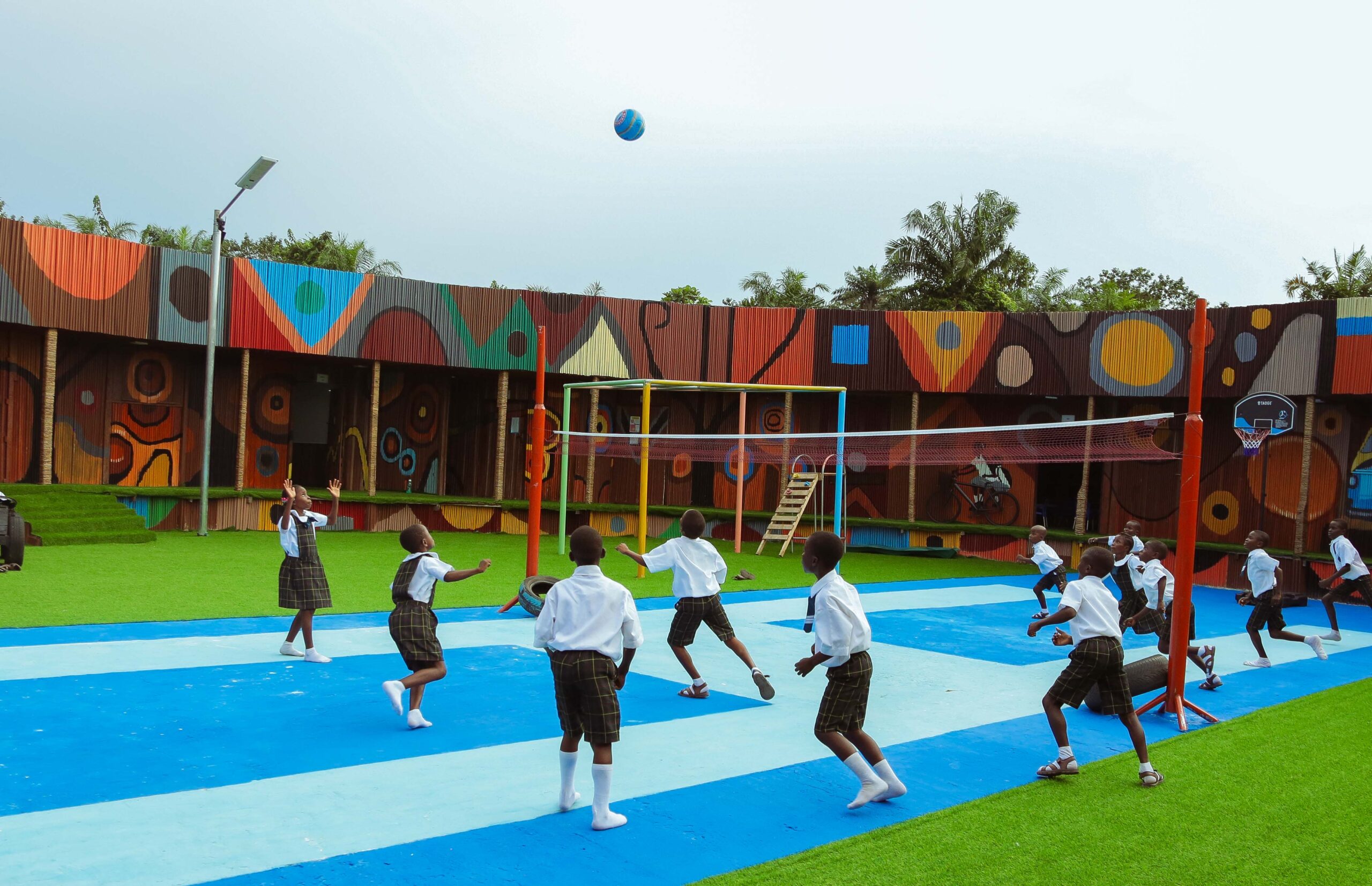
- Sports & Athletics
- Creative and Fine Arts
- Environmental Sustainability
- Home Economics & Entrepreneurship
- Literacy, Public Speaking & Leadership
Learners also receive health services, occasional nutrition, mentorship, and psychosocial support, ensuring they grow not only academically but also emotionally and socially.
“Orondaam Otto, Founder of Slum2School Africa, emphasizes that Nigeria’s demographic future will be shaped not simply by school enrollment, but by the quality, resilience, and relevance of the learning environments children experience. The Slum2School Green Academy was deliberately designed as a long-term infrastructure solution, one that integrates effective learning, climate adaptation, and economic viability. By embedding sustainability and cost efficiency into its core design, the Academy demonstrates that education infrastructure can remain relevant decades into the future. It offers a practical, scalable model that can be adopted by governments, supported by development finance, and strengthened through private sector partnerships, without compromising educational outcomes or equity.”
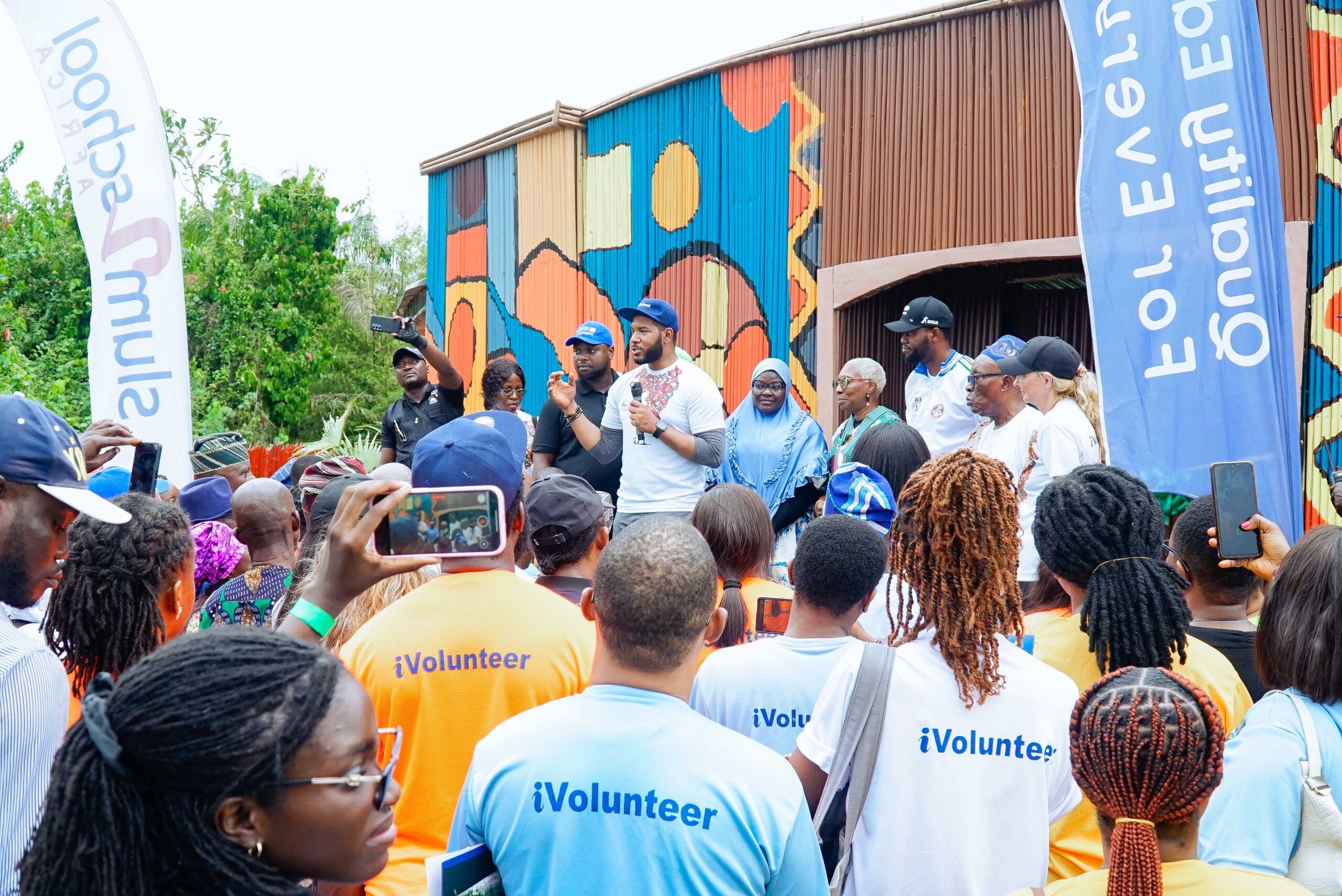
Orondaam Otto , founder of Slum2School Africa , speaking at the launch of the Slum2School Green Academy
Built With the Community, Not For the Community
From conception through construction, the Saga community was actively involved in shaping the Academy. Bamboo was locally sourced, artisans were trained in eco-construction techniques, and parents helped embed cultural identity into the design, with women transforming water hyacinths into raffia used to wrap and finish the wooden structures.
This shared ownership has transformed the Academy into more than a school; it is now a community hub for learning, health outreach, and civic engagement.
Partnerships Powering Impact
The Slum2School Green Academy stands as a testament to the power of strategic partnerships and collective action. The major construction funding was provided by bioMérieux through its Endowment Award, which Slum2School won in 2024, enabling the realization of a climate-smart learning environment in a hard-to-reach community. HP supported the Academy with digital devices and learning tools, strengthening its technology-enabled approach to education, while United Airlines contributed educational materials and logistical support.
Additional partners, including the Norwegian Embassy and Universal Music Group, provided support for Slum2School’s Early Childhood programs, reinforcing the organization’s commitment to foundational learning. Local organizations such as Triton and Preserve Our Roots played key roles in construction, finishing, and playtime integration. Government agencies contributed technical support, while Slum2School’s global volunteer network continues to provide mentorship, funding, skills transfer, and sustained programmatic support.
“Collaboration is our currency,” Otto explains. “With every partner, we multiply impact.”
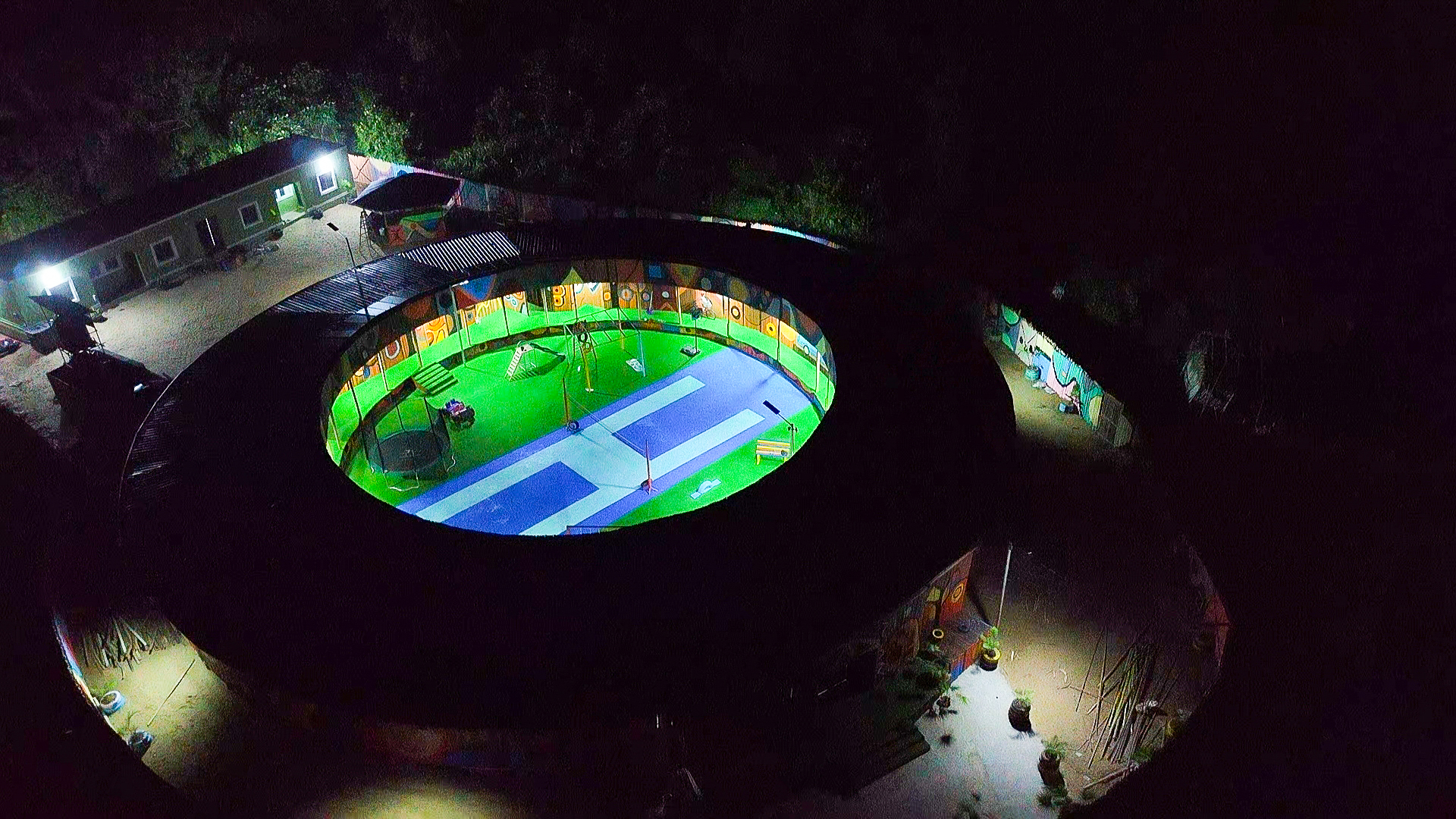
Aerial view of the Slum2School Green Academy at night showing the solar-powered campus
A Moment That Captured the Nation’s Attention
Since images and videos of the Green Academy began circulating online, reactions have been overwhelmingly positive. Many viewers have described feeling inspired, emotional, and hopeful after seeing the quality of the school and the joy on the children’s faces.
One such video, shared by Orondaam Otto on Instagram, has sparked widespread conversation and admiration.
You can view the post here:
Looking Ahead:Scaling Across Africa
While Saga hosts the first Green Academy, the vision extends far beyond one community. Slum2School Africa plans to replicate this eco-digital, community-driven model across Nigeria and other parts of Africa, particularly in riverine, rural, and hard-to-reach regions where traditional school infrastructure often fails.
From the Niger Delta to lake communities in East Africa, the Green Academy offers a scalable solution rooted in local realities and aligned with global priorities, including the UN Sustainable Development Goals, especially SDG 4 (Quality Education), SDG 7 (Affordable & Clean Energy), and SDG 13 (Climate Action)
As the Academy welcomes its first full cohort of learners, Slum2School Africa extends an open invitation to partners, volunteers, and supporters: every child who walks into this school carries the dreams of a continent.
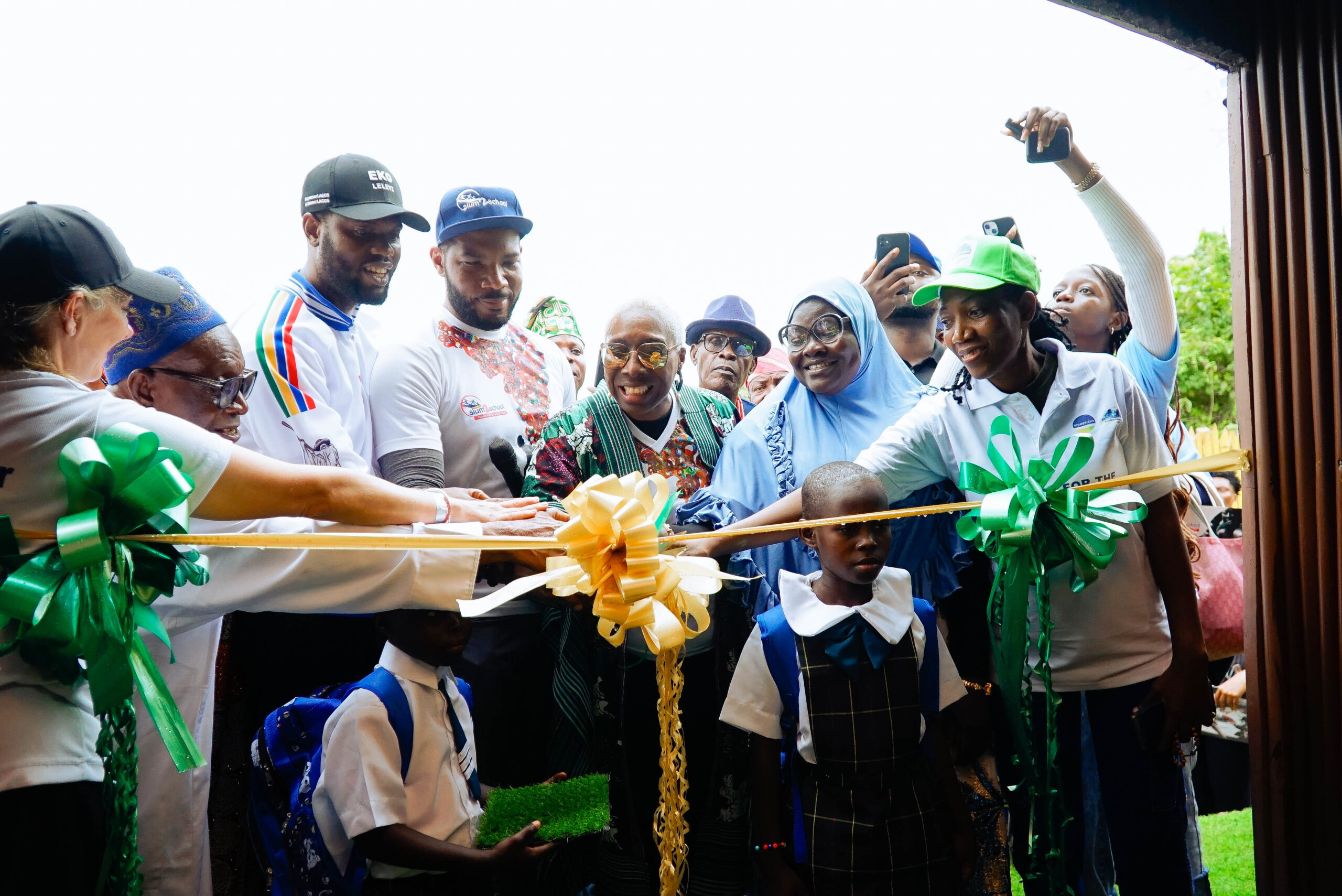
Various partners and volunteers at the commissioning of the Slum2School Green Academy

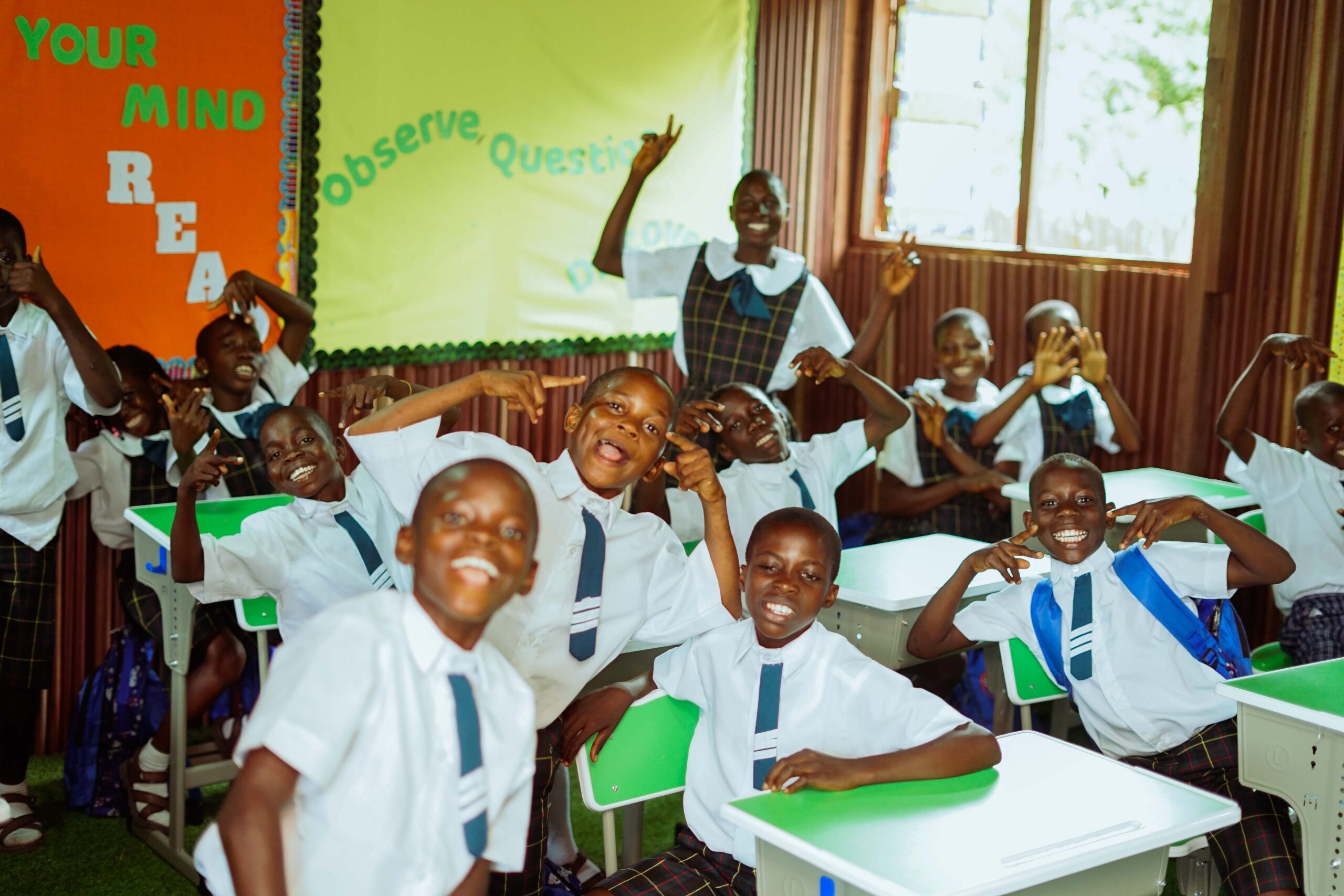
A bright learner in grade 4 at the Slum2School Green Academy
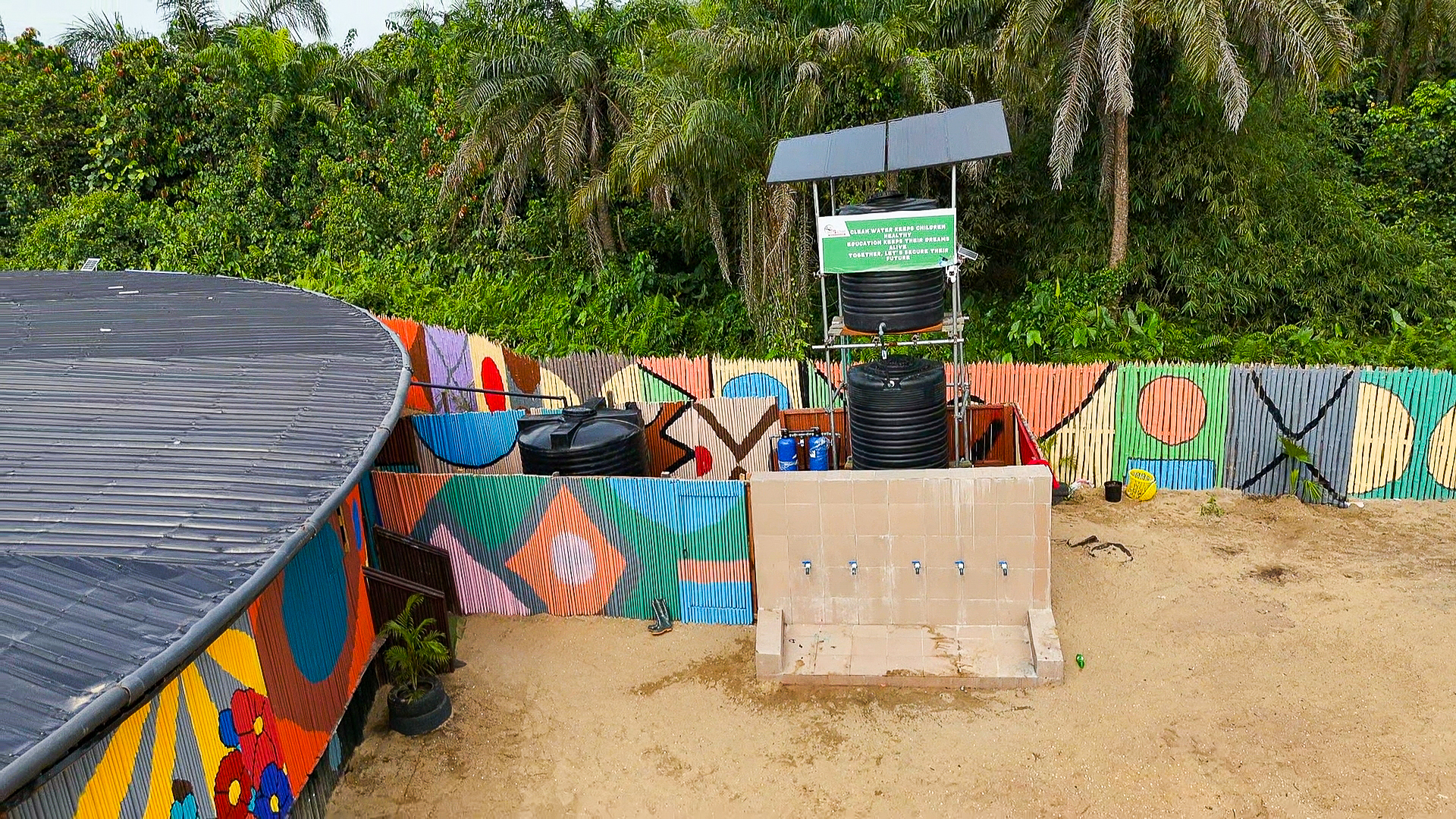
Aerial view of the solar powered water borehole with rain water collection technology

A learner at the Slum2School Green Academy , exploring virtual reality
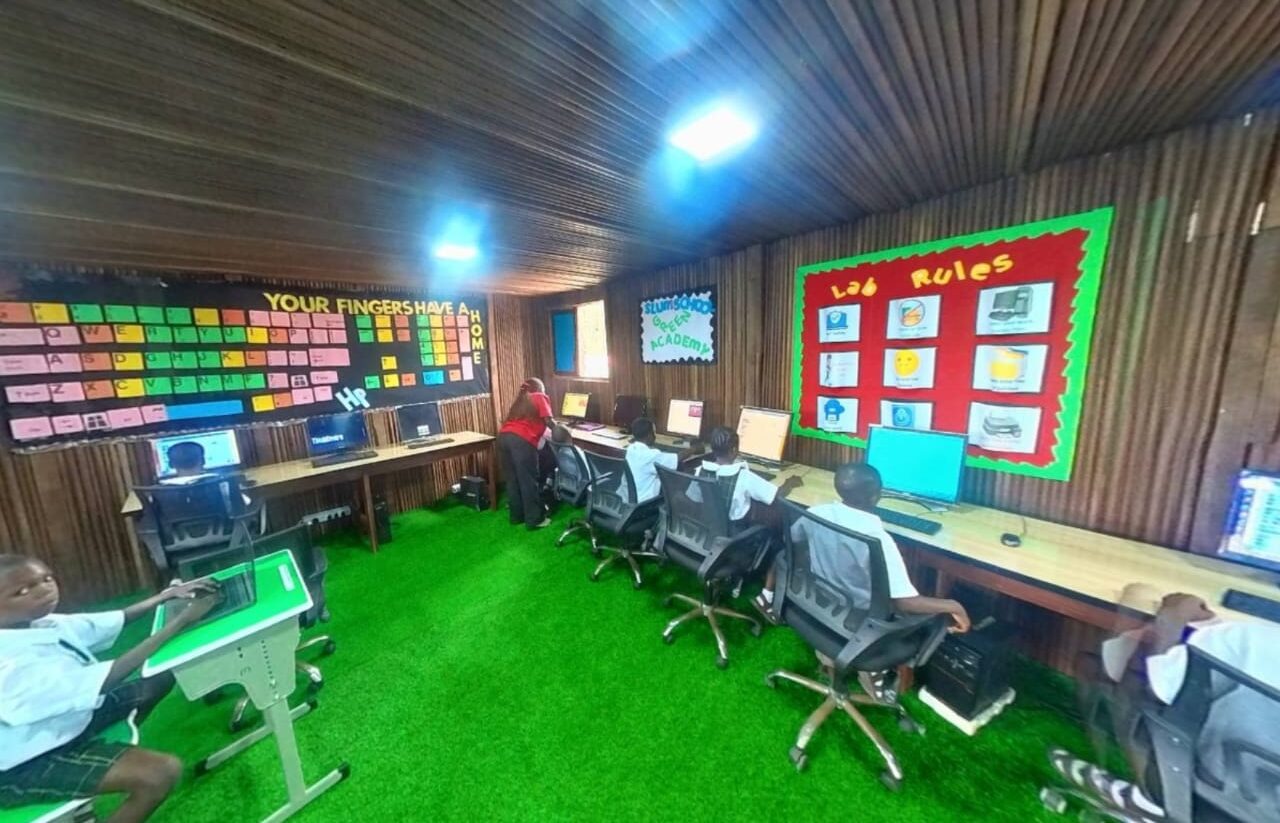
A Digital Lab at the Slum2School Green Academy
BellaNaija is a Media Partner for Slum2School Africa