Features
Dayo Akinbode: Why Moving Across West Africa Still Feels Impossible For Africans

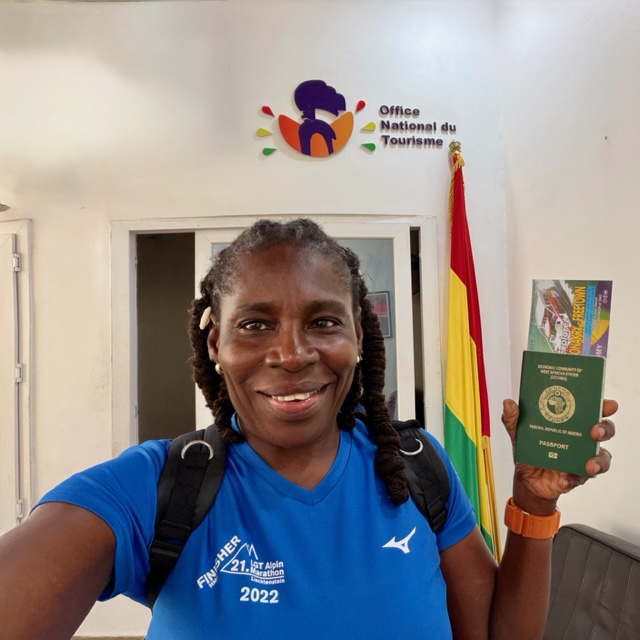
Some journeys look effortless on the map with a simple line between two neighbouring countries. These journeys, however, become unexpectedly complicated the moment you attempt to work on the logistics. My recent trip from Conakry in Guinea to Freetown in neighbouring Sierra Leone proved just how easily such a seemingly simple journey can become complicated.
I had just travelled from Conakry in Guinea to Freetown in Sierra Leone. These are two capital cities of neighbouring West African countries separated by roughly 300 kilometres. Close enough to feel like cousins but far enough to remind you that in Africa, proximity does not always mean accessibility. Naturally, the quickest way to travel from one capital city to a neighbouring capital city ought to be a brief hop through the skies. A short flight that lifts you and sets you down before you have even settled into your seat. That was my first thought, but reality had other plans.
Checks showed that if I wanted to fly between these two capitals, I would have to travel north to Casablanca in Morocco with Royal Air Maroc Airlines, essentially flying to North Africa before coming back down to West Africa. Other options required long layovers in Abidjan, Lomé or Banjul.
Imagine stepping out of your house, only to drive through three different countries before returning to the house right next door. That was exactly how this journey felt. That simply made no sense. I sat with that frustration for a while, staring at the map as if the map might suddenly rearrange itself out of pity. Flying felt like going around the world to greet someone across the fence. So I turned to the road option, hoping that the road option would offer something more reasonable. By road, the journey could take about 6–8 hours, possibly even faster and at a fraction of the cost of a flight ticket. There was comfort in that possibility. I could imagine the wheels of the vehicle rolling smoothly along open highways, the landscape shifting from one country to another.
But then reality tapped me on the shoulder as I remembered I was in West Africa and quickly put on my thinking cap. Yes, I could gain precious hours on the open road with the wind in my face and still lose all of the saved hours at a stubborn border post with endless waiting for documentation processes, which would include questioning and stamping. There is also the unpredictable amount of time that will be spent at the motor park whilst waiting for the taxi to fill up. For clarity purposes, the bush taxi is our beloved West African vehicle, which will only commence the journey when every seat is filled. I could feel the joy of making good time on the highway, only to lose every minute gained at border crossings or even while sitting on a wooden bench in the motor park, watching life happen around me but not for me.
So there I was, stuck in limbo. Between the promise of speed and the uncertainty of delay. Between hope and the weary knowledge that in this part of the world, time does not always belong to one. The thought of the complexity of moving between two geographically close countries weighed me down. I almost surrendered to frustration. Then I discovered something that felt almost revolutionary. The SeaCoach.
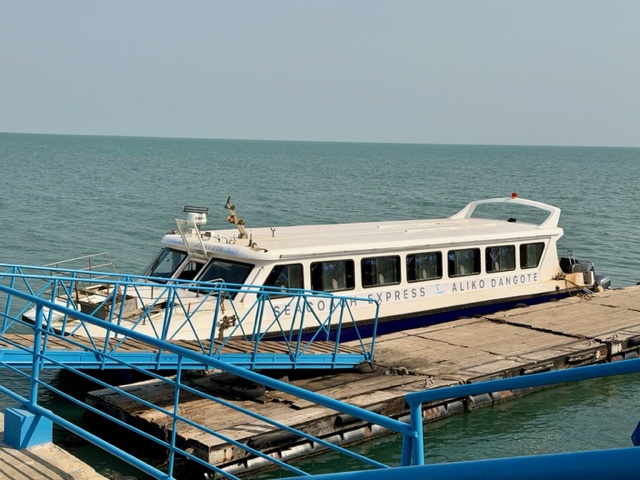
The SeaCoach is an organisation that operates a boat service directly between Conakry and Freetown three times a week, with a sailing time of just four hours. At last, practical thinking appeared to have found its way into West African travel. I went straight to the Conakry SeaCoach office to make enquiries and was pleasantly surprised by the simplicity of the process. There was no need for booking. “Just arrive an hour before departure, purchase your ticket, complete the documentation and board,” I was told.
Choosing this mode of travel felt like the easiest decision I had made all week. The SeaCoach felt like clarity after chaos. On the morning of departure, I packed my bags and checked out of my hotel room. This was what I needed: a smooth four-hour sail, and I would be in Freetown. I approached the receptionist with confidence and asked her to please call me a taxi to the SeaCoach office. She burst out laughing. I stood there, slightly puzzled. “Why are you laughing?” I asked. “You are too early,” she said, still smiling. “No one will attend to you until one hour before departure.”
Too early? After all my mental calculations about borders and bush taxis and wasted hours, here I was, too early. “You can relax in the lobby,” she said kindly. “I will call you a taxi at the appropriate time.” So I sat down. For the next two hours, I watched life move gently around me in the hotel lobby. Some guests are checking in, others are checking out. Staff moving about with quiet efficiency. And there I was, suspended between departure and patience.
The first stop was the ticketing office. Only after purchasing a ticket was I directed to immigration. In my opinion, immigration checks should come before ticket sales to prevent passengers from losing money if their documents are not in order. I watched two people already holding tickets that were neither refundable nor transferable, turn back at immigration. Systems may be procedural, but they should never forget to be humane.
A ritual I have observed too many times during my travels played out at the Conakry immigration office. I knew I had not overstayed my visit to Conakry and did not need a visa to visit Sierra Leone. I handed my precious passport to the officer. That small booklet has both opened the world to me and, at times, locked me out. I stood there, calm on the outside and alert on the inside. I watched as the officer flipped through the pages of my booklet. Then, without lifting his head to look at me, he muttered under his breath, “Argent.” I told him I didn’t speak French. Then he whispered “Money” without looking up. I pretended I did not hear what he said. I leaned in and told him to repeat himself. He did. Slightly clearer this time, but still not meeting my eyes. I raised my voice just a little, enough for the air in the room to shift. “What happened to money?”
Silence.
Another officer, perhaps more confident, stepped in to clarify. He explained almost casually that his colleague was asking if I could give something in appreciation of the work they do.
Appreciation. The word hung in the air like perfume, trying to mask something rotten. For a split second, I felt the familiar surge of shock and irritation. I have seen this happen too many times. This scene is annoyingly becoming a routine. An unpleasant routine which shouts corruption. I know how I respond to such requests in my own country, but I began to slowly open my handbag, and I could see the officer’s face light up. Hope flickered in his eyes, and a small smile crept in. He thought the ritual was about to conclude successfully. I brought out my purse. His smile widened. Then I pulled out my debit card. The smile vanished as quickly as it had appeared. He handed me my passport and waved me away as expected. I walked out with my passport in hand and my dignity intact.
Corruption takes two. And I resolved a long time ago that I will not be one of the two. Not because I am naïve. Not because I do not understand how the system works. But because every time we participate, we strengthen the very chains we complain about. They may whisper money. But I will always answer with principle.
The call to board the vessel finally came, and I got all excited when I sighted Aliko Dangote boldly written on the side of the vessel. The name carried weight. Aliko Dangote is no ordinary Nigerian. He is the man who has built empires out of gaps. He is known to step into industries where scarcity lives and turns the scarcity into strength. From petroleum refining to cement, sugar and flour, his fingerprints are all over Nigeria’s industrial story. I have even seen his cement plants beyond our borders. I saw one in the Republic of Congo and another in Cameroon. So what was his name doing on this vessel? Was he the quiet brain behind SeaOcean? Was this another frontier he had decided to conquer? I smiled to myself. Whether or not he owned the boat, the name alone stirred a strange pride in me. I climbed aboard, instinctively reaching for one of the life jackets before I approached the captain to introduce myself. “I am Dayo and Nigerian,” I announced warmly. “I see this vessel has Aliko Dangote boldly written on the outside.” The Captain smiled, and I continued my introduction by saying Aliko is my brother. Success, after all, has many relatives. The Captain smiled politely. I was not sure whether he believed the claim or simply enjoyed my enthusiasm. Either way, I had made my introduction. Only then did I turn to find a seat.
I put on my lifejacket and settled in my seat, and that was when something unsettled me. The Captain had no life jacket on. Neither did the other passengers. They had taken their seats casually, some chatting, some staring at their phones, none reaching for the silvery blue vests stacked nearby.
Strange.
I had been trained differently. In my years working with Shell, safety was not a suggestion. Safety was a culture. The first thing you do immediately you step on a vessel on water is put on your life jacket. The very last thing you do before you disembark is take off your life jacket. No negotiation. No shortcuts. My neighbour looked at me curiously and asked why I was wearing a life jacket when there was no emergency. For me, being on a boat in the Atlantic was already reason enough. Some lessons follow you long after you leave the workplace.
After everyone had settled down, a crew member demonstrated how to wear the lifejackets but did not insist they be worn. She spoke of them as tools for a future emergency. Then she offered free seasickness pills. I collected one immediately. Four hours on the Atlantic is long enough to respect the ocean. The boat was not full, so passengers stretched across seats and drifted into sleep. I slipped in and out of sleep myself. Now and then, I woke up to glance outside.
One of the highlights of the journey was spotting small fishing boats far out in the ocean. I had no idea local fishermen ventured that deep into the Atlantic. Their tiny wooden vessels looked fragile against the vast water, yet they moved with quiet confidence. Africa survives because Africans are brave.
As the sun began to descend slowly into the Atlantic Ocean, a quiet unease stirred within me. Daylight had been our steady, reassuring and familiar companion, but now the sky was softening into shades of amber and bruised purple, and I found myself wondering how the captain would see in the dark? Do boats have headlights like cars? The question lingered longer than I cared to admit. Out at sea, darkness feels different. Darkness at sea is not only the absence of light, but darkness at sea is also depth, distance and mystery all at once. My eyes searched the horizon, trying to measure how much of the day we had left.
Then, almost on cue, the cabin lights flickered on. A warm glow filled the interior, pushing back the growing shadows. The hum of the engine remained steady. No alarm. No panic. Just quiet confidence. And then I saw them. Faint, scattered lights in the distance. Small at first, like stars that had fallen from the sky and settled on the water’s edge.
Freetown.
The realisation spread through me like relief. The lights grew brighter as we moved closer, forming a sparkling outline against the darkening coast.
I was one of the last people to disembark, and there was already a long queue at the immigration desk. I joined the tail end and observed the choreography. Three officers were behind desks. One flipped through passports, the second lingered longer than necessary with passengers, and the third stamped the passports. When my turn came, I kept a straight face and handed my passport to the first officer. He flipped through the pages slowly, expression unreadable, then passed the passport to the second officer and motioned for me to move to the second officer without even responding to my “Good Evening, sir” greeting. The second officer had a different tactic.
“Do you know JJ Okocha?” he asked me.
I said I did not.
“He is a popular Nigerian footballer. You should know him,” he continued
“I’ve heard of him,” I replied calmly. “But Nigeria is huge with 250 million citizens, and it is impossible to know everyone.”
Then he asked if I liked Jollof Rice.
I responded in the affirmative.
He said he also liked Jollof Rice would like to eat some. I smiled.
He suggested I should give him money to buy some. I brought out my debit card. I was waved to the third officer. The final officer flipped through my passport and prepared to stamp a fresh page. I begged him not to. “I am carefully managing my pages,” I said in a subdued voice, and I still have a few more countries to visit before returning home. He jokingly threatened to stamp everywhere if I did not “do the right thing.” I smiled. I pleaded gently. I appealed to his pride. I flattered him the way African men often respond to. He paused mid-air, flipped back, found a tiny corner on a page already crowded with four stamps, and pressed his mark there. I thanked him profusely. Victory!
Small, quiet victories matter. Beyond immigration, I exchanged some money and hired a taxi to my hotel. Yes, $20 felt expensive for such a short ride, but it was nighttime, and I was tired. Sometimes, peace of mind is worth more than haggling over prices. I had travelled from one West African capital to another—not by air, not by road, but by sea.
In just four hours, I crossed one ocean and two borders and encountered countless lessons along the way. Here’s the irony: we have brilliant African entrepreneurs, billionaires, and individuals with extraordinary resources. Yet, two neighbouring capitals, separated by barely 300 kilometres, lack direct flight connections.
Why must West Africans travel to Europe or North Africa to visit neighbouring countries? Why must trade, tourism, and simple human movement be so complicated? The SeaCoach serves as a glimpse of what is possible when we choose to connect rather than divide.
To the wealthy and powerful across the continent, I urge you to use your resources to foster connections within Africa. Invest in regional airlines, strengthen coastal transport, and build infrastructure that facilitates movement across the continent. We do not lack distance; we lack connection. And it is that connection that will unlock our true potential.