Features
Uche Ikpeazu Discusses His Career, AFCON 2025, Nigerian Roots and Playing for Uganda
“I hope Nigeria goes on to win the tournament.”

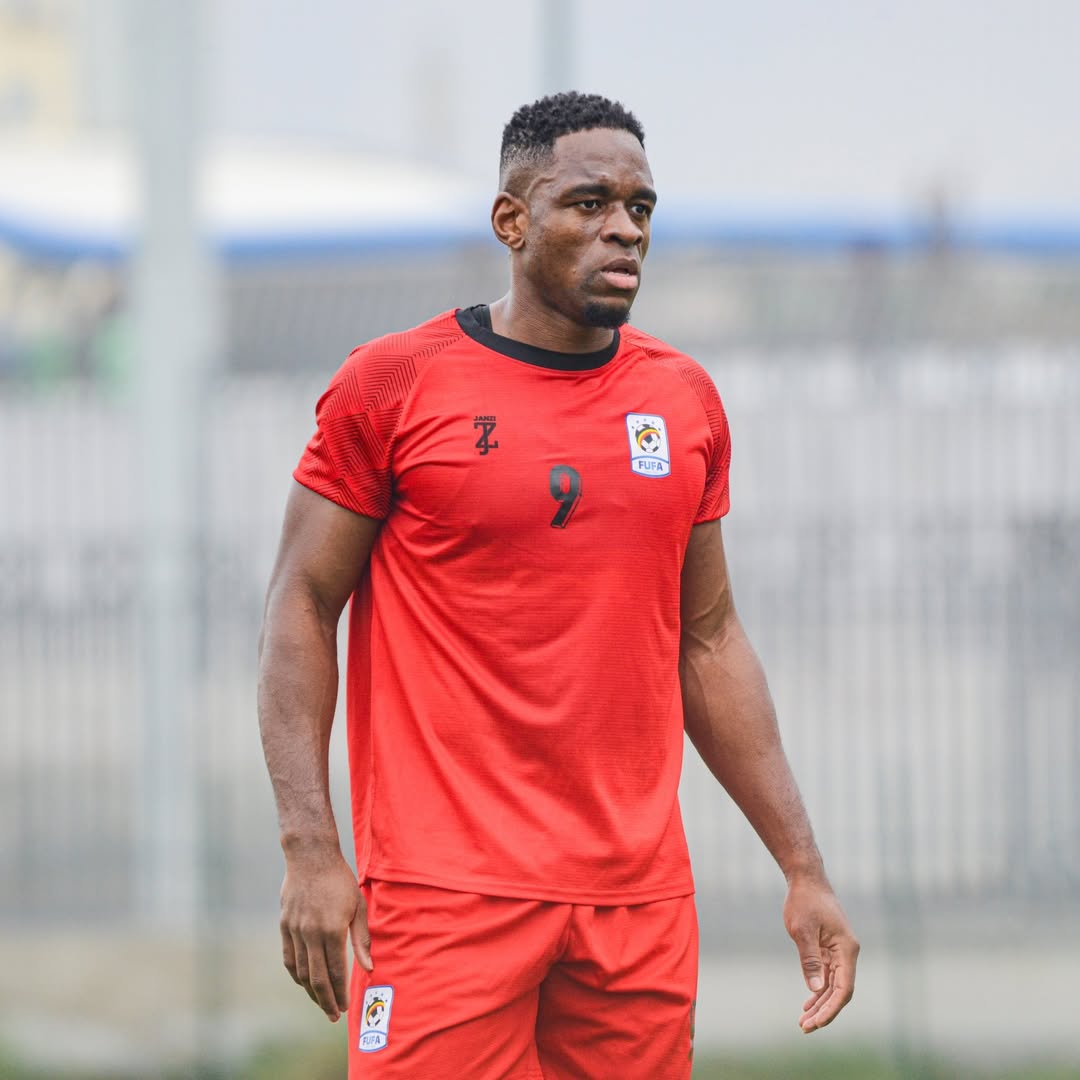
“I think this is the hardest game of my career”, said Uche Ikpeazu in a post-match interview after Uganda, the nation he represents, were knocked out of the 2025 African Cup of Nations by Nigeria in a 3-1 defeat in Morocco. By descent, Uche is Nigerian and Ugandan. He was born to a Nigerian father and Ugandan mother.
In football, national representation is not always defined by birthplace alone. FIFA regulations allow players to represent countries connected to their heritage, through parents or grandparents, provided certain criteria are met. It is a system that has allowed for stories of dual nationals across the game, where, for instance, a player who bears a Nigerian name plays for another country and vice versa.
Uche Ikpeazu was born in the United Kingdom, but being born to a Nigerian father and a Ugandan mother makes him eligible to play for England, Nigeria or Uganda. He was called up to play for Uganda in 2020 but made his full international debut on September 5, 2025, in a 4–0 win against Mozambique. In the current African Cup of Nations tournament, Uche scored the equalising goal in a 1–1 draw with Tanzania, which gave Uganda hope of qualification out of the group if they beat Nigeria. The match should have been a routine footballing rivalry, but it was a moment layered with emotions for Uche.
In this exclusive interview, I speak to Uche about the complexity of carrying multiple identities in international football, his career journey, AFCON 2025, injuries, his faith and identity and what it means to play for Uganda.
Enjoy the conversation.
Hello Uche, how are you doing today?
I’m good, thank you. I had training earlier, so I’m just getting back now. It feels good to be back.
How would you describe your AFCON 2025 experience playing for Uganda?
It was one of the most amazing experiences of my career and my life. Football is a huge part of who I am, and to represent a nation at AFCON is a blessing. I wasn’t playing regular minutes at the club level, so when I got called up, I was buzzing. Most players selected were playing consistently, so just being included meant a lot. I appreciate the trust the coach showed in me.
I believe I had a good tournament individually, regardless of how far we progressed. Scoring in the competition, especially coming off the bench to equalise in a crucial moment, was surreal. I’ve never felt anything like that after a goal.
The feeling was expressed in your celebration. What’s the story behind the celebration?
I’ve actually done that celebration throughout my career. Growing up, I watched AFCON a lot, mostly Nigeria because Uganda weren’t qualifying then. To now play in a competition I grew up watching, alongside players I admired like Didier Drogba, was incredible. Scoring in that moment, for the nation, in such a big competition, was different. It was pure joy.
View this post on Instagram
We were all happy for you. Did you ever consider representing Nigeria before getting the call-up for Uganda?
Yes, there was consideration when I was younger. I remember when I was at Middlesbrough, my agent was contacted about potentially going to a camp, but I was in the middle of signing and doing my medical at the time, so I couldn’t go. There were always hints about Nigeria—I even got called up to one of their youth camps—but as my career progressed, it became harder. Nigerian strikers are very competitive; many play in the Premier League or other top leagues. I believe I had the ability, but opportunities became limited.
I’ve never ruled out playing for either nation. I love both countries equally, but Uganda were persistent. I believe it was God’s timing. I love both countries equally, but representing Uganda has been an amazing experience.
Were you expecting the call-up earlier than it came?
For me, I think it was really about God’s timing. I’ve spoken about it with other reporters as well. With Uganda, I honestly feel like it was divine timing because there were so many moments before when I was called up, and it just never worked out. Three different managers called me up, including Coach Paul Put, and every single time something happened.
Either there was a lockdown, or I picked up an injury, or something else came up that meant I couldn’t go. At the time, it was frustrating, but looking back now, I really believe God knew what He was doing. Eventually, I was able to go, but I feel like God wanted me to come at this specific moment in my life and in my career.
It felt crazy at the time, but I now understand that God stopped me from going earlier for a reason. That’s genuinely how I see it.
Speaking of injuries, I read about your injury layoff. It seemed like a very long and difficult period
It was one of the hardest times of my life, not just my career. I had knee surgery and unknowingly carried an infection for almost 11 months. I was in constant pain and couldn’t recover properly despite seeing top specialists and spending a lot on treatment.
The structure of my knee was fine, but it kept swelling and was hot to the touch. Even basic things like walking were difficult. My life felt paused. It affected me emotionally because football is my livelihood.
Eventually, we discovered the infection, I got the right antibiotics, and I could finally recover. It took a lot of hard work and sacrifice to regain fitness and sharpness, but I persevered. By God’s grace, I’m here today as an AFCON goalscorer.
Well done!
Thank you.
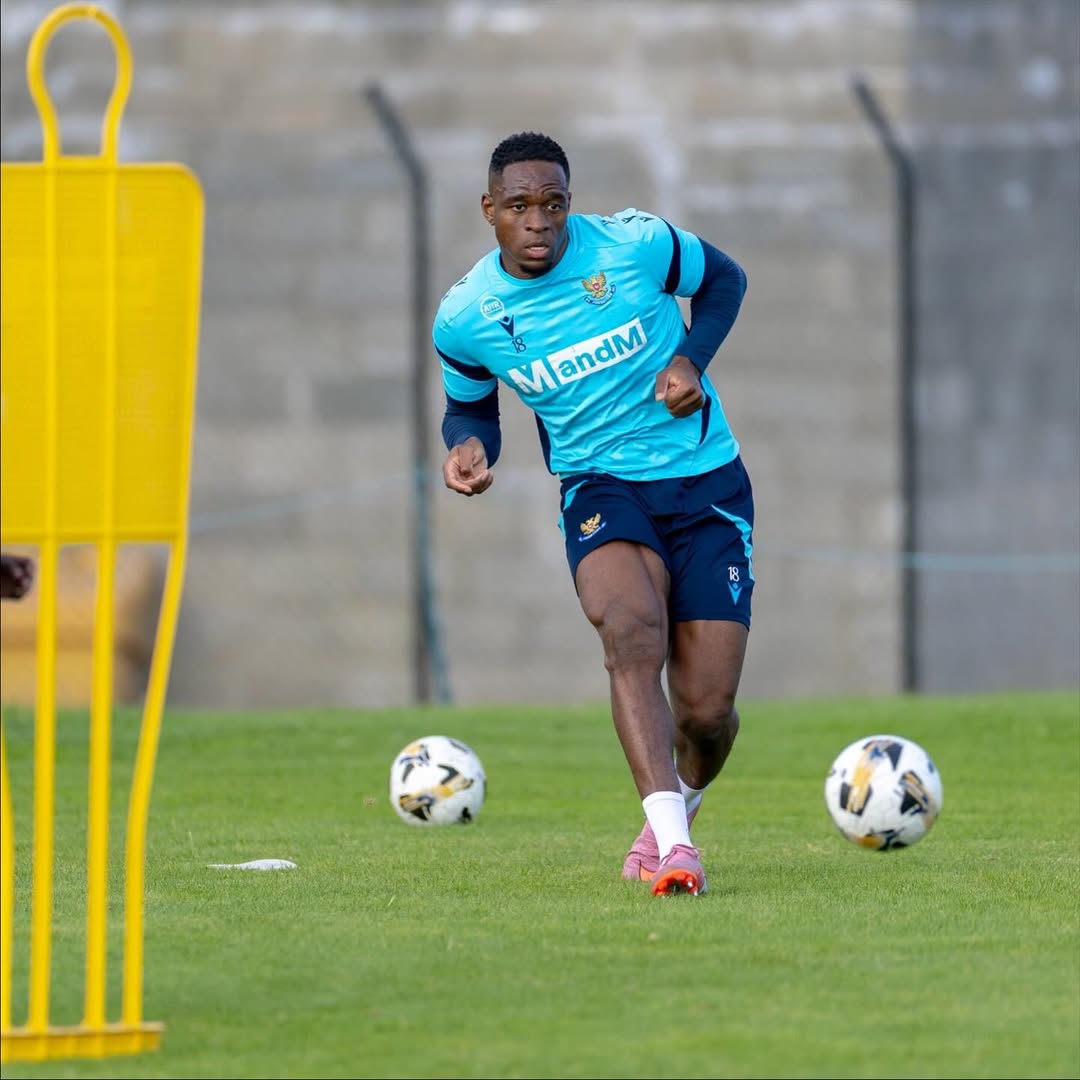
So you’ve played across England, Scotland and Turkey. How do you reflect on your journey?
I’ve done a lot of reflection recently. I may have made some decisions differently in hindsight, but I have no regrets. I never failed, I learned. Playing abroad, especially in Turkey, exposed me to a completely different culture and football environment. It made me a better person and player. I’m still here, still hungry, and still learning.
You talk about constantly improving and evolving. What areas of your game are you still working on?
I’m constantly learning. My positioning and movement have improved, but I want to make smarter runs in behind and sharpen my instincts in the box. No one is a finished product.
One thing that is constant in our conversation is your trust in God. Many footballers are now more open about their faith. Why do you think it is, and what role does faith play in your life?
I think faith goes beyond football, even though we often come back to it because we’re talking about the game. For me, faith really moves mountains. On a personal level, I genuinely don’t know where I’d be without it. When you go through challenges and difficulties in life, you have to ask yourself who you turn to. Everyone faces challenges, and people can get depressed. I’ve had days where I’ve been down on myself. But when you have faith and truly believe in God, you realise there’s more. He gives you an extra layer of strength and helps you persevere.
I always say lean on your faith, not just your own understanding. When I see players like Neymar, some Premier League players, and others like Antonine (Semenyo), who recently moved to Manchester City, who are open about their faith, I find it inspiring. To reach the top level in football, you already need a strong mentality, but when you add faith to that, it’s powerful.
I think it’s amazing that players are now more open about their faith. In the past, people were sometimes hesitant to speak about it, but now it inspires others to say, ‘‘You know what, there is a God.’’ It’s living proof. Seeing footballers lean on their faith and speak openly about it inspires a lot of people, religious or not, and reminds them that there’s more to life than what we see.
A lot of Nigerians are reading this. How was it playing against Nigeria, especially the battle with Calvin Bassey?
First of all, it was amazing to play against such talented players who are performing at the highest levels. Big shout-out to them because getting to that stage is not easy, and I’m happy to see them reach the semi-finals. I also want to give credit to Calvin Bassey—he’s had an incredible tournament. I’ve watched every Nigeria game in this tournament, and he’s been one of the best defenders, locking down most strikers.
To be honest, it was one of the most difficult games for me because we didn’t play as well as we could and were down to ten men. It was a battle for both of us. After the game, we spoke. He didn’t have it easy, and I didn’t have it easy.
I felt like I gave him a run for his money. He’s a top defender, and I really hope he and the team (Nigeria) go on to win the competition. We have a lot of mutual friends, and he’s a great guy as a person. I wish him all the best.
I hope Nigeria goes on to win the tournament.
You must have a lot of love for Nigeria
A lot of people don’t know this, but I actually went to school in Nigeria for a year. I was in secondary school and spent my Junior Secondary Schools at a boarding school in Abuja called Oasis International College, in Lugbe.
That experience was one of the best of my life. When you visit Nigeria on holiday, you don’t always get the full picture, but living there and going to boarding school really opened my eyes. It taught me discipline and helped me understand my culture properly.
My parents were intentional about making sure I experienced both Nigeria and Uganda growing up. That year in Nigeria changed me. When I returned to the UK, I appreciated what I had more and worked harder. It had a positive impact on my life and my football career.
I went back to visit the school in 2020 and reconnected with some of the teachers. Nigerians are hardworking people, and that hustle mentality stayed with me. It pushed me to go harder, and I still carry those lessons with me today.
View this post on Instagram
Oh wow. That’s like a revelation for a lot of people.
I know, right?
Did you speak to the Nigerian squad after the match?
Honestly, I really like the Nigerian squad as well. Of course, I’m happy with Uganda, but after the game I went into the dressing room and had chats with a few of them. I spoke with Victor Osimhen, and we exchanged shirts. They were very complimentary about my performance, and that meant a lot to me.
That’s something I really appreciate about my Nigerian side, too. The togetherness in the team is clear to see. I genuinely wish them the best for the rest of the competition. I really hope they go on to win it because even just being around them, you can see how humble they are. They gave me words of encouragement as well, and it was a really good experience.
I also spoke to Paul Onuachu. He said to me, ‘I’m big,’ and I replied, ‘You’re big as well.’ We just laughed about it. But honestly, they were all really nice and humble. They bigged up my thing and told me I had a good game, called me a good player, and wished me the best.
I really appreciate the love from Nigerians, too. A lot of fans have been messaging me after the game, saying they enjoyed my performance, and that support means a lot to me.
Which Nigerian striker best matches your style?
I’d say Yakubu [Aiyegbeni]. Strong, good hold-up play and great positioning. He’s probably the closest comparison.
Oh, I can see the similarities. Meanwhile, players like Ronaldo and Pepe show that careers can be extended. Do you feel the same?
Absolutely. Longevity is built on discipline. I’m probably in the best physical condition of my career at 30. I don’t drink during the season, I’m strict with my diet, and I understand my body better now. Experience teaches you how to manage yourself on and off the pitch. That’s made a huge difference for me.
Now that Uganda is out of the tournament, what can Uganda take from their AFCON 2025 experience?
We gained valuable experience. At this level, you must stay switched on at all times. Teams like Nigeria and Tunisia punish mistakes instantly. We learned a lot, even though it was harsh. We’re a tight-knit group, and this experience will help us grow.
What message do you have for young players in Nigeria, Uganda, and the diaspora?
Never give up. Believe in your dream and stay disciplined. Millions want the same thing, so your mentality and work ethic must set you apart. I had dreams of playing international football, and they once felt impossible. With perseverance, belief and dedication, it’s achievable. If I can do it, so can you.