
Career
Reykjavík Index 2025 Reports that Nine in Ten Nigerians Believe Women Can Lead Despite Workplace Barriers
The 2025–2026 Reykjavík Index for Leadership reveals that Nigeria’s leadership index has risen to 59, yet workplace equality perceptions have fallen to a five-year low of 55%. While the report shows that 9 in 10 Nigerians support female CEOs—with men driving significant perception gains—representation remains low, and sectors like childcare continue to hold deep-seated biases.

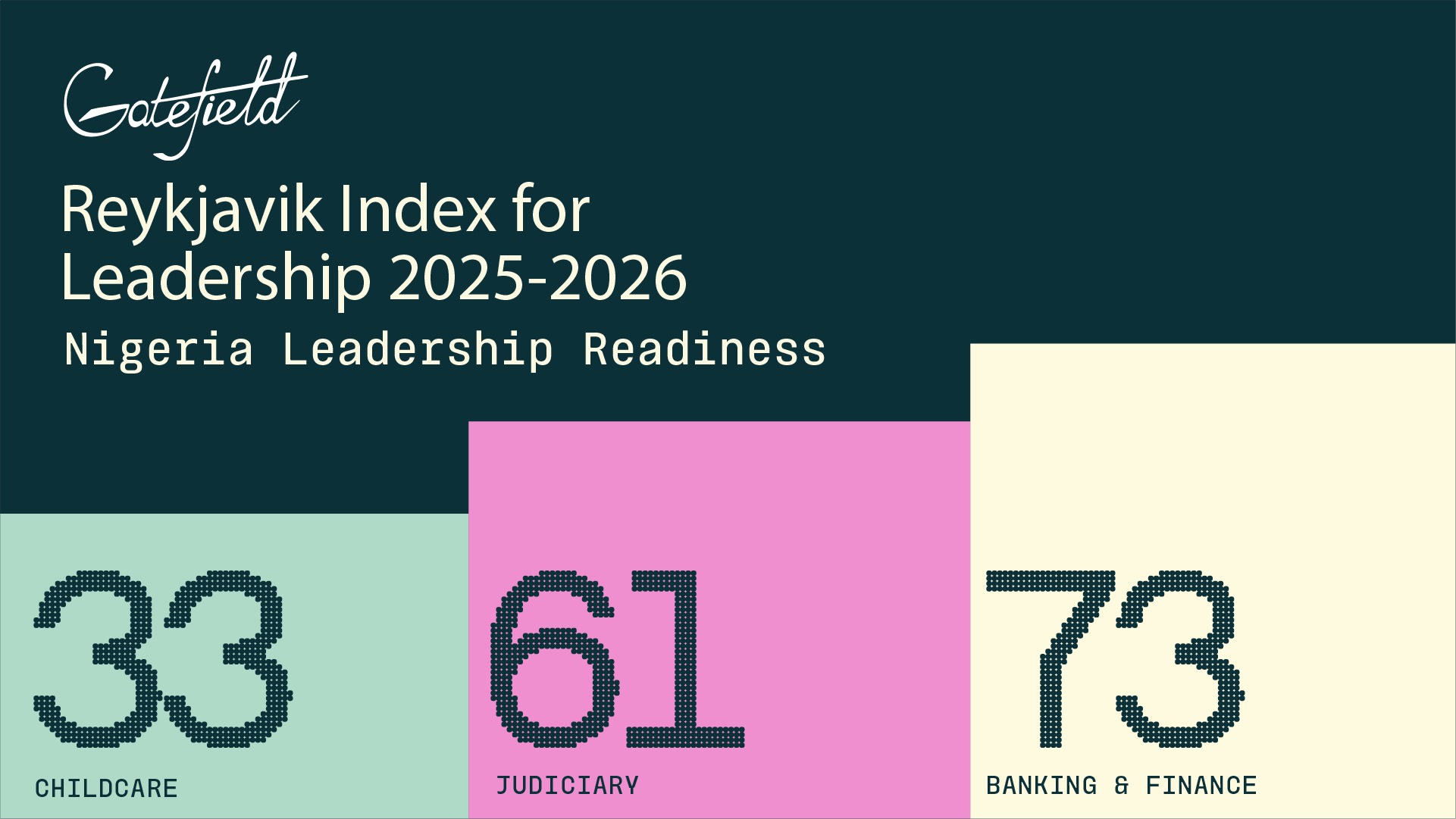
Infographic showing Nigeria’s leadership readiness scores for 2025–2026 across three sectors: Childcare at 33, Judiciary at 61, and Banking & Finance leading at 73.
There’s a clear and encouraging shift in how Nigerians view women in leadership. According to the 2025–2026 Reykjavík Index for Leadership, the majority of Nigerians believe women are capable of leading across business, politics, and other critical sectors. The Index, which tracks societal perceptions of women’s suitability for leadership across 23 sectors, surveyed 1,082 working-age Nigerians aged 18 to 65 and was weighted to reflect national demographics. Nigeria’s overall score rose slightly to 59 out of 100, up from 57 in 2024, largely driven by more progressive attitudes among men.
But beyond this broad optimism, the report unpacks a more layered reality. These are some of the key findings from the report:
High Comfort With Female Leaders, Low Representation
A strong majority of Nigerians say they are comfortable with women in top leadership roles, with 89% open to a woman CEO and 77% comfortable with a woman as Head of Government. Yet, this openness hasn’t translated into equal representation.
“While most Nigerians are comfortable with a woman leading, women occupy only 12% of CEO roles and 4% of National Assembly seats,” said Shirley Ewang, Advocacy Lead at Gatefield. “This highlights a stark disparity between comfort levels and actual representation.”
Men Driving Perception Gains
For the first time since Nigeria joined the Index, the shift in perception is being driven largely by men. While women’s scores held steady at 61, men’s scores rose from 53 to 56, narrowing the gender perception gap from eight points to five. The most notable change came from older men aged 45–65, a group historically seen as more conservative.
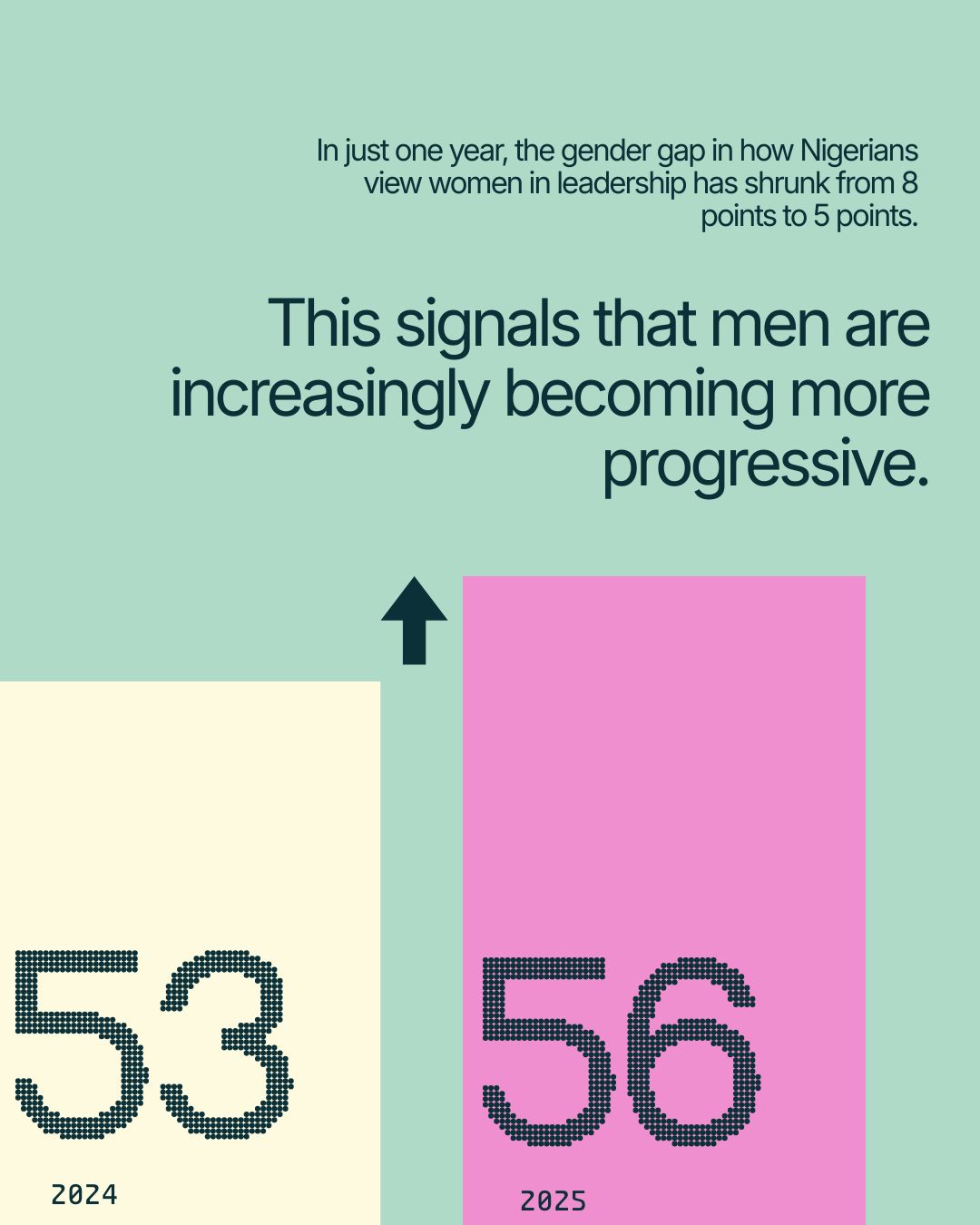
Infographic showing the gender perception gap in Nigeria shrinking from 8 points in 2024 (score of 53) to 5 points in 2025 (score of 56), signalling more progressive attitudes among men.
Workplace Equality Beliefs Hit Five-Year Low
Despite the rise in overall perception, fewer Nigerians believe equality has been achieved in the workplace. That figure dropped from 62% in 2024 to 55% in 2025, highlighting a disconnect between general support for women leaders and the realities of everyday work environments. Interestingly, men were more likely than women to say equality has not yet been achieved.
Childcare Remains the Deepest Bias Stronghold
Across the 23 sectors measured, the Index reveals clear patterns of bias. Banking and finance, education, and pharmaceutical or medical research ranked highest, suggesting stronger acceptance of women in leadership within these fields.
On the other end, childcare ranked lowest at 33, sitting well below every other sector, followed by fashion and beauty and engineering.
“We expect women to carry the burden of care, but hesitate to see them as leaders shaping care systems. When care is treated as private, informal work rather than public infrastructure, women’s leadership in that space is systematically undervalued,” said Blessing Adesiyan, CEO of Caring Africa.
At the same time, there were notable gains in traditionally male-dominated industries, with aerospace and automotive manufacturing seeing some of the biggest improvements.
Family and Upbringing Shape Leadership Views
When it comes to what influences how Nigerians see women in leadership, family and upbringing top the list at 30%, followed by education (18%) and personal experience (16%). Media and religion each account for 9%, with no major differences between men and women.
Nigeria Near Germany, Below G7 Average
Globally, Nigeria’s score of 59 places it just below Germany (60) and ahead of Kenya (56), but still below the G7 average of 68. Iceland continues to lead with a score of 86, while the G7 average has dropped to its lowest level since 2018, pointing to a broader global shift in perceptions.
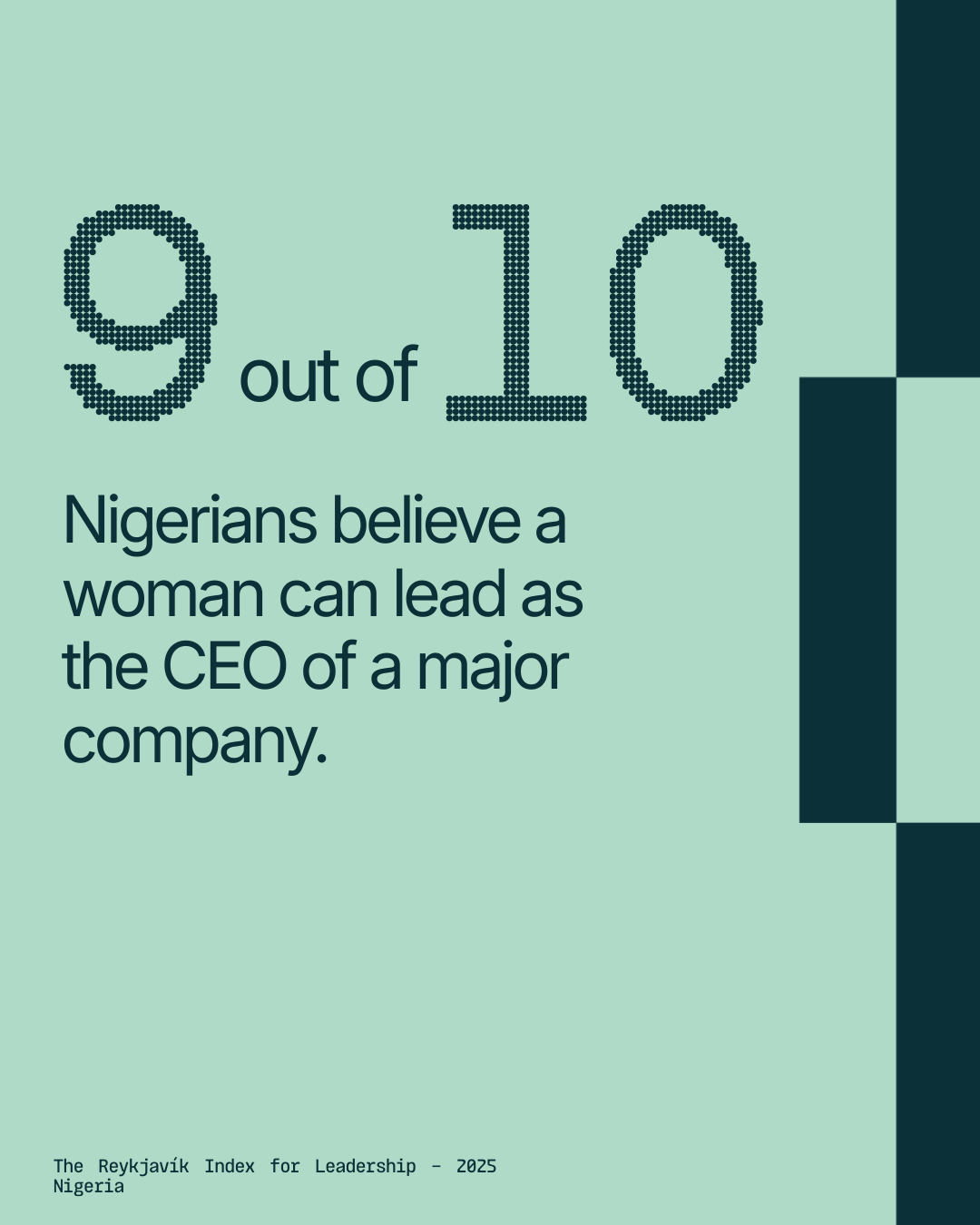
Infographic from The Reykjavík Index for Leadership 2025 showing that 9 out of 10 Nigerians believe a woman can lead as the CEO of a major company.
Experts say the real challenge now is moving from perception to action.
“Public support exists, but institutional barriers prevent women from claiming leadership. Our institutions must step up to ensure perception mirrors reality,” said Ekemini Akpakpan, WISCAR.
“Banking, finance, education, and medical research rank highest for gender equity, demonstrating that intentional policies, such as the Central Bank of Nigeria’s quota for women in leadership, can drive measurable progress.”
“Society is ready, but the system must follow. The real barrier is no longer public opinion, but the policies and structures that determine who gets into positions of power,” said Rachel Pindar, NGF.
“Nigeria must properly support sectors powered by women. This can unlock jobs, strengthen the creative economy, and add billions to national economic output,” said Omowunmi Akingbohungbe, WIMBIZ.
“Government and political leaders must enforce merit, set targets, and hold each other accountable because without women in leadership, our democracy cannot reach its full potential,” said Itunu Hunga, WILAN.
Read the Nigeria Leadership Readiness Brief for full insights from the report.