Cuisine
Juliet Tontoye: How Food Creators Changed the Way the World Sees Nigerian Food

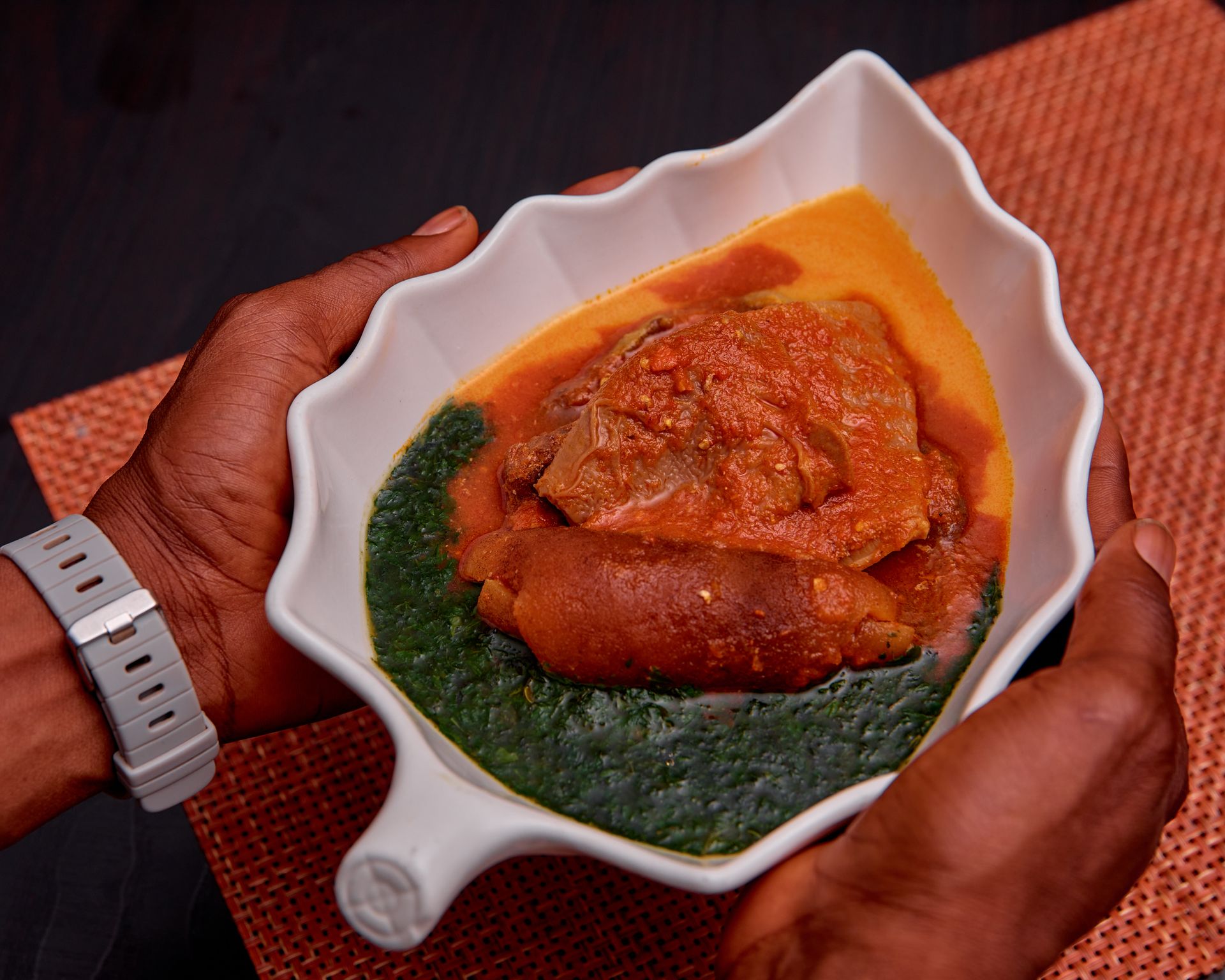
Leaf-shaped bowl with traditional Nigerian soup featuring meat and vegetables. Tochukwu Ekeh/Pexels.
As I watched a young Englishman, Cal, attempt to make amala and abula, the trifecta, I clutched my hands over my chest in horror at what I thought was about to unfold. As I watched him turn the flour in the pot with the deliberate rhythm of someone who understood the assignment, my scepticism began to melt away. Then came the Abula assembly. He didn’t just throw the elements together. He layered them with precision: the yellow gbegiri acting as a base, the slick, green ewedu cutting through it, and the rich, red Buka stew crowning the plate. When he dropped in the assorted meat, perfectly glistening with palm oil, I knew this wasn’t just a casual experiment. It was a love letter to Yoruba cuisine, executed flawlessly thousands of miles away from home.
The mere thought of cooking three different soups for one meal pushes people to seek this dish at local buka spots or restaurants. To truly appreciate Cal’s triumph, you have to understand the mechanics of a perfect amala: It cannot be lumpy; it must be stretchy, smooth, and served piping hot. Hence, my worry for Cal, who was about to cook amala and abula in London. But alas, I was pleasantly surprised.
The Shift in the Landscape
There was a time when foreigners would not attempt to cook a Nigerian dish. Our cuisine requires flavorful depth, diverse local ingredients, and significantly longer cooking times than most Western meals. Any attempt to skip the effort, time or spice usually ended in a terribly bland dish. But Cal’s delivery of this deeply traditional Yoruba meal tore a veil from my eyes. I’ve realised the landscape has shifted, and foreigners can now actually cook Nigerian food.
How did this happen?
Growing up, Nigerian food used to be just food, a necessity for survival, served without any senrenren (finesse). Eating out at restaurants usually meant consuming seemingly foreign dishes or snacks, while fine dining was strictly reserved for French or European meals.
By the 2010s, the landscape shifted. The explosion of social media platforms like YouTube and Instagram allowed creators to niche down into industry-specific content. We saw the rise of Nigerian food vloggers. Early creators like Sisi Yemmie and Sisi Jemimah, and others, began bringing Nigerian dishes to a global audience. As more chefs entered the digital food space, they sought to showcase their culinary skills with modern techniques, presenting traditional dishes in ways that felt entirely new and fresh.
Then came the food critics and restaurant reviewers. They hopped from high-end restaurants to local bukaspots, displaying the incredible diversity of Nigerian food. Nigerians in the diaspora were watching, and global tourists were observing, waiting for an opportunity to try these dishes for themselves.
Also, the great Jollof War between Nigeria and Ghana. Social media was completely abuzz. Netizens from both countries aggressively picked sides on who made the best jollof rice. Intrigued by the drama, foreigners wanted a taste so they could judge for themselves. It became a win-win for both nations; whichever way the pendulum swung, both Nigerian and Ghanaian jollof profited massively from the popularity of the fight.
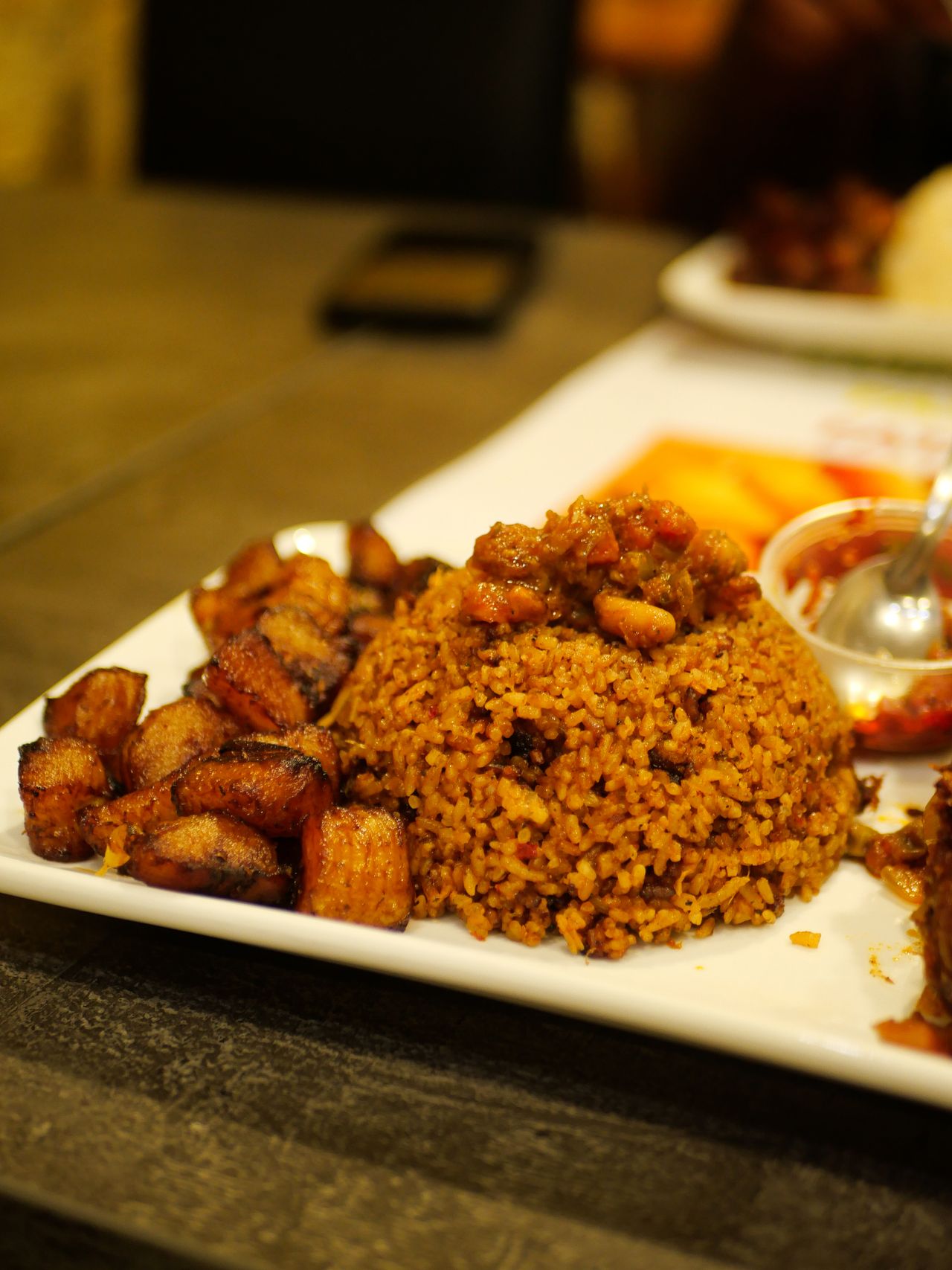
Close-up of Jollof rice with fried plantains and sauce on a plate, perfect for food enthusiasts. Studio Saiz/Pexels.
Music and Other Export Machines
Then Afrobeats happened. Our music became a worldwide sensation, and the global gaze shifted to Nigeria for entertainment. Lagos capitalised on this, branding itself as the ultimate “enjoyment destination” in December. Tourists and international celebrities trooped in for a feel of the Nigerian people, the Lagos lifestyle, and a taste of its food.
Imagine visiting a fine-dining restaurant in London, where you are served a dish from the menu that catches your eye. You recognise the name—it’s akara—because it’s a Nigerian dish, and you are Nigerian. However, what appears on your plate looks entirely exotic, with textures and layers that challenge everything you thought you knew about the dish. You take a bite, and the food dances between your teeth, caressing your palate. It tastes both familiar and foreign at the same time. It reminds you of home, but in a more refined and sophisticated presentation.
This is precisely what a select few Michelin-starred restaurants in London, owned by Nigerian chefs, have accomplished. They have elevated traditional Nigerian dishes, successfully positioning Nigerian cuisine on the global culinary map. Fine-dining restaurants in Lagos have quickly embraced the Afro-fusion trend, crafting multi-course menus centred around local staples and ingredients while employing modern cooking methods and exquisite plating techniques.
Another major milestone in the exportation of Nigerian cuisine was MasterChef coming to Nigeria. An international competition spanning over 71 countries with a TV runtime of over 36 years finally focused its cameras on Nigerian cooks, local ingredients and traditional delicacies. These are what make Nigerian cuisine appealing to the world.
If this post were a video, this is the exact moment I would look into the camera and serenade you with that classic Shania Twain line: “Looks like we made it, look how far we’ve come…”
This is, without a doubt, one of the most noteworthy cultural glow-ups of the century.
***
Featured Image by Tochukwu Ekeh for Pexels.