Inspired
The Radical Grace of Damilola Feyide: How a Saturday Outreach Became Lagos’s First Free Boarding School
Damilola Feyide intended to complete her service year and leave Nigeria. Instead, she built a haven of learning that now educates and houses over 300 vulnerable children through Let It Shine Academy.

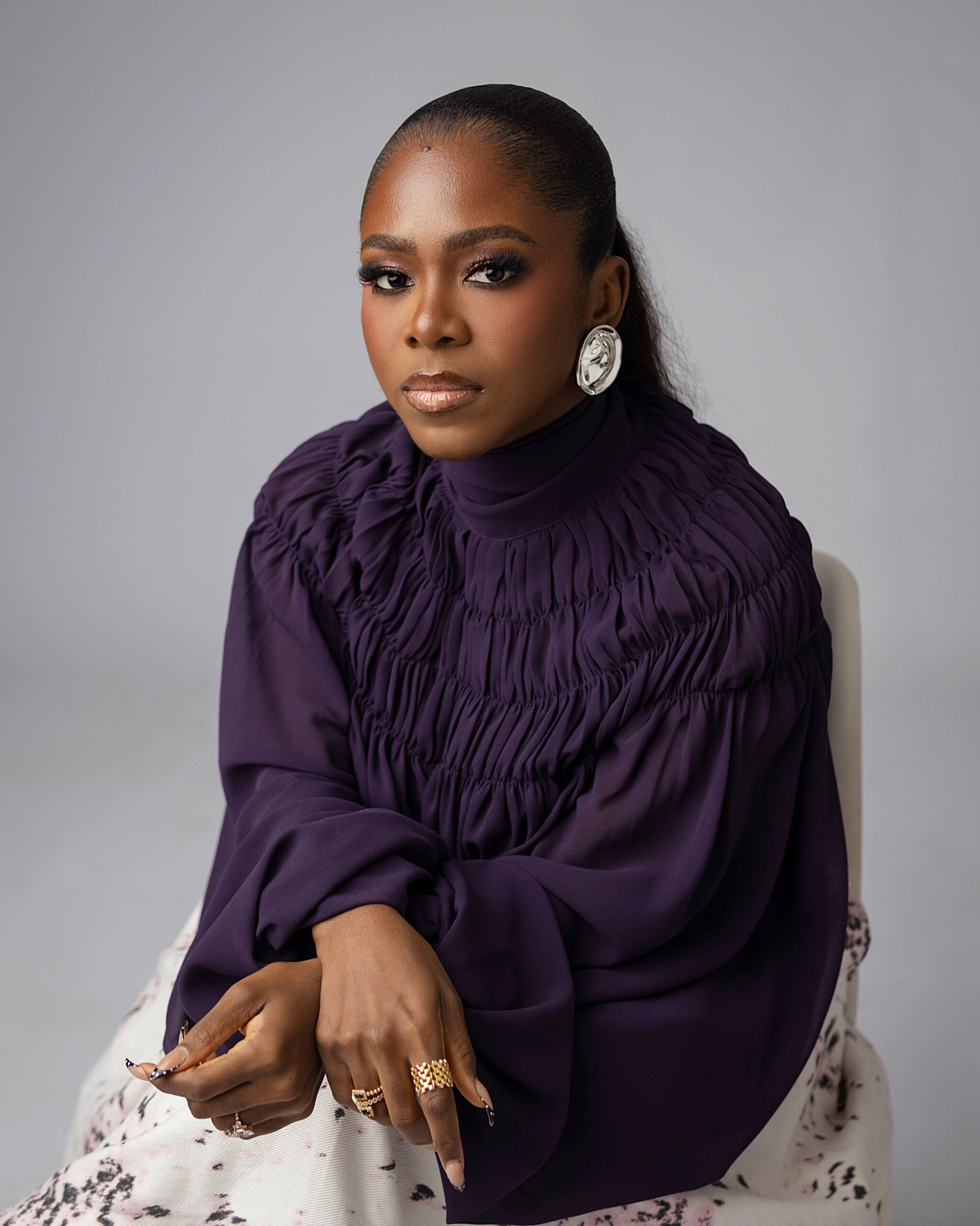
Damilola Feyide, founder of Let It Shine Academy.
By the middle of our virtual interview, I had lost count of two things: how many times Damilola Feyide had been interrupted, and how many times I had said “wow”.
Our call was taking place across a screen, but her laptop offered a clear window into a working day that refused to pause. Her office looked much like any other school administrator’s desk, except for the transparent glass walls surrounding it. From where she sat, Dami could see everything happening outside, and it did not take long before the world outside her door stepped into our conversation.
Every few minutes, a student would pop into the office. Dami would turn to them—sometimes firm, sometimes amused, always familiar—answer a quick question, and seamlessly pivot back to our discussion. What was meant to be a formal interview quickly stopped feeling like one. It became an intimate observation of a founder whose life and institution were moving in real time around her.
Listening to her explain how Let It Shine Academy (LISA) grew from an idea she could barely articulate into Nigeria’s first free boarding secondary school, the numbers were impressive. But the numbers were not what stayed with me. It was the sheer weight of responsibility behind them: more than 300 children living on site, over 50 staff members, three meals a day, accommodation, security, electricity, water, books, uniforms, healthcare, examinations, safeguarding, parents, and university applications.
And Dami, who had initially arrived in Nigeria intending to complete her National Youth Service Corps (NYSC) year and leave, found herself responsible for all of it. “I was just to do NYSC and go back,” she told me candidly. “I was to go finish, if I’m being honest. I was going to do that thing where somebody would sign for me while I japa’d.”

Damilola Feyide, whose weekend outreach expanded into a sanctuary of learning for over 300 students.
Instead, she stayed.
The beginning of LISA was much smaller than the institution it would become. During her NYSC year, Dami visited a remand home after missing an outreach organised by her church. Her driver mentioned another facility nearby, and she decided to stop there. She returned on Valentine’s Day with friends, expecting a brief afternoon of activities. Instead, she found children who dreamed of becoming lawyers, designers, and models, but lacked access to the basic tools that might make those futures feel achievable.
Dami had brought art supplies on a whim, only to realise that several of the children had never used materials she had always taken for granted.
The experience unsettled her. “I just couldn’t sleep,” she said.
She began returning every Saturday—first with a single instructor, then with friends who could teach practical skills: crochet, bead-making, hairdressing, carpentry, mechanics, ballet, and visual art. The premise was straightforward: expose children to possibilities they might otherwise never encounter.
At first, Dami thought that would be enough. Then she visited a correctional centre for boys in Oregun.
What she saw there reframed the issue entirely. Some boys were idle; others had received only primary education or had been out of school for years. Dami had initially planned to introduce her creative vocational academy, but she found herself asking what would happen after the boys left. How were they being prepared to return to society? What happens to a teenager who spends years outside formal education and is then expected to navigate adulthood?
She asked if she could bring in a teacher to begin secondary-school lessons. They agreed. She found a teacher who would eventually become the principal of LISA Academy.
They started with 12 boys. Then 40. What began as two hours on a Saturday expanded to lessons on Thursdays, Fridays, and Saturdays. As Dami shared updates online, an employee from Access Bank reached out regarding a corporate social responsibility contribution. A classroom was renovated, more teachers were hired, and the small tutorial centre began to reshape itself.
Dami still did not call it a school.
Then came access to another facility intended for vocational training. Dami did not need another space, but during a period of prayer, she felt a conviction to start a free secondary school.
Her initial reaction was disbelief. “I was like, ‘I don’t think that’s how it works. I can’t just wake up and say I’m starting a school.’”
There was also the question of who the school was for. Having grown up in London where public secondary education is compulsory and free, Dami assumed the numerous public schools in Nigeria meant free secondary education already existed. When she saw children out of school, she assumed they were enrolled elsewhere or simply chose not to attend.
To resolve the internal battle, she made a deal with God: she would run a flyer campaign, and if no one showed up, it meant she had misheard. Alongside her principal and a friend, she walked through the local streets announcing a free secondary school.
Children came. Parents came. Some parents wept. One mother shared how she had lost her husband and was forced to pull her son out of school because she could no longer afford it.
That outreach laid bare systemic fractures in a country where UNESCO estimates over 20 million children are out of school. Dami learned that while public secondary schools do not charge official tuition, mandatory peripheral expenses—uniforms, textbooks, PTA levies, and daily transport—place them far beyond the reach of families earning Nigeria’s ₦70,000 national minimum wage. Furthermore, due to severe population pressures in Lagos, children can remain on public school waiting lists for up to two years, while other parents keep them home simply because the surrounding environment feels unsafe.
In October 2021, LISA opened its doors as a free secondary school in that centre. By 2023, seeing that day schooling alone could not fully insulate vulnerable children from unstable home environments, the academy transitioned into a full boarding school—making it Nigeria’s first free boarding secondary school. Today, 70 to 80 per cent of the academy’s senior class are the exact children Dami met on the streets during that first flyer walk.
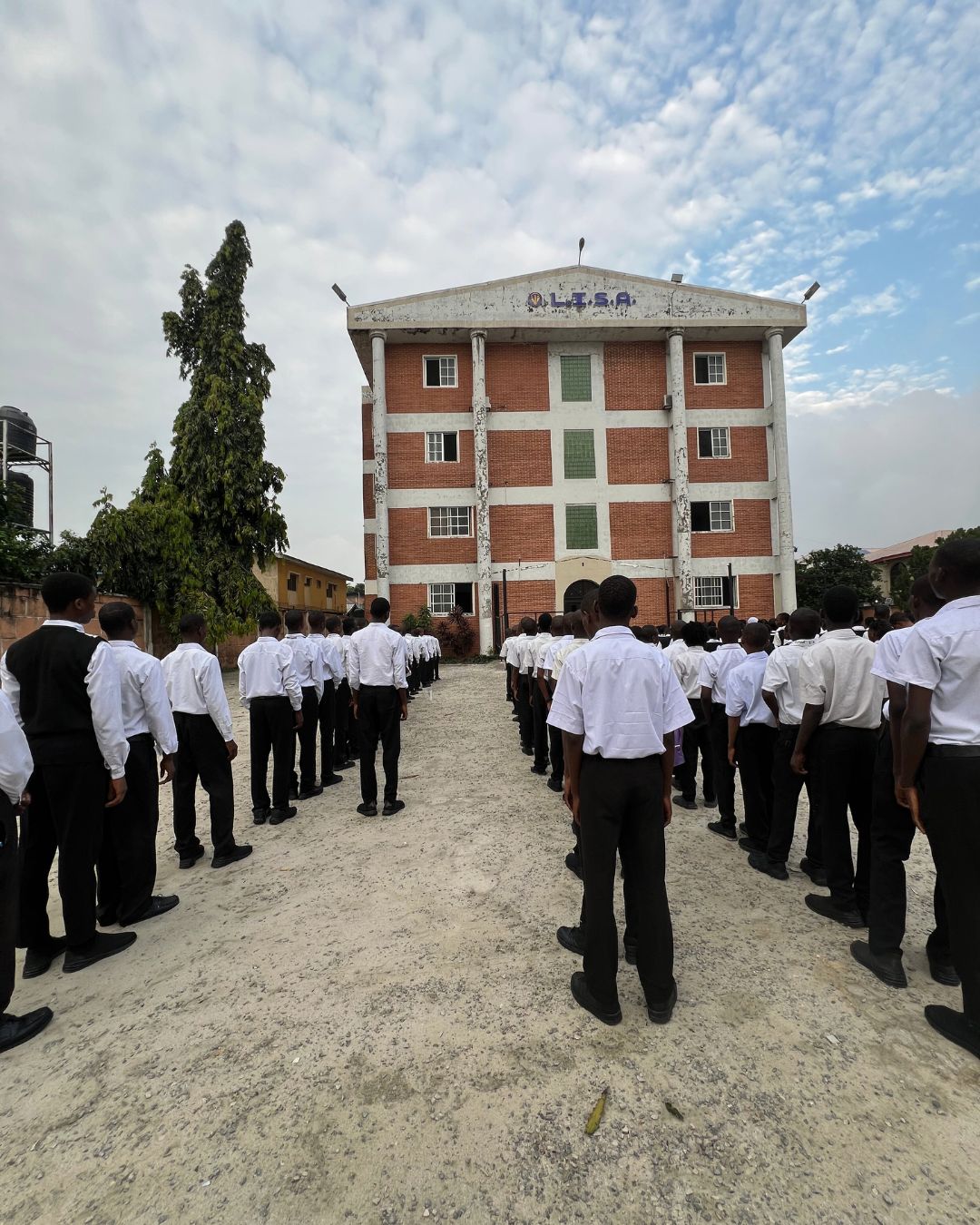
Students gather for morning assembly in front of the main campus building at Let It Shine Academy in Lagos.
Removing those daily burdens entirely requires continuous funding. Dami is pragmatic about the work. Support comes through sponsor-a-child drives, corporate partnerships, grants, and local contributions—a bakery donates bread, a farm provides produce, a dairy partner contributes regularly, and the solar power system was gifted. Yet, some months remain tight. Salaries are occasionally delayed, generator repairs arise, uniforms need replacing, and feeding over a hundred boarders three times daily remains a heavy expense.
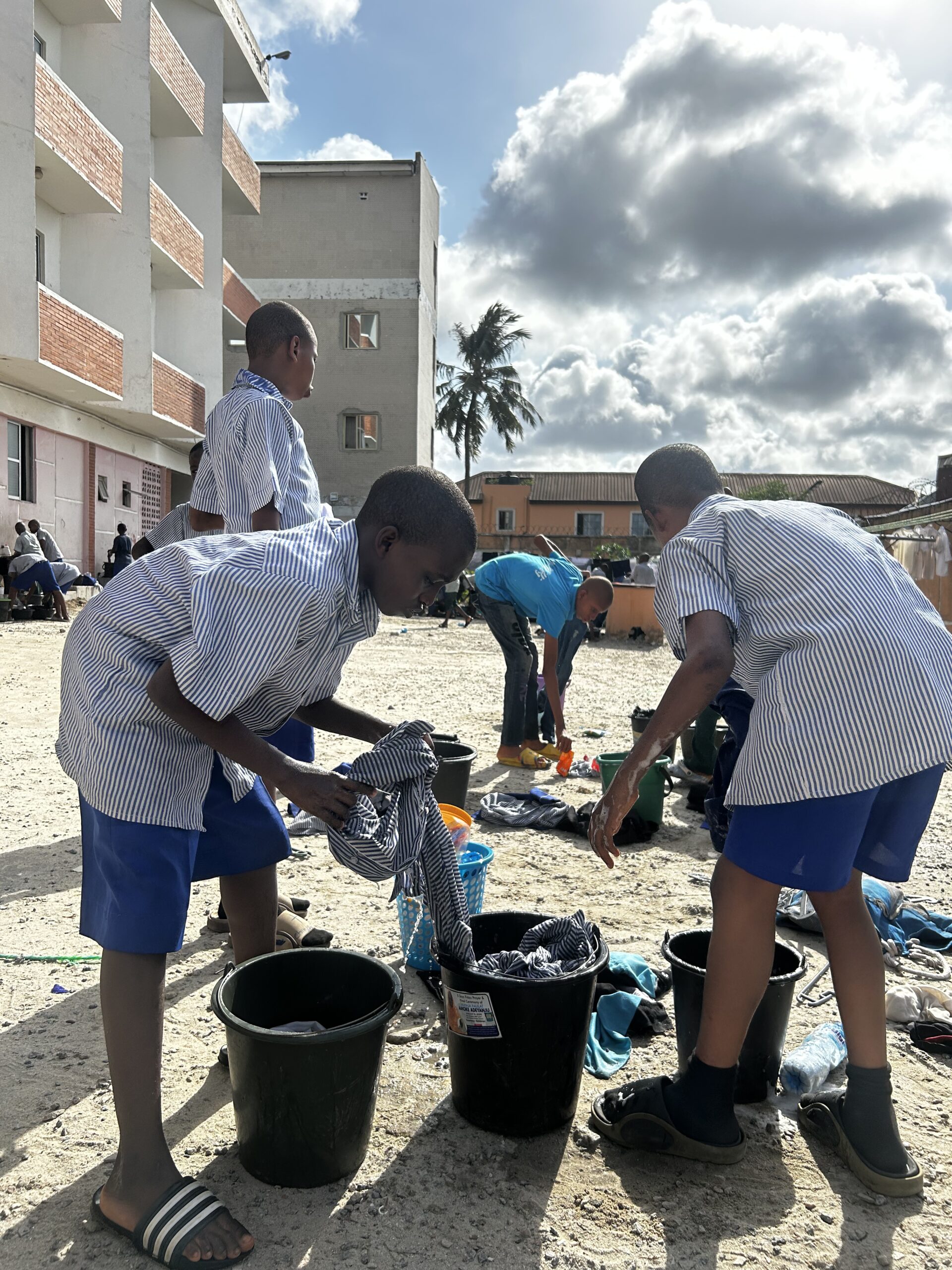
Boarding students complete chores outside their residential quarters at Let It Shine Academy.
Dami balances accounting ledgers with faith, aware that conviction alone does not pay vendors. “I’ll drop the ball,” she admitted. “There’s no way I won’t drop the ball.” Balancing a corporate role at Providus Bank, personal health, friendships, and wedding planning alongside running a boarding school leaves little space for rest.
“It has cost me tremendously in every way,” she reflected. Running the academy is a physically and mentally exhausting endeavour—one that has cost her personal relationships, peaceful sleep, and the comfort of her old life in London. The weight of her decisions carries real consequence, from managing staff to carrying the daily responsibility of feeding, protecting, and counselling children navigating deep trauma.
Yet, when asked what the work returns to her, she speaks not of prestige, but of affection.
“It has given me an immense amount of love,” she shared. “I wasn’t historically a very maternal person, but now I have the genuine pleasure of raising these incredible children. Being a part of their future and watching who they are becoming is unquantifiable. Despite the heat and stress, the pure joy and family environment we’ve built makes me realise I wouldn’t change a single thing.”
It is why she resists the word “charity.”
“I don’t like the word charity,” she said. “I call it an intervention organisation, because I feel like I am intervening in a situation.” For Dami, housing, safety, and learning are not generous gifts handed down to the poor; they are human rights.
Privilege has a way of insulating us from realities that feel too uncomfortable to acknowledge. When you move through life shielded by comfort—behind tinted glass, behind gated walls, behind economic security—it becomes easy to look past the child working on the street who ought to be sitting in a classroom. Distance makes the discomfort outside easy to ignore.
I put this to Dami during our call. Unlike many social founders who build interventions out of their own lived experience with poverty, Dami comes from privilege. How does someone who grew up shielded from that kind of struggle learn to see across the divide so clearly, and choose not to look away?
“The answer is to take yourself out of the equation and look at them the way you would look at yourself, your own child, or your sibling,” she told me. “They were strangers when I started, but now they are my children and they call me mommy. God gave me a new heart. As a believer, the mandate is simple: love your neighbor and love the stranger. Christ says what you do for the least of them, you do for Him. We are not here to be served, but to serve.”
That shift in perspective turned a social intervention into a family. Many of the children at LISA had been deemed unmanageable or difficult by the world around them. Today, Dami has legally adopted about 30 of them.
“They are incredibly sensitive and just need love,” she explained. “My house and my car are not my own; they belong to them because I am here to serve them. When you stop focusing entirely on yourself, you can actually see and care for people.”
The real impact of LISA Academy is written in individual lives.
Take Azeez, who came to Dami from a juvenile correctional centre in Yaba at fifteen. When he failed the placement test, Dami initially hesitated to admit him. But Azeez begged for a single term to prove himself. She took the risk, and by the end of that term, Azeez had posted some of the top results in his year. Today, he reads effortlessly, ranks consistently in the top ten, excels in sports, and serves as a school prefect.
Then there is the girl rescued from child marriage in the North, whose younger sister had already been married off. She arrived completely withdrawn and silent. Today, she is a confident, bright student who plays football, excels academically, and brings warmth into the classroom.
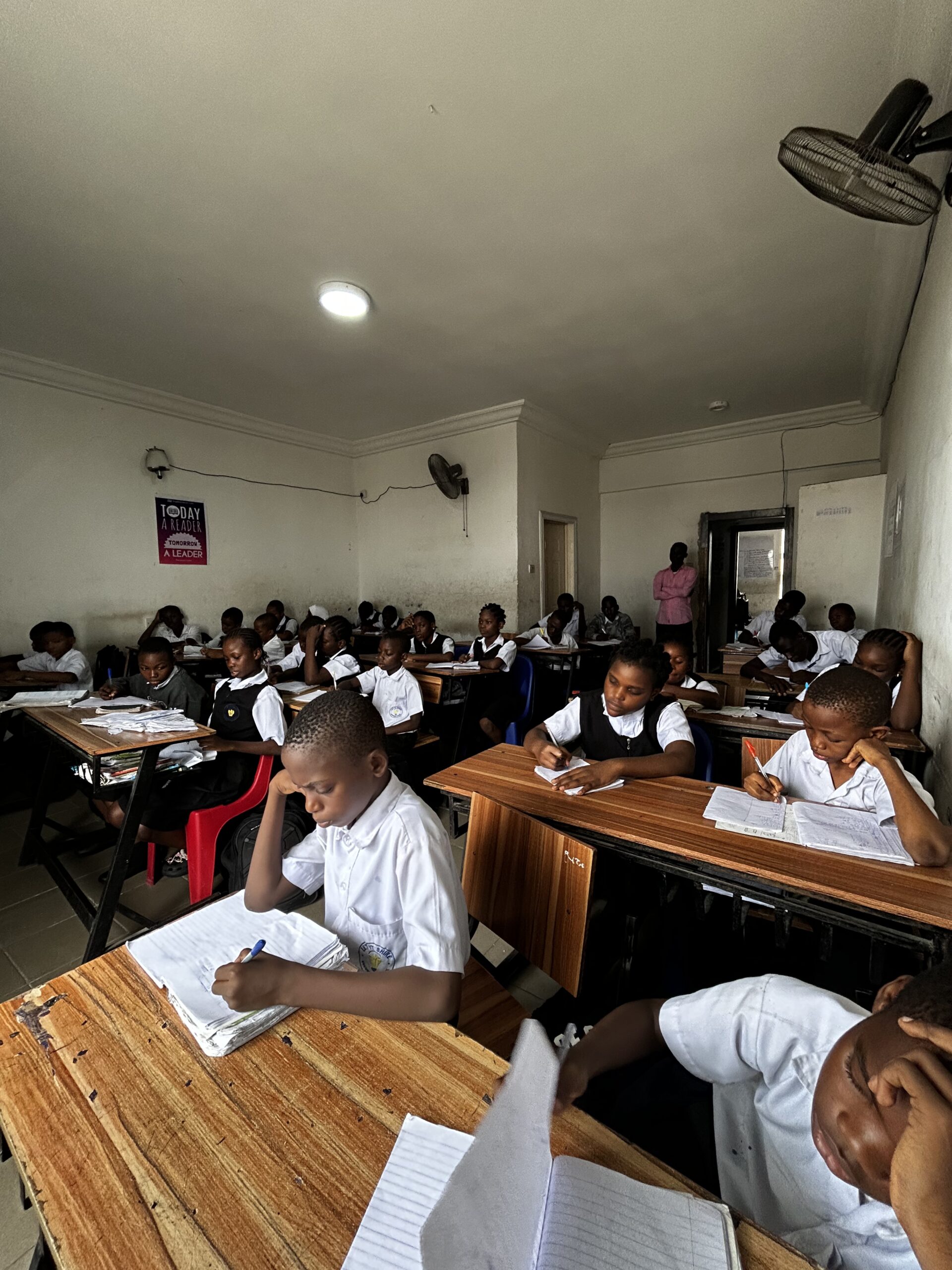
Inside the classroom at Let It Shine Academy, where street-connected youth receive free secondary education.
I understood those stories differently when I attended the school’s graduation ceremony.
After listening to Dami speak about the children across our virtual call, standing among the students and their families made the reality hit home. Parents stood beside their children, posing for photographs in graduation gowns with deep pride. During the closing prayers, the emotion of what had been built was overwhelming: these children were being given a real chance at life—backed by hot meals, safe beds, proper care, teachers who believed in them, and an environment designed to help them thrive.

Students in school uniforms performing with traditional African musical instruments including talking drum and shekere at Let It Shine Academy.
For Dami, that path extends far into the future. The academy’s pioneer class is currently preparing for their JAMB and SAT examinations, supported by pathways she has spent years forging—including partnerships with Pan-Atlantic University and the Mastercard Foundation for full tertiary scholarships, alongside international consultants helping her top students secure university placements abroad.
Looking toward the next decade, her vision for LISA Academy demands even greater space. Beyond operating on leased land, she is working toward building a permanent campus complete with standard science laboratories and sports facilities. Ultimately, the goal is not just to sustain one institution in Lagos, but to replicate this free boarding intervention model across other regions in Nigeria where children remain cut off from education.
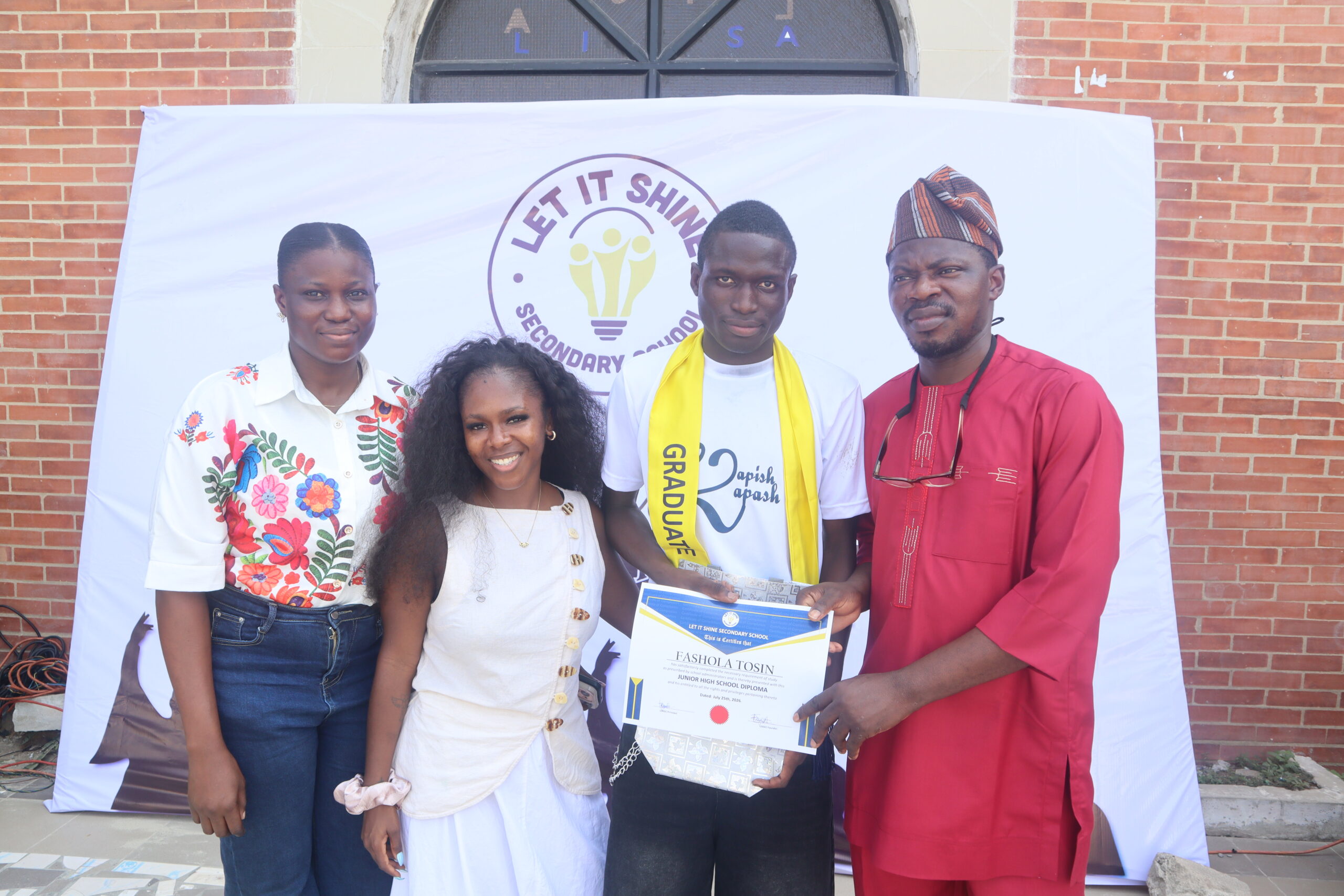
Founder Damilola Feyide and a school teacher celebrate student Fashola Tosin as he receives his Junior High School Diploma at Let It Shine Academy.
Yet, even as the scale of her ambition grows, the core of the work remains fiercely intimate. For Dami, the thousands of children she hopes to reach will never be just statistics on a ledger. The focus remains on the individual life—ensuring every child is given room to breathe, safe memories, proper care, and a clear view of their own potential.
“My daily prayer is for God to keep my heart tender, soft, and filled with compassion so the wickedness of the world doesn’t taint how I see people,” Dami told me. “I also pray for the love needed to help Nigeria and its system.”
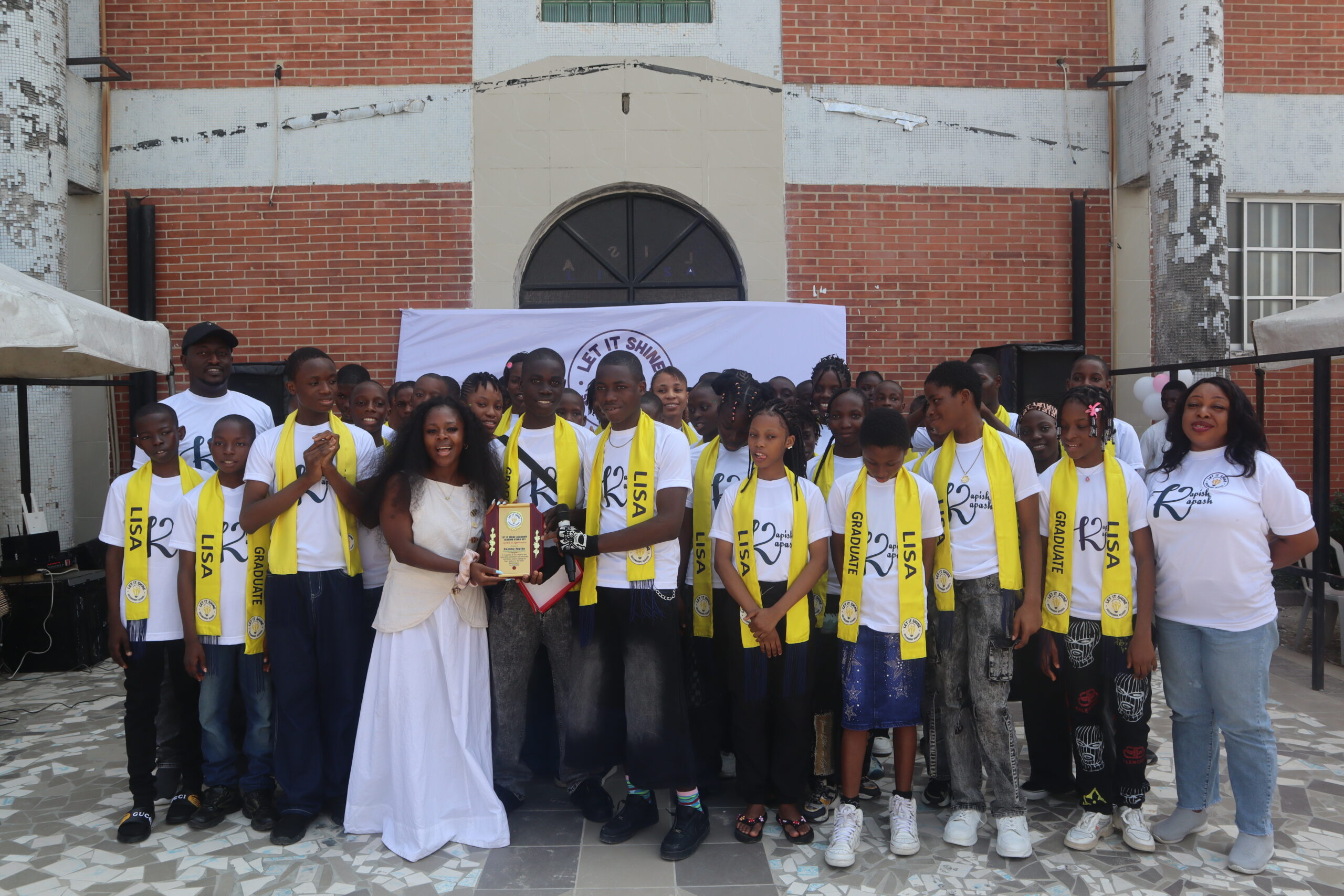
Damilola Feyide celebrates with graduating students during the Let It Shine Academy graduation ceremony.
To help LISA continue funding tuition-free education and full-time care for vulnerable children, join those sponsoring a child’s full term of learning and living for ₦300,000 at lisa.com.ng/sponsor-a-child.
***
Photo Credit: Damilola Feyide