Features
My Experience at the Caine Prize Self-Editing Workshop in Lagos
Súnmisọ́lá Olúdé on his experience at the Caine Prize Self-Editing Workshop, held in Lagos on 17 and 18 November 2026.

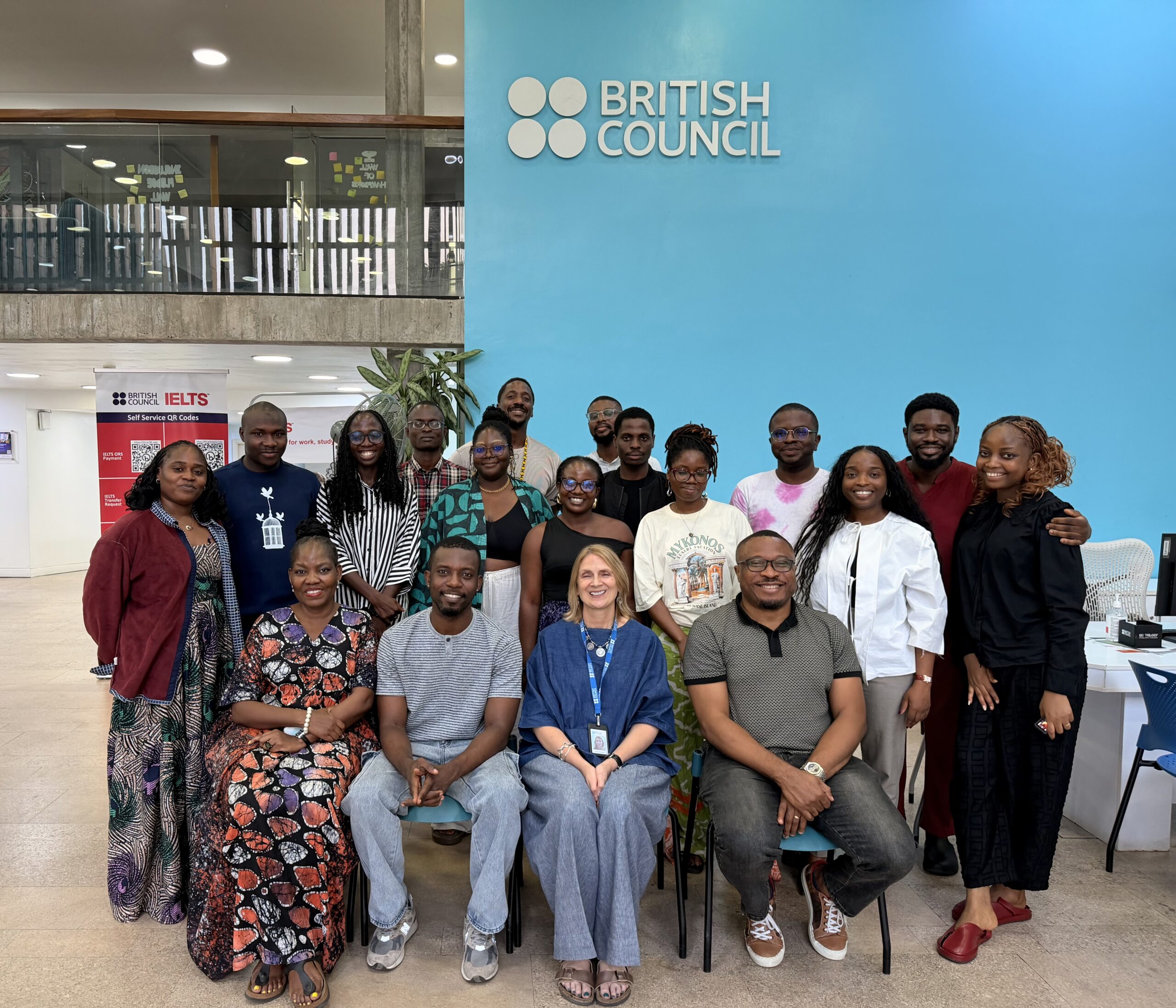
The Caine Prize Self-Editing Workshop, held in Lagos on 17 and 18 November 2026.
When I got the email that I was selected for the Caine Prize Self-Editing Workshop in Lagos, I knew, without doubt, that the cohort of writers I would engage with would be some of the finest around. I was not disappointed. The workshop put me in the same room with extremely talented writers I had read and admired from a distance. Some of us have shared publication credits and honours on longlists and shortlists of literary prizes over the past couple of years.
For two days, we were guests of the British Council and students at the feet of our primary facilitator, Nigerian writer, journalist, and editor, Molara Wood. Liberian-American writer Wayétu Moore also facilitated a session, and a publishing masterclass was held by Anwuli Ojogwu and Eghosa Imasuen of Narrative Landscape Press.
The twelve selected writers for the workshop are Azeeza Adeowu, Chinenye Okechukwu, Ahmad Adedimeji Amodi, Chinonso Nzeh, Innocent Chizaram Ilo, Kingsley Alumona, Mayowa Fagbure, Mustapha Enesi, Oluwatobi Afolabi, Súnmisọ́lá Olúdé, Ufuoma Bakporhe, and Winifred Odunoku. A combination of writers who are also journalists, editors, filmmakers, among other things.
“Gotta Whack That Guy!”
I first encountered Molara Wood on social media, where she shared her commentary on a plethora of issues, from literature and culture to politics. So I particularly looked forward to learning from her. On the first day, when I walked into the workshop at the British Council, she was there, standing and already conversing with the writers present.
By the time other writers arrived and the round of introductions began, it illuminated the sort of people I was in the room with. I had read the writing samples and excerpts recommended for reading ahead of the workshop. They were really good. These writers seemed assured in their craft, and it became further obvious as the conversations became robust.
Molara Wood, with all her brilliance, struck me even more with the animated manner in which she facilitated the workshop. As though she was more excited to teach than we were to be taught by her. This made the workshop flow seamlessly from the jump. We shared opinions on the assigned short stories. We discussed how well they used dialogue, descriptions, and language to reveal so much about the characters and the world they inhabit. We discussed how words, accents, and other idiosyncrasies of characters can reveal class, age and societal standing. This is why it is important for writers to observe the world. To observe the minute details of what makes up people, because these are the tools through which subtext can be created.
The arts are connected, especially through the basic principles of storytelling. Molara Wood recognised this by using the context of films, mostly classics, to highlight storytelling techniques for better understanding. We discussed the dangers of anachronism in contemporary fiction through the critique of a Nigerian novel and the anachronistic elements therein.
She hammered on the importance of reading widely, beyond the mainstream, beyond the contemporary, across literary cultures and traditions. We must read widely so we can know exactly what we are writing in response to.
The workshop’s goal is in its name. The rudiments of writing are well known to writers, but not so much those of editing. To polish a story to the best it can be. “To develop the inner practice of being attentive to define and understand the times”. Editing one’s own work can be difficult. The sentimental value we place on our words makes it hard to, as they say, “kill your darlings”, but it is a necessity for the beauty of a story to shine through. For the writing to be better, we simply “Gotta whack that guy!” as Molara Wood called out from her workshop material.
The afternoon session was facilitated by the Liberian-American novelist, Wayétu Moore. Her session was on Speculative fiction/Magical Realism. Naturally, the question raised is the extent to which these categorisations apply to the works of those who write from cultures where the material and the mystical spheres are considered to be in constant interaction. Such that the happenings that seem magical to a Western mind are random stories one hears from neighbours, friends and family so often that they are as real as anything, and an immutable fact. Tales of cats that bring down house walls, of children who die and return again and again, of grandfathers who come back as babies, of birds dropping from the sky and transforming into old women. Wayétu Moore was in conversation with us about this.
The most important eye-opener for me during this session was about plot and character building. The rules for writing nuanced characters are the same regardless of whether a story is speculative or realist. Writers tend to venerate certain characters as saints and demonise others with no redeemable qualities, such that they are a clear antithesis of the other. But human beings are not that way. A supposedly evil character can be a loving husband. A torturer can be a caring father when he returns home every night. This is the nature of humans, the nature of the characters we want to portray in stories. It has been said that reality doesn’t necessarily make sense, but fiction should.
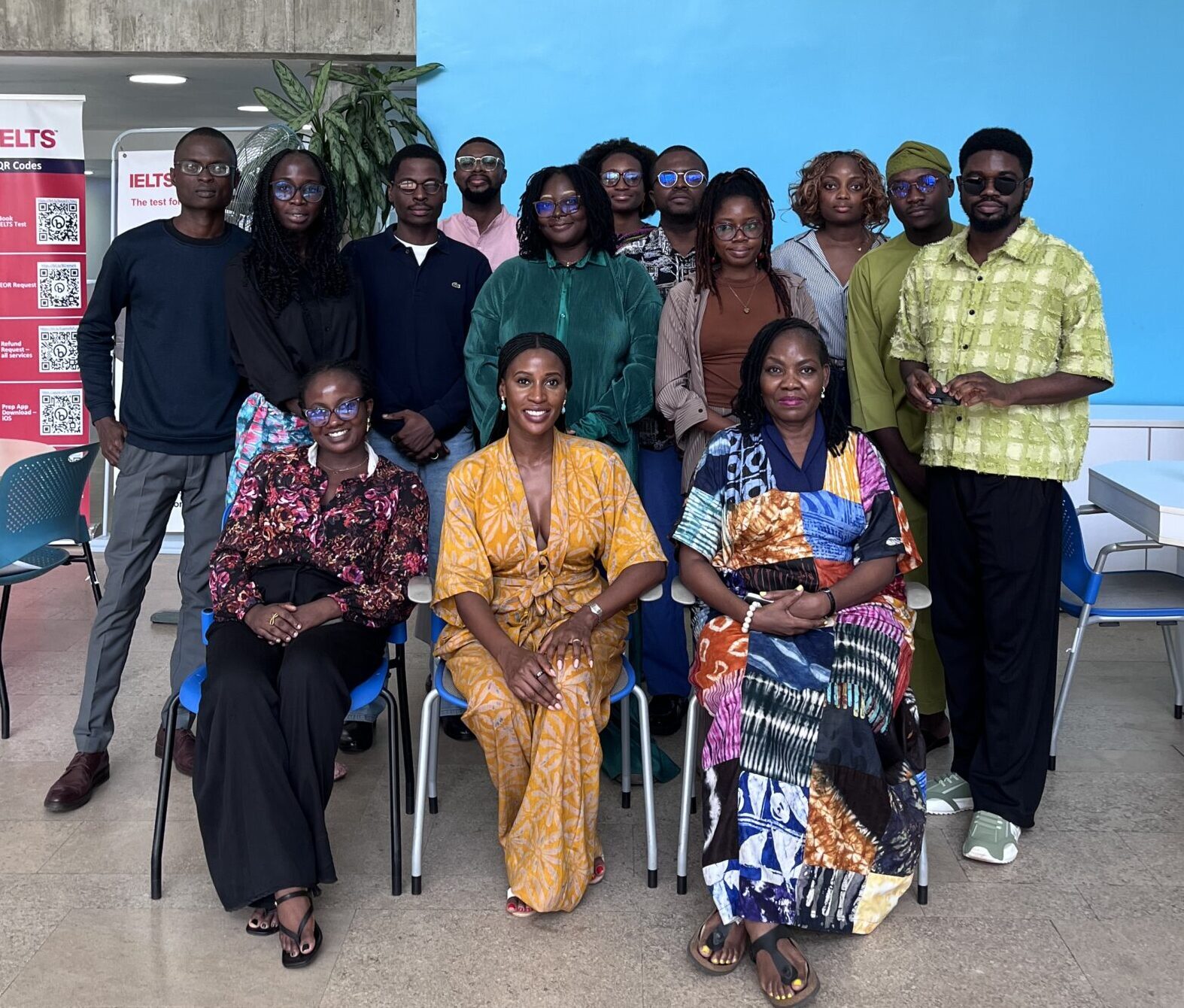
The Caine Prize Self-Editing Workshop, held in Lagos on 17 and 18 November 2026.
“Forget technique… Write from here.”
We all had one question on our tongues on the second day of the workshop: who wrote the assigned anonymised short story we were to discuss? It was a shocking story, quality-wise, and was written by one of the greats of 20th-century African Writing, we came to find out. A story that meanders and pulls up new surprises with every line. In a workshop with a focus on editing, it was the perfect case study for our facilitator to have us note not only its obvious flaws, but also its strengths.
We learned even more about dialogue and voice, structural and contextual editing. The field was covered. Molara Wood wanted to get as much as possible done despite the short time we had together for the workshop. So we had to eat into our lunch breaks, quite literally. No complaints; there was so much to converse about.
The sessions were interactive. We discussed each other’s writing samples, and then our works-in-progress in pairs, giving feedback on what we thought worked well, what didn’t. A way of putting into practice what we had spent hours learning during the workshop. One that was soon reaching its end.
When Eghosa Imasuen and Anwuli Ojogwu of Narrative Landscape Press filled the room with their presence for the afternoon session, I knew it was going to be enjoyable. Eghosa Imasuen is a very jovial man, mixing English with Pidgin to land a point and make jokes. It felt as if he knew us all beforehand.
The publishing industry in Nigeria has always fascinated me. What are contracts like? How well do books sell? These things are often shrouded in mystery. Eghosa spearheaded the session. Anwuli made her points where she thought necessary. Understanding the publishing process within a Nigerian publishing house like NLP was necessary for writers who, after fine-tuning stories or a novel, would seek out publishers.
The session included tips on how to put together a publisher’s query for a manuscript, and the fine margins that can make a query sound professional and confident. “Be simple. Less is more,” Anwuli noted. You write a good story, rewrite, revise, edit, put together a pack of publishers’ queries and send it off with a hail of prayers.
“Writers are the suppliers of stories,” Eghosa Imasuen explained. Publishers produce and sell them. It is looking at stories in the business sense, because publishing is a business, a precarious, courageous one. This was further highlighted when we got into the numbers of it all, information that I was glad to be privy to. The nature of publishing contracts, negotiations, typical first prints, marketing, royalties, publishers’ accounts and others.
I don’t think there is a gathering of writers, particularly African writers nowadays, where the spectre of AI accusations hanging over any writer who wins a prize is not discussed. And surely, this conversation was had. We spoke about measures writers could take to avoid pitfalls, and to prove the human authorship of their work. Keep every single draft you make? Email them to friends? Record yourself writing? I reckon that no matter what one does in good faith, the bad actors who have adopted the AI boogeyman to hound an unlucky prize-winning African writer will not care.
And maybe it is not only about AI, but also about sustained tropes in African literature, about formulaic ways of writing. It is ironic that in a workshop about the complexities and technicalities of craft, I was particularly struck by the words repeated like a refrain by Eghosa Imasuen when he addressed the issue. “Forget technique… write from here,” he said, pointing to his chest. I understood this as simply saying that since formulaic ways of writing are now easily replicated, perhaps one should take a step back and just write as it comes from the heart.
By the end of the workshop, so many revelations had been made. I would never be the same writer I was when I first walked into that room. There was a networking event that evening attended by Donna McGowan, the Country Director at the British Council; Harry Keseina, Head of Arts and Culture at the British Council; Ajoke Bodunde of The Caine Prize; and other guests. There was more food and drinks. We listened to readings by fellow writers in such an amazing cohort. There were extra conversations and laughter.
Writing is a solitary act. Everything else afterwards is not. Being in the midst of other brilliant writers can create a sense of belonging. A feeling that there is a community to cheer for that can cheer you back. To remind you of the strengths and weaknesses you would not have otherwise noticed. To remind you that, indeed, despite the many layers of the technicalities of craft, all it really takes, most importantly, is to first write from the heart.