Culture
TIFF 2025 Is Stacked With Black Cinema — Here’s What to Watch

Fifty years in, and TIFF is still doing something remarkable. Black cinema at #TIFF50 encapsulates the full range of human feeling, from gothic and intimate to political and poetic, formally daring and quietly devastating.
There is a veritable plethora of films by Black filmmakers, films rooted in Black histories, films with Black casts, films that place Black experience at the emotional and political center and we are so here for it.
My Father’s Shadow
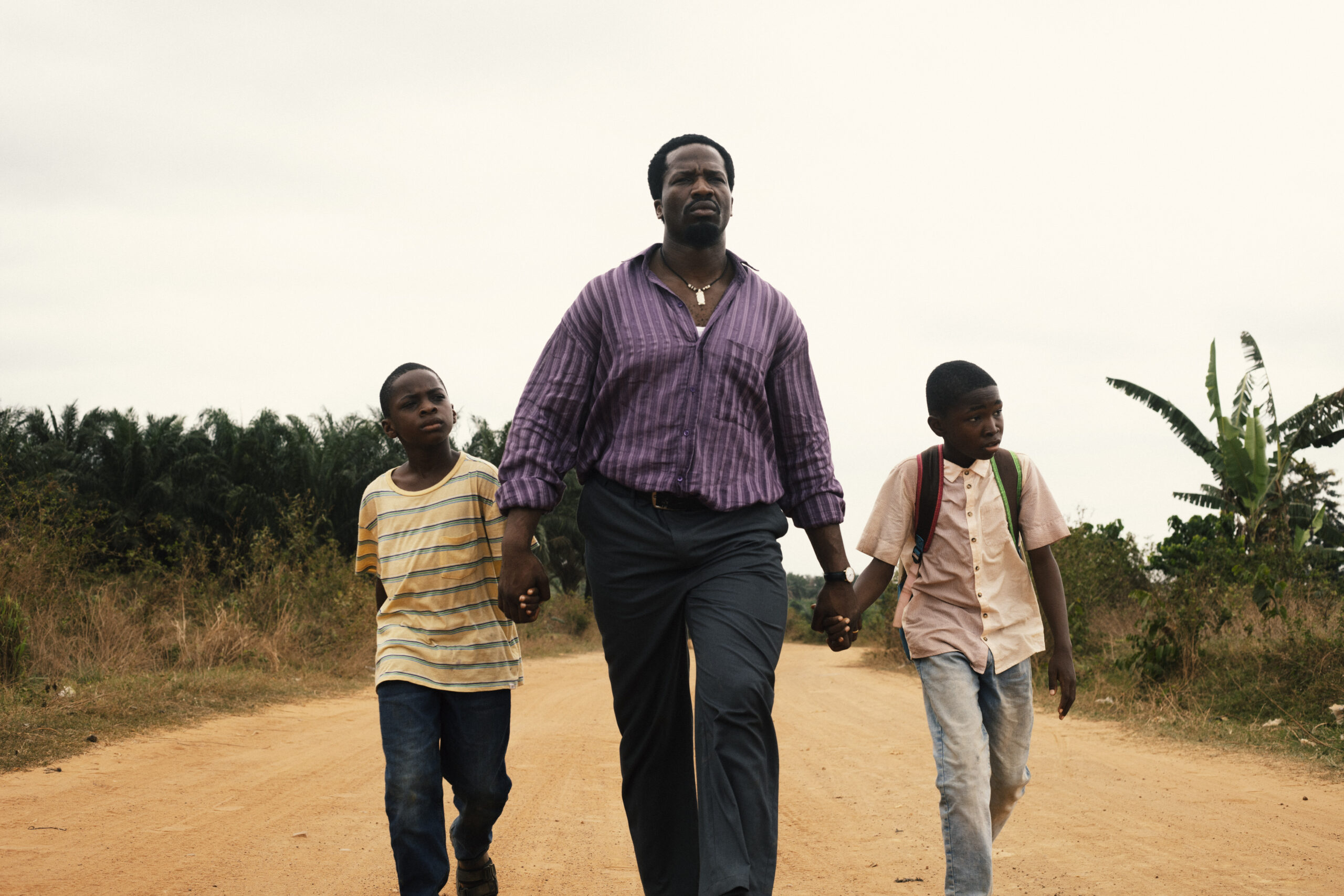
Still from My Father’s Shadow, a film directed by Akinola Davies Jr. and written by Wale Davies. Credit: Lakin Ogunbanwo
Director: Akinola Davies Jr.
Winner of the Caméra d’Or Special Mention at Cannes, My Father’s Shadow marks a striking feature debut from Akinola Davies Jr. Set in 1993 Lagos, the film follows two brothers who spend one transformative day reconnecting with their distant father. Ṣọpẹ́ Dìrísù gives a restrained, quietly magnetic performance as Folarin, while real-life brothers Godwin Chiemerie Egbo and Chibuike Marvelous Egbo bring the story its emotional charge. This is not a sentimental tale of easy reconciliation. It is about the harder, more adult work of seeing a parent clearly.
Hedda
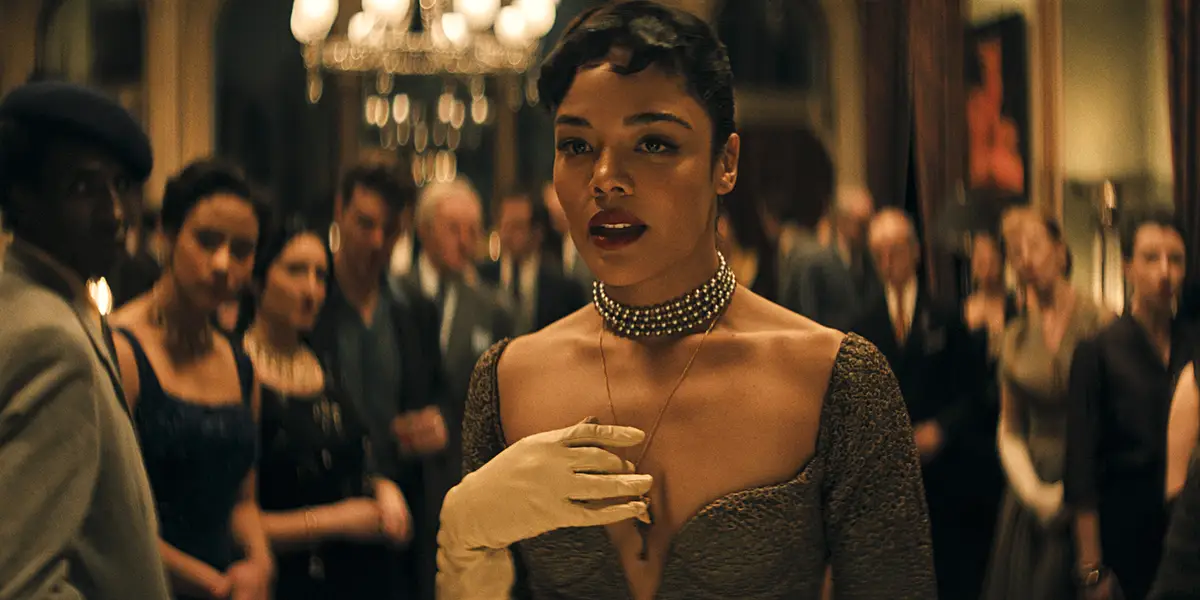
Director: Nia DaCosta
Nia DaCosta returns with a bold reimagining of Henrik Ibsen’s Hedda Gabler, transplanting the classic to mid-century England and placing Tessa Thompson at its centre. The result promises a stylish, feminist study of power, performance and self-destruction, with Thompson reuniting with DaCosta after Little Woods. If Candyman proved DaCosta’s gift for turning inherited texts into something volatile and contemporary, Hedda looks poised to do the same with one of theatre’s most famously restless women.
Youngblood
Director: Hubert Davis
After the acclaimed documentary Black Ice, Hubert Davis returns to the world of hockey with Youngblood, a drama about talent, aggression and the psychic toll of being taught to meet every slight with force. Ashton James stars as Dean Youngblood, a gifted player whose future depends on whether he can learn to master himself before the sport swallows him whole. Blair Underwood appears as Dean’s father Blane, while Shawn Doyle plays the skeptical coach Murray, whose relationship with Dean becomes increasingly complicated when Dean develops a connection with Murray’s daughter Jessie.
The Christophers
Director: Steven Soderbergh
Steven Soderbergh’s The Christophers pairs Ian McKellen with Michaela Coel in a chamber comedy about art, commerce and moral compromise. Coel plays Lori, a former artist turned freelance restorer and food-truck worker, whose fortunes shift when the estranged heirs of a famous painter offer her a suspiciously lucrative job. She must infiltrate the artist’s home, complete his abandoned paintings and share in the profits after his expected death. Naturally, the plan does not remain simple for long.
The Eyes of Ghana
Director: Ben Proudfoot
A love letter to cinema, memory and inheritance, The Eyes of Ghana follows legendary Ghanaian cameraman Chris Hesse, now in his 90s, as he passes his legacy to younger filmmaker Anita Afonu. Directed by two-time Oscar winner Ben Proudfoot, the film brings together a formidable creative team, with Afonu producing alongside Nana Adwoa Frimpong and Moses Bwayo. Kris Bowers provides the score, while Barack and Michelle Obama’s Higher Ground serves as executive producer. It is, by design, a film about looking back in order to look forward.
Dinner With Friends
Director: Sasha Leigh Henry
Sasha Leigh Henry’s Dinner With Friends turns the dinner party into a pressure cooker. The film follows eight longtime friends who gather intermittently to eat, drink, laugh and quietly fall apart. With access to their group chat and a seat at their table, the film captures the peculiar intimacy of millennial friendship: the rituals, the resentments, the private scorekeeping and the strange endurance of people who know too much about one another to fully walk away.
Laundry
Director: Zamo Mkhwanazi
Set in 1968 apartheid South Africa, Zamo Mkhwanazi’s feature debut Laundry is an intimate family portrait shaped by the violence of a larger political system. At its centre is a young man trying to find his own path while protecting his father and the family business. Mkhwanazi examines the uneasy privileges and hidden costs of exemption under apartheid, crafting a quietly powerful debut about survival, compromise and the brutal architecture of inequality.
Steal Away
Director: Clement Virgo
Clement Virgo’s Steal Away unfolds in a mysterious, highly stylized world that evokes occupied Europe, Algiers and the Antebellum South. Fanny, played by Angourie Rice, is a sheltered teenager whose world barely extends beyond her mother’s stately home. Then comes Cécile, played by Mallori Johnson, a charismatic asylum seeker whose arrival disrupts the fragile order of Fanny’s life. The film appears to operate in the charged space between fable, history and political allegory.
BLKNWS: Terms & Conditions
Director: Kahlil Joseph
Kahlil Joseph’s BLKNWS: Terms & Conditions expands his celebrated “fugitive newscast” installation into a feature-length cinematic experience. Joseph, long admired for his ability to merge music, image, history and atmosphere, offers a shapeshifting exploration of Black identity, possibility and cultural memory. Conceived with the texture and rhythm of an album, the film promises less a conventional narrative than an immersive act of reclamation.
The Man in My Basement
Director: Nadia Latif
Nadia Latif adapts Walter Mosley’s novel with The Man in My Basement, a psychological thriller starring Corey Hawkins and Willem Dafoe. Hawkins plays Charles Blakey, a man approached by a mysterious stranger who offers him a generous sum to rent his basement. What follows draws Blakey into a chilling confrontation with hidden family history and the darker machinery of power. Anchored by Hawkins and Dafoe, the film announces Latif as a bold new voice in feature filmmaking.
Diya
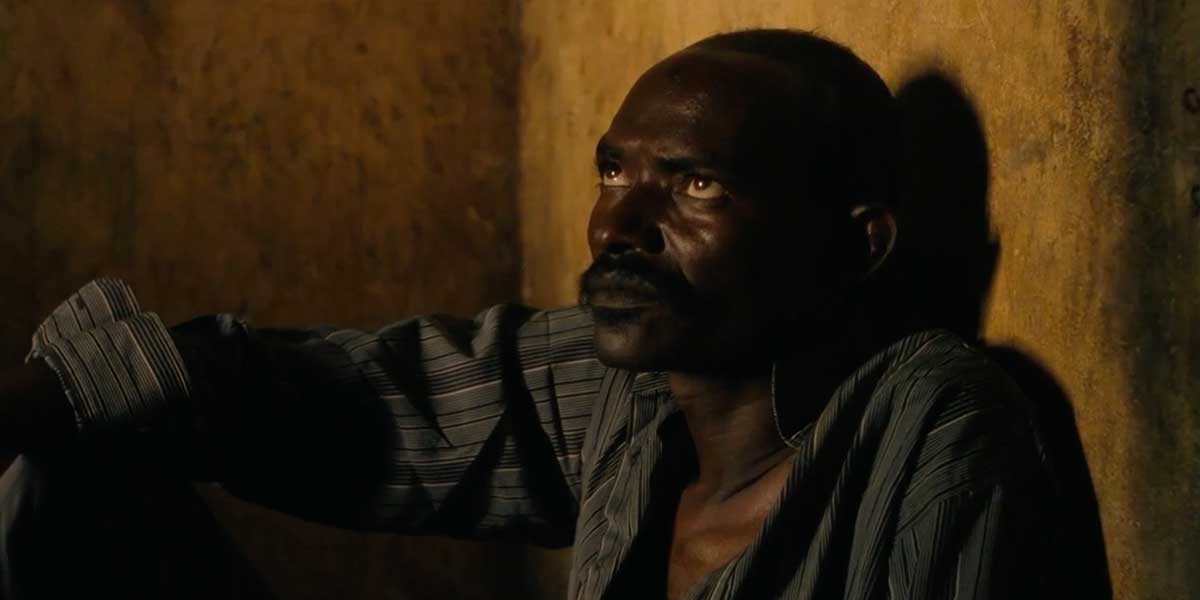
Director: Achille Ronaimou
Chadian filmmaker Achille Ronaimou makes his feature debut with Diya, a relentless thriller about a man accused of killing a child and forced to reckon with the demand for a blood debt. Dane is a man of faith, pulled into circumstances that grow more dangerous by the moment. His wife, gathering her own courage, is prepared to go to great lengths to support him. But in Diya, certainty is fragile and every turn threatens to reveal another trap.
Memory of Princess Mumbi
Director: Damien Hauser
Set in the futuristic African country of Umata, Damien Hauser’s Memory of Princess Mumbi blends romance, technology and royal intrigue. The film follows a love triangle between a film director, an aspiring actress and a prince, using modern technology to visually restore lost kingdoms while keeping its focus on the human drama at the centre. Princess Mumbi, portrayed by Shandra Apondi, becomes both muse and mystery, while Abraham Joseph and Samson Waithaka complete the film’s charged emotional triangle.
Origin: The Story of the Basketball Africa League
Directors: Richard Brown and Tebogo Malope
Origin: The Story of the Basketball Africa League traces the creation of the BAL, launched after the NBA committed in 2019 to building a professional basketball league on the continent. With teams representing countries including Kenya, Nigeria, Egypt and Rwanda, the league becomes more than a sports venture. In the hands of Richard Brown and Tebogo Malope, it is also a story about ambition, infrastructure, national pride and the global future of African athletic talent.
Under the Same Sun
Director: Ulises Porra
A Spanish settler, his Chinese companion and a former Haitian soldier attempt to establish high-quality silk production in early 19th-century Hispaniola in Under the Same Sun. The result is an emotionally charged historical drama with political resonance, one that uses the past to examine labour, alliance, empire and the uneasy compromises that shape new worlds.
True North
Director: Michèle Stephenson
Michèle Stephenson, director of Going to Mars: The Nikki Giovanni Project, turns her attention to Canada’s own racial history in True North. Centred on the 1969 student protests at Montréal’s Concordia University, then known as Sir George Williams University, the documentary examines a defining moment in Canada’s reckoning with racism. Searing and galvanizing, the film continues Stephenson’s ongoing investigation into Black life across the Americas and the historical pressures that continue to shape it.
Wasteman
Director: Cal McMau
David Jonsson leads Wasteman as Taylor, a soft-spoken inmate serving a severe sentence for a petty crime. He survives prison by becoming almost invisible: cutting hair, avoiding conflict and clinging to memories of the son he has not seen since infancy. But when a charismatic and dangerous new cellmate, played by Tom Blyth, enters his orbit, Taylor is forced to choose between prison loyalty and the possibility of freedom. Jonsson’s performance is described as one of remarkable restraint, built from small gestures and years of swallowed pain.
The Fence
Director: Claire Denis
Claire Denis returns with The Fence, set within the walls of a private construction company in Africa. Matt Dillon plays Horn, a British supervisor waiting for a visit from his wife after a worker has been killed in an accident. When Alboury, played by Isaach De Bankolé, arrives to claim the body of his deceased brother, the company’s uneasy order begins to fracture. Themes of racial inequality, exploitation and masculinity move through the film as each character reveals more than they intended.
Orwell: 2+2=5
Director: Raoul Peck
Raoul Peck brings his incisive political eye to George Orwell in Orwell: 2+2=5. Though 1984 was published in 1949, its language of surveillance, authoritarianism and manipulation feels unnervingly current. Peck, who previously placed James Baldwin at the centre of I Am Not Your Negro, approaches Orwell not as a relic but as a writer whose warnings have become part of the present tense.
Shorts at TIFF 2025
Will Niava, short film program — Jazz Infernal
Tyler Mckenzie Evans, short film program — Sea Star
Kelly Fyffe-Marshall, short film program — Demons
Carolyn Lazard, short film program — Fiction Contract
Idris Elba, short film program — Dust to Dreams
As TIFF celebrates its 50th anniversary, these filmmakers and films speak across continents, genres and histories, from Lagos to Montréal, Ghana to South Africa, the prison cell to the dinner table, the archive to the speculative future. Black cinema at TIFF 2025 is not simply present. It is helping shape the festival’s cultural centre of gravity.
The 2025 Toronto International Film Festival runs September 4 to 14.